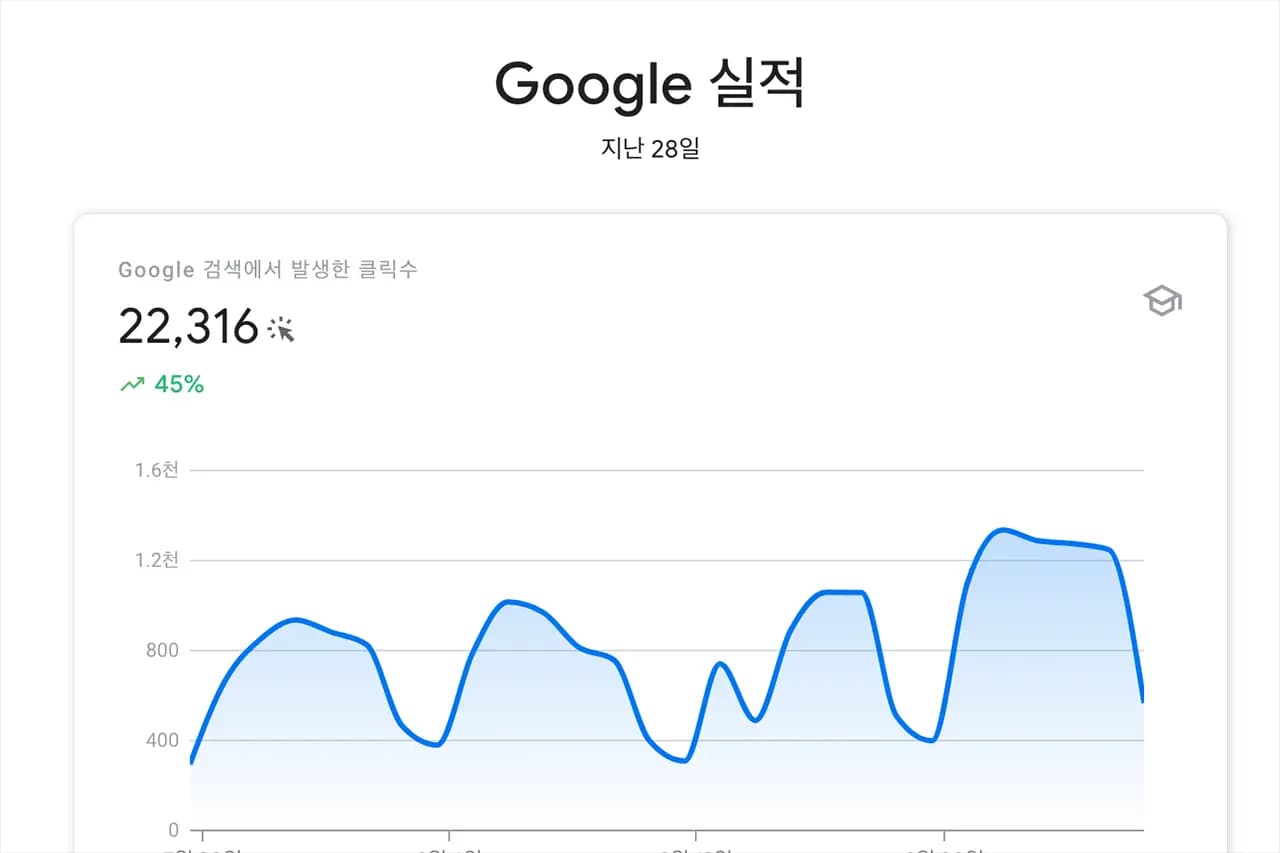
How to Analyze Keyword Difficulty and Choose Keywords Efficiently
 임재복
임재복
Keyword difficulty is a metric that quantifies how much competition you’re up against to rank near the top of search results for a given keyword. Backlinko explains that keyword difficulty is gauged from factors like the domain authority of top-ranking pages, their backlink and referring-domain counts, and overall competitive intensity. In other words, even a high-search-volume keyword can be hard to rank for if competition is too fierce, while a low-difficulty keyword can bring in traffic quickly with far fewer resources.
So keyword difficulty isn’t just a number — it’s the real starting point for SEO strategy and a core factor that decides how well your content actually performs. In this article, we’ll walk step by step through what keyword difficulty means, how to analyze it, which tools to use, and a keyword selection strategy you can apply directly to your own work.
Predicting Your Odds of Ranking With Keyword Difficulty
First, choosing keywords based on search volume alone tells you nothing about your odds of actually ranking.
In practice, even a high-volume keyword can be nearly impossible for new content to break into if every top-ranking result is a portal, a media outlet, or a major brand website. This is where checking keyword difficulty helps — it lets you gauge whether your current domain strength and content scale can realistically compete.
Choosing a lower-difficulty keyword also lets you secure traffic quickly, and build a structure where your SEO gains compound over time.
Building up traffic through long-tail keywords early on, then gradually expanding into medium-difficulty-and-above keywords, is a strategically stable approach.
In other words, search volume is just one factor among many. Finding keywords you can actually break into, using keyword difficulty as your guide, is the real first step of a content strategy.
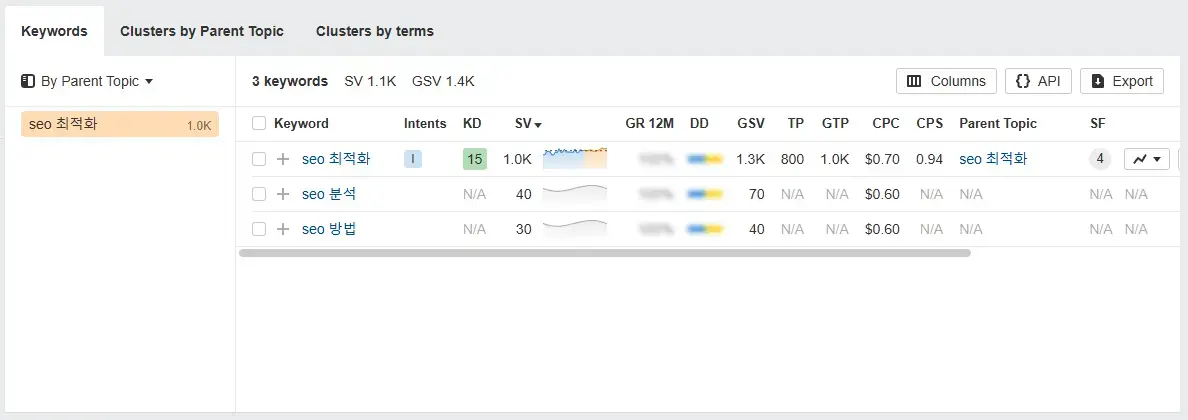
When Analyzing Keyword Difficulty, Weigh the Score and the SERP Structure Together
Keyword difficulty is usually presented as a KD (Keyword Difficulty) score, a quantitative benchmark for gauging competitive intensity.
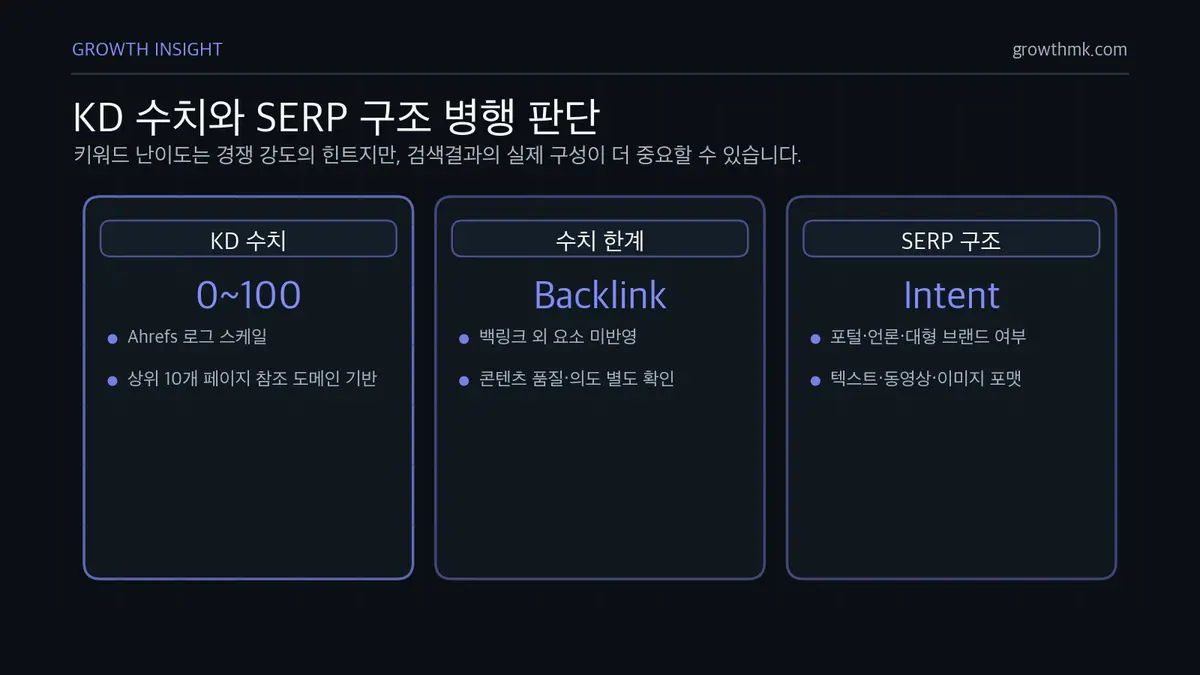
But judging a keyword’s competitiveness on the score alone has real limits. Ahrefs’ KD is a score from 0 to 100, on a logarithmic scale, based purely on how many websites (referring domains) link to the top 10 ranking pages — it doesn’t factor in anything besides backlinks. To make a strategically meaningful call, you need to also analyze what the top-ranking content for that keyword actually looks like.
For example, even if KD is low, the barrier to entry can still be high if the results are dominated by authoritative sites like major portals, encyclopedias, or shopping platforms.
Conversely, even if KD shows as high, if the top-ranking content is mostly outdated blog posts or simple community forum threads, there’s a genuine opening if you produce high-quality content.
The type of content dominating the results — text, video, image-based — also shapes how you should plan your own content. This is exactly why you need to analyze SERP structure alongside the keyword difficulty score to properly judge the real level of competition.
Combine Keyword Difficulty Tools to Fit Your Purpose
Each tool analyzes differently and has its own strengths, so relying on just one has real limits.
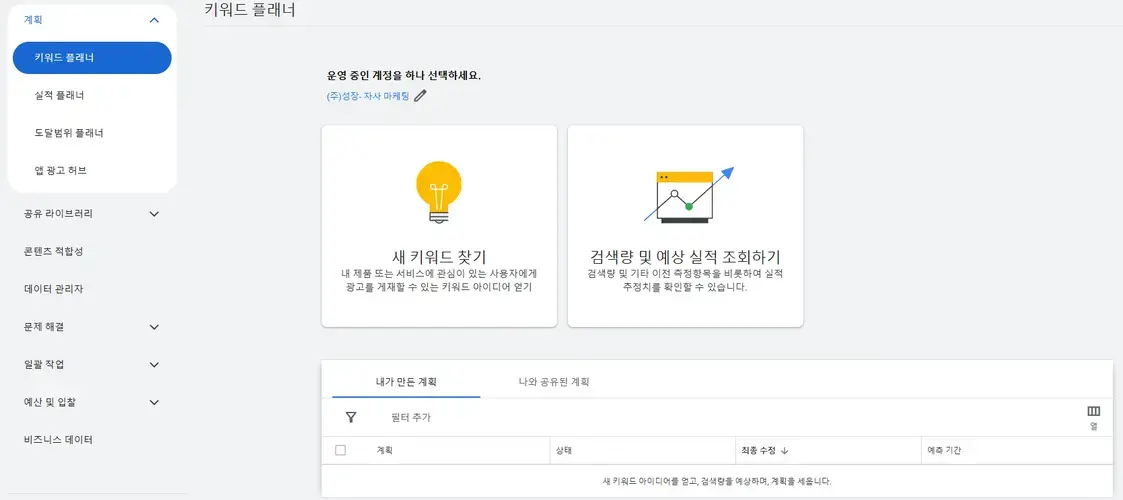
Google Keyword Planner is effective for gauging search volume, ad competition intensity, and related keywords, but it can’t give you a detailed difficulty score or a deep SERP analysis.
A tool like Ahrefs, on the other hand, gives you a precise KD score and visualizes a range of useful data for content planning — backlink counts, domain authority, content length — for top-ranking content.
If you want to check the gap between your content and competitors’ — tracking competitor keywords, analyzing ad spend — we’d recommend SEMrush. It’s well-suited for marketing-focused analysis.
If you want a quick read on difficulty, search volume, and related content, Ubersuggest is a good choice — it has an intuitive interface and works well for lighter use.
For content targeting the Korean market, you should also run Naver’s keyword tool alongside your other tools to analyze PC/mobile search volume, related keyword patterns, and seasonal keywords. Combining 2-3 tools depending on your purpose and stage is the most realistic way to get both accuracy and efficiency.
A Keyword Selection Strategy That Weighs Search Intent and Competition
When choosing a keyword, figure out the searcher’s intent first. Ahrefs’ own SERP analysis guide also emphasizes that content matching search intent tends to rank higher — you need to look not just at the difficulty score but at what content is actually sitting in the results, to properly judge your odds of breaking in.
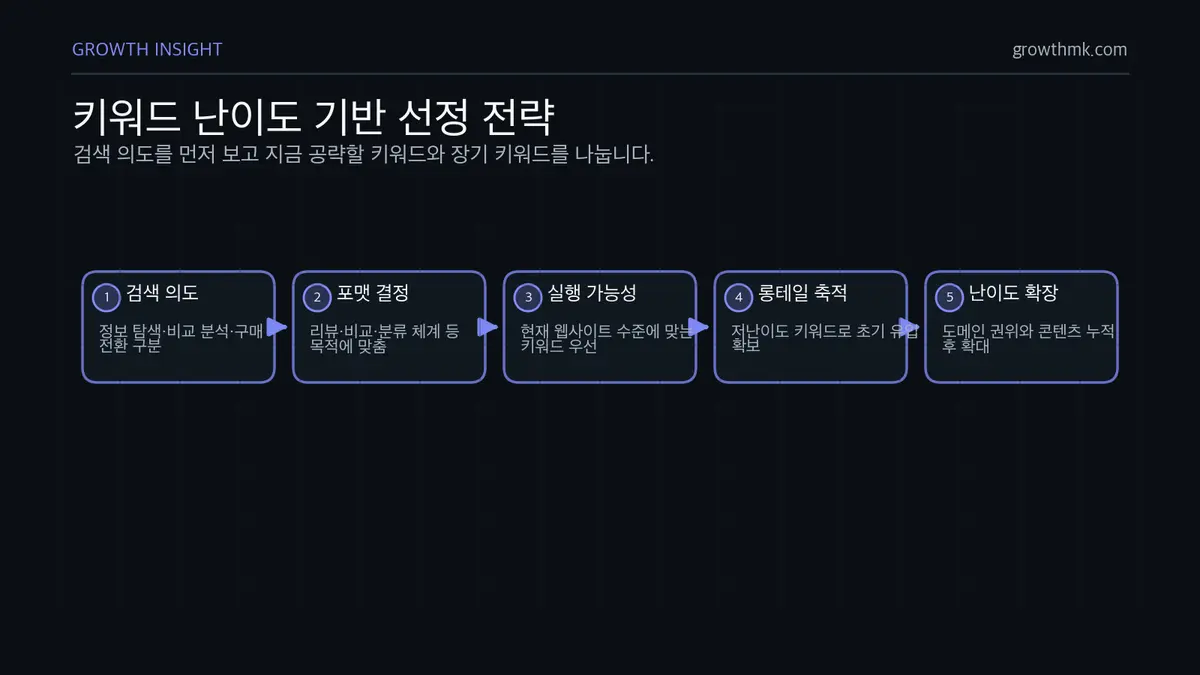
A content’s goal and structure should shift depending on the searcher’s purpose — information gathering, comparison shopping, or purchase intent — and the same keyword can call for a different format, depth, or CTA depending on that intent.
For example, “best bikes to buy” targets purchase intent, so a product review or comparison format fits well, while “types of bikes” is exploratory and calls for content that lays out categories or basic concepts.
For each keyword, check its difficulty and, factoring in your content’s actual purpose and available resources, prioritize the keywords realistically within your reach.
Even the best content takes a long time to rank for an overly competitive keyword, so finding keywords that fit your website or channel’s current level should come first.
Sorting keywords by difficulty into ones you can go after right now versus ones to prepare for over the long term makes your content planning and execution far more systematic.
Related Reading
- Marketing Keyword Research Strategy, From Start to Feedback
- Does High Keyword Density Actually Make for Good Content?
- Long-Tail Keyword Examples and How to Apply Them in Marketing
- What Are Primary and Supporting Keywords, and How Do You Use Them?
- What Is a Seasonal Keyword (SK)?
Want to apply this to your own business? Take a look at how Growth approaches it in our SEO service, or if you need a diagnosis of your specific situation, reach out through our contact page. We answer in terms of the one lead who becomes revenue — not raw traffic volume.
Frequently Asked Questions
How is keyword difficulty (KD) calculated?
The exact method varies slightly by tool. Ahrefs’ KD, for example, counts the number of websites (referring domains) linking to the top 10 ranking pages for a keyword and converts that into a logarithmic score from 0 to 100. In other words, the more backlinks the top pages have, the higher the difficulty score. Since this is a backlink-centric metric, you need to check content quality and search intent separately.
Is a high search volume automatically a good keyword?
No. Search volume is just one factor among several to consider. Even a high-volume keyword can be hard for new content to break into if portals, media outlets, and major brands already dominate the top spots. So you need to weigh search volume together with keyword difficulty and the actual SERP structure to judge your real odds of ranking.
Which tools should I use for keyword difficulty analysis?
It’s best to combine tools depending on your purpose. Ahrefs is best for an accurate KD score and backlink/SERP analysis, SEMrush for competitor keyword and ad-spend analysis, and Ubersuggest for a quick, intuitive check. Google Keyword Planner is useful for search volume and ad competition, and Naver’s keyword tool for domestic search patterns — using them together covers both accuracy and efficiency. Most teams combine 2-3 tools depending on the stage and purpose.
Should you just give up on high-difficulty keywords entirely?
No, there’s no need to give up on them. Just manage low- and medium-difficulty keywords you can target right now separately from high-difficulty keywords to prepare for over the long term. A stable strategy is to build traffic on long-tail, low-difficulty keywords early, then gradually expand into higher-difficulty keywords once your domain authority and content have built up.