
SERP (Search Engine Results Page)
 임재복
임재복
Have you ever looked up something like “Excel keyboard shortcuts” or “how to relieve work stress” on a search engine? Whenever we’re curious about something, we naturally open a search engine and type in a query. That results screen that appears right in front of you is the SERP — the Search Engine Results Page.
Why does the SERP matter so much for SEO (search engine optimization)? By carefully analyzing what makes up a SERP and putting that understanding to work in your SEO strategy, you can make your company’s website stand out among countless competitors and generate more business opportunities.
What Is a SERP (Search Engine Results Page)?
A SERP (Search Engine Results Page) is the results screen that appears when you type a query into a search engine to find information you’re curious about.
You could call the SERP the front line where users and information meet. Users use it to quickly navigate to the information they want, and search engines keep evolving it constantly to deliver the best possible search experience. That’s why truly understanding the SERP is both the first step toward an effective SEO strategy and central to succeeding at online marketing.
The Core Components of a SERP
A search results page generally contains two types of content: “organic search results” and “paid search results.”
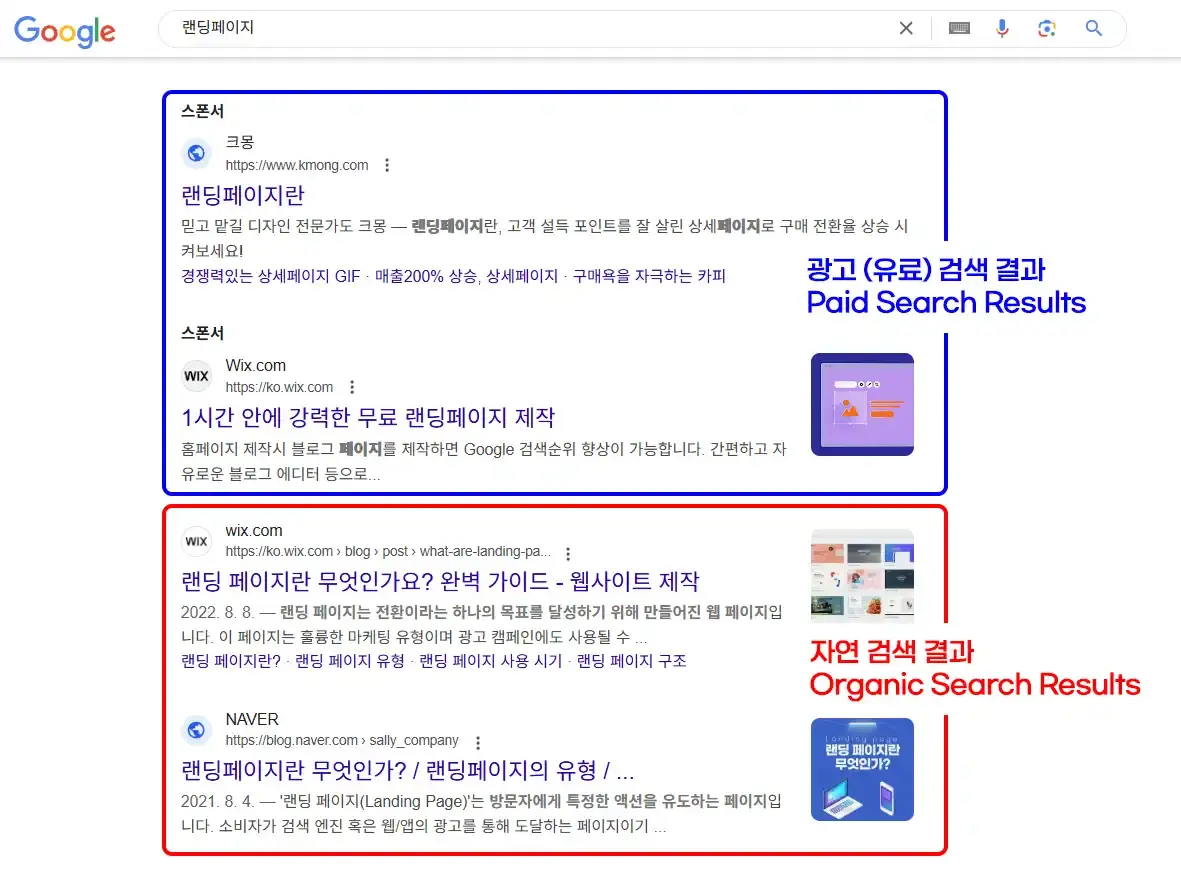
Organic Search Results — A Source of High-Trust Information
Organic search results are the list of websites whose ranking is determined by a search engine’s algorithm, which comprehensively evaluates a page’s content, quality, user experience, authority, and more. They’re called “organic” because their ranking comes purely from the search engine’s objective algorithm, with no artificial intervention like paid placement. Users tend to see organic results as the most trustworthy information, and they occupy the central real estate of a SERP.
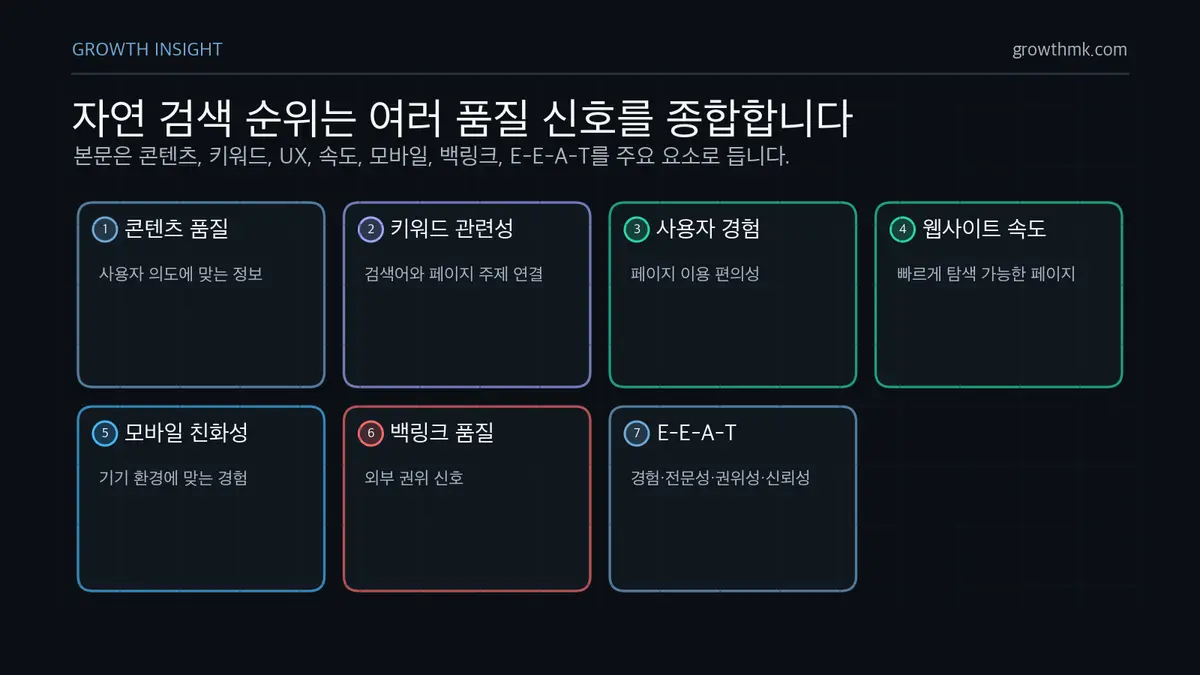
A search engine’s algorithm weighs hundreds of different factors together to determine a page’s ranking. Google’s own documentation on how Search works explains that “relevance is determined by hundreds of factors, including things like the user’s location, language, and device.” The major factors include content quality, keyword relevance, user experience, site speed, mobile-friendliness, backlink quality, and E-E-A-T (Experience, Expertise, Authoritativeness, Trustworthiness). Ranking at the top of organic search is a core SEO goal, and it brings a range of positive effects — sustained traffic growth, higher brand awareness, and more leads. SEO practitioners work continuously toward that top organic ranking, and need to keep revising and improving their strategy as search algorithms evolve.
Paid Search Results — Fast Exposure and Immediate Impact
Paid search results are website links a company pays a search engine to show against a specific keyword. They typically appear at the top, bottom, or side of the SERP, labeled with something like “Ad,” “AD,” or “Sponsored.” The advantage of paid results is getting fast, immediate exposure that organic results can’t match. They’re especially useful for concentrating traffic in a short window, or maximizing visibility during a specific promotional period.
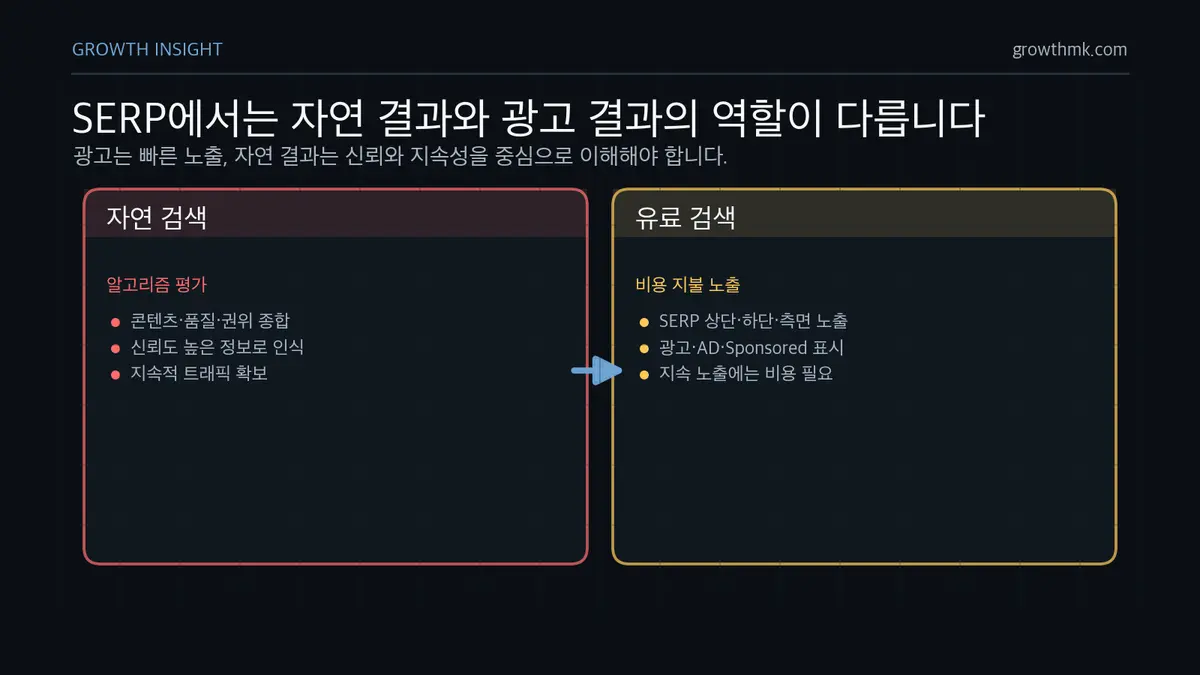
That said, paid results tend to be perceived as relatively less trustworthy than organic results, and maintaining exposure requires ongoing spend — a real downside. That’s why it’s important to use paid results in a balanced strategy alongside organic results, with clear goals and efficient budget management.
Meanwhile, today’s SERP goes well beyond a simple list of website links — it now serves the information that best matches a user’s search intent in a range of formats, including featured snippets, PAA (People Also Ask), and image carousels.
Featured Snippets — Fast, Clear Answers to Questions
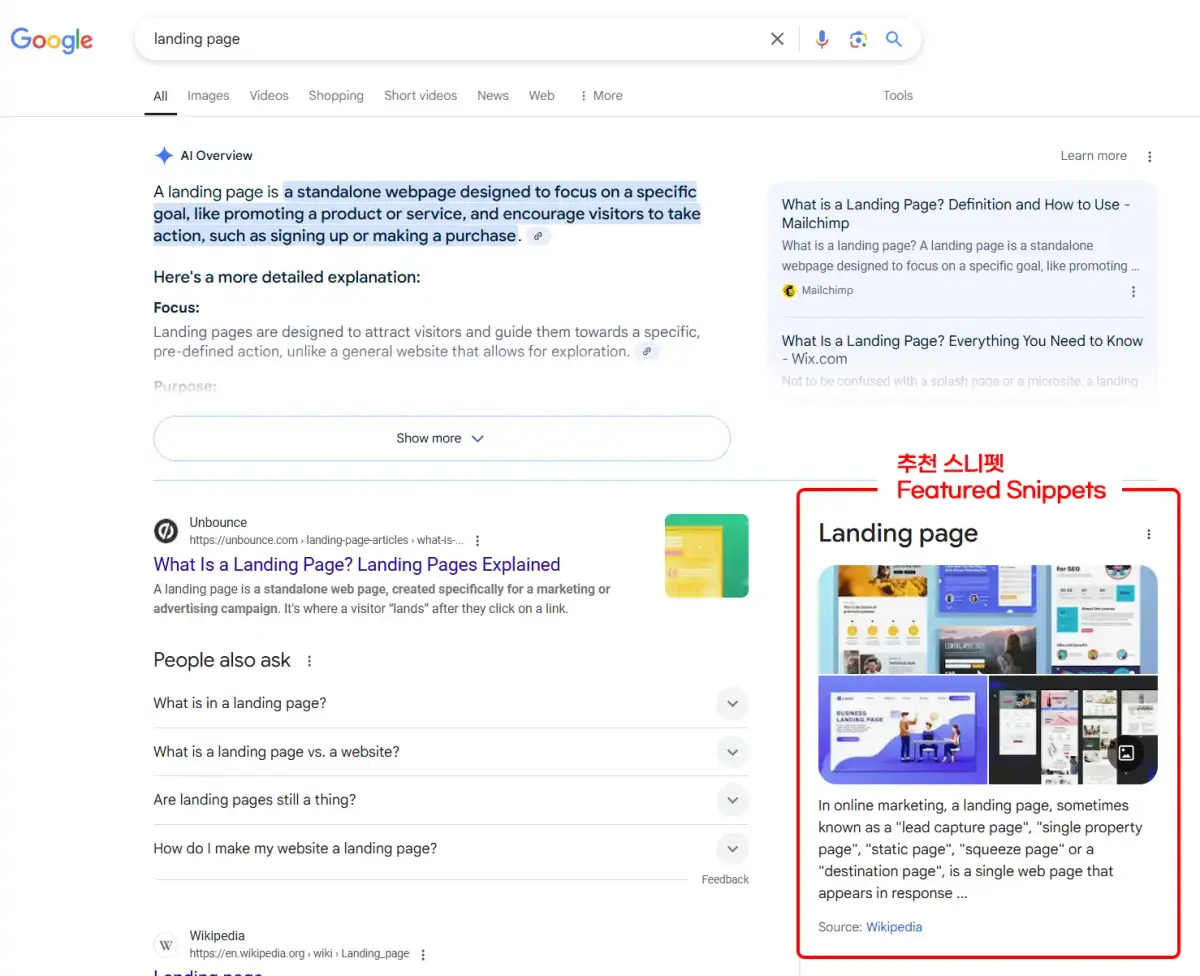
A featured snippet is a feature where, for a question-style search query, the search engine places the answer it judges to be the best match directly at the very top of the SERP. It can appear in a range of formats — text, a table, a list, video — and lets users grasp the core information they were looking for instantly, without ever clicking through to a website.
Featured snippets are sometimes called “position zero,” and can be worth even more than the number-one organic result. That said, Google’s own documentation explains that you can’t designate a featured snippet directly — Google’s systems automatically decide which page to feature. So to earn a featured snippet, what matters is a Q&A optimization strategy: accurately understanding a user’s question intent, and providing a clear, concise answer within your page’s content.
PAA (People Also Ask) — An Ever-Expanding Feast of Questions and Answers
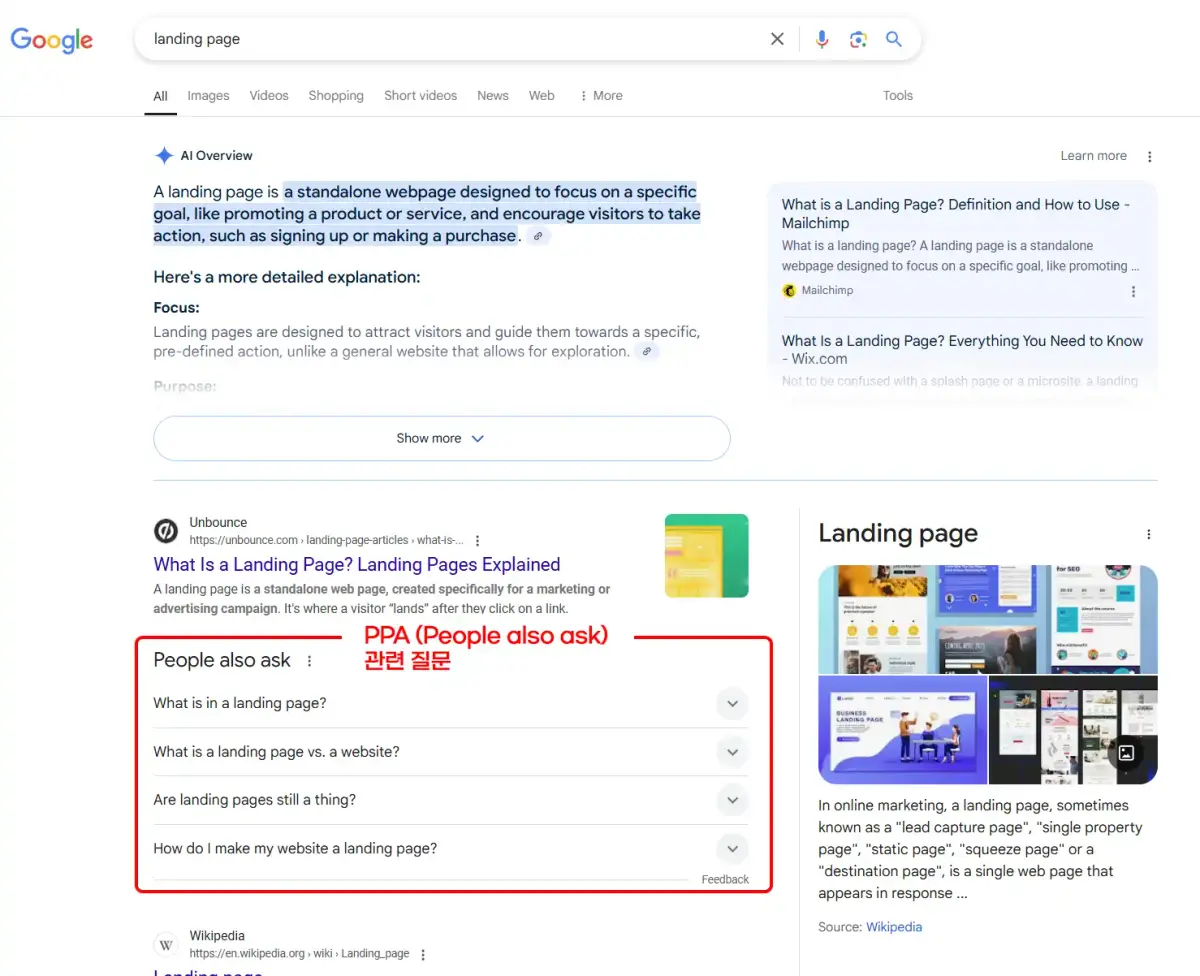
PAA, or “People Also Ask,” is a feature that shows a list of questions related to a user’s search keyword directly in the SERP. It typically appears as a box below the featured snippet or within the organic results area, with each question expandable via a “∨” button to reveal its answer. PAA’s defining trait is that it keeps expanding: click a question, and along with a brief answer, an entirely new set of related questions gets added — endlessly. This lets users keep extending their search journey, discovering questions and answers they hadn’t even thought to ask, and digging deeper into a topic.
PAA offers genuinely useful insight for planning SEO content. Because the questions that show up in PAA reflect what users are actually curious about on a given topic, they’re an effective source for uncovering content topics, structuring an FAQ page, and deepening existing content. PAA questions can also help you understand what information users want when they search a keyword — search intent — and shape your content-optimization direction. Put PAA data to active use when building a long-tail keyword strategy or targeting question-style keywords in your SEO approach.
Image Carousels — A Visual Way to Explore Information
An image carousel is a feature that shows a range of images related to a search query in a horizontally scrolling row at the top of the SERP. It typically appears for queries where visual information matters — products, places, people, concepts — letting users explore visual information quickly and get a more intuitive search experience.
Image carousels matter enormously in e-commerce in particular. Showing product images visually through a carousel when someone searches for a product can raise product awareness and drive purchases. Producing high-quality product images and then applying image SEO — including alt text — can raise how often your images appear in a carousel.
Why the SERP Matters in SEO
The SERP is both the most important benchmark and the ultimate goal in any SEO strategy. The whole point of SEO is getting your website to rank high on the SERP — especially high in organic results — to drive more users to visit your site.
Ranking high on the SERP carries real significance:
- High traffic: ranking high on the SERP leads to a higher click-through rate, substantially increasing your website’s visitors. Ranking high in organic results in particular contributes to steady, sustained traffic.
- Stronger brand awareness and trust: users tend to see a website that ranks high on the SERP as a more credible source of information. Ranking high is an effective way to build both brand awareness and trust.
- Higher conversion rate: high traffic and brand trust ultimately contribute to your website hitting its goals — product purchases, sign-ups, inquiries — which translates into a higher conversion rate.
In short, the SERP is a core element of your website’s success online, and SEO is the essential strategy for optimizing your presence on it. It’s important to build a genuine understanding of what makes up a SERP, then design and execute an effective SEO strategy to get your website ranking high on it.
Related Reading
- The Complete A-to-Z Guide to SEO Marketing
- How to Write Title Links That Boost Search Ranking (+ Prompts)
- SEO Marketing Case Study Analysis — Content Strategy Built on Keyword Research
- Video Search Optimization: Using YouTube Titles, Descriptions, and Tags
- Why Image Search Optimization Matters, and How to Do It
Want to apply this to your own business? — Visit our SEO service page to see our approach to growth, or get in touch for a specific diagnosis of your situation. We measure success by the one customer who becomes revenue, not by traffic volume.
Frequently Asked Questions (FAQ)
What’s the difference between organic and paid search results?
Organic results are ranked by a search engine’s algorithm evaluating content quality, relevance, authority, and more, with no artificial intervention like paid placement — which is why users trust them highly. Paid results, on the other hand, are links a company pays to show against a keyword, marked with “Ad” or “Sponsored,” offering immediate exposure but requiring ongoing spend to maintain. Using both in a balanced way, matched to your goals, is the important strategy.
How does a page get featured in a Featured Snippet?
A featured snippet shows the answer judged best-matched to a question-style query in a box at the very top of the SERP — sometimes called “position zero.” According to Google’s own documentation, you can’t designate a featured snippet directly — Google’s systems decide automatically whether to show one. Including a clear, concise answer (in Q&A format) matched to the question’s intent within your content is the best way to raise your odds of being featured.
How do you use PAA (People Also Ask) in SEO?
PAA shows a list of questions users are genuinely curious about, related to a search keyword. Because these questions directly reflect user search intent, they’re great raw material for uncovering content topics, structuring an FAQ page, and deepening your content. Targeting question-style long-tail keywords and providing a direct answer within your content can raise your odds of showing up in both PAA and featured snippets.
Why does ranking high on the SERP matter?
Ranking high on the SERP drives a higher click-through rate, substantially growing your traffic, and users tend to trust a higher-ranked site more, boosting brand awareness and trust. That traffic and trust ultimately translate into a higher conversion rate — purchases, inquiries, sign-ups. That’s why the SERP is treated as both SEO’s benchmark and its ultimate goal.
Marketing Insights
Marketing insights, delivered weekly
Practical growth and GEO/B2B marketing insights, summarized in your inbox every week.
Subscribe for insights