
What Is a Seasonal Keyword (SK)?
 임재복
임재복
A seasonal keyword (SK) is a keyword whose search volume spikes sharply around a specific time, season, or event.
These are terms with high demand during a specific window — a holiday, an event, a season. Using keywords tied to a particular date lets you optimize your content and campaigns around it.
The advantage of a seasonal keyword is that it can piggyback on a topic already drawing attention, generating more interest and engagement than simply including a keyword would on its own.
That said, there are things to watch for when using seasonal keywords. It’s easy to get so absorbed in seasonal keywords that briefly drive a lot of traffic that you don’t have the resources left to build content that stays popular over the long run.
So it’s important to choose seasonal keywords carefully and balance them properly against your existing keyword strategy.
Whether a seasonal keyword is worth using depends on whether your goal is short-term or long-term. Using seasonal keywords can actually work against your efforts to hit long-term SEO goals.
That’s why, when using seasonal keywords, it’s important to analyze your own industry and product carefully and understand your customers’ interests and search trends.
And based on that, choosing the right, effective seasonal keywords and applying them to your content and marketing is the core of a successful seasonal strategy.
This article covers why seasonal keywords matter and how to put them to direct use in marketing. We’ve also brought along some marketing case studies that used seasonal keywords.
Let’s find out together which keywords could be this year’s secret weapon for boosting revenue and results.
Why Seasonal Keywords Matter
Using seasonal keywords lets you create content that resonates with your audience.
Better Relevance and Visibility Through Timely Opportunities
Seasonal keywords let you seize opportunities right when they matter — especially during peak seasons or event periods. Building content around these keywords attracts highly engaged users and maximizes brand awareness online during key windows.
This, in turn, deepens users’ interest in the brand. Seasonal keywords also let you connect more closely with users online.
For example, planning different events by season and using the keywords that match them to engage with users can boost brand image and lift user engagement.

Weaving in seasonal keywords improves your content’s relevance, so it surfaces better for users searching around a particular seasonal topic.
Search engines, in particular, place a lot of weight on content that’s timely and kept up to date. Google’s own helpful content guidelines even recommend asking, as part of a self-assessment of content quality, “Is the content kept up to date?” Content published in a timely way using seasonal keywords is that much more likely to surface in related search results.
In summer, for instance, you’d expect a lot of use of keywords related to cold drinks, swimwear, and the beach. Making active use of summer-relevant keywords, then, can help you surface better in search engines.
Using keywords that match the season this way boosts your content’s relevance and can help it surface better in search engines — which, in turn, delivers a better search result for users too.
Seasonal SEO strategy can be broadly split into time-based and event-based categories.
Both share the ability to drive conversions within a short window. Making use of a variety of seasonal keywords can also be a big help in raising brand awareness.
Adapting to Market Dynamics
Market dynamics refer to the forces and factors that influence buyer and seller behavior within a market. These dynamics are the outcome of a range of factors — supply and demand, competition, economic conditions, consumer preferences, and outside influences.
Analyzing market dynamics helps a business understand the ever-shifting nature of the market and make informed decisions to adapt and grow.
Seasonal keywords play an important role in both shaping market dynamics and responding to them.
Seasonal keywords let a business offer products that match current consumer trends and preferences. By weaving in keywords tied to a specific season, a business can tap into rising demand for seasonal products or services.
Certain industries too — retail, travel, hospitality — see demand fluctuate with the seasons.
Using seasonal keywords lets a business tailor its marketing effort to capture that fluctuating demand, meeting the rise in demand during a specific window.
Seasonal keywords inherently convey urgency and scarcity. Consumers are more likely to engage with content that emphasizes a product or service’s timely, seasonal nature, creating a sense of exclusivity tied to the season.
Ultimately, seasonal keywords shape consumer behavior by drawing attention to products or services that are especially relevant or desirable at a particular moment.
That helps a business shape consumer perception and encourage seasonal buying patterns.
Seasonal Keyword Trends by Season
Seasonal keyword trends are like the shifting colors of the digital landscape. Understanding these dynamics is the first step toward building a clear, effective digital strategy.
Among the many kinds of seasonal keywords, calendar-season keywords are the easiest to apply, for B2B and B2C businesses alike. Let’s look at examples for some ideas in this section.

- Just as nature comes back to life in spring, so does online search.
- Keywords tied to gardening, home improvement, and outdoor activities become noticeably more prominent.
- “Spring cleaning tips,” “gardening essentials,” and “outdoor workout routines” become popular search terms.
- Decision-makers can tailor content and ad campaigns to match users’ fresh interests over the spring season.

- In summer, searches related to travel, outdoor activities, and seasonal events spike.
- Users look for information on “vacation,” “summer fashion essentials,” and “outdoor barbecue recipes.”
- Tailoring content to these hot-summer searches means your brand is the first thing users think of as they start planning a summer trip.

- As the leaves fall, searches take on a cozy, festive mood.
- In autumn, searches spike for terms like “fall fashion trends,” “Chuseok recipes,” and “best fall foliage spots.”
- Advertisers can capture their audience by weaving these autumn keywords into their content strategy and connecting seamlessly with their target demographic’s seasonal interests.

- In winter, users turn to the digital world for Christmas, the first snow, winter sports, and cozy indoor activities.
- Search trend analysis shows keywords like “year-end deals,” “winter fashion trends,” and “Christmas gifts” consistently spiking in popularity.
- Tailoring content to these winter-centric keywords secures visibility and engagement throughout the festive, cold-weather season.
Looking at these seasonal keyword examples, you can now put a keyword like “year-end holiday season” to active use as well.
During the holiday season, a wide range of searches emerge — from gift ideas and festive recipes to travel plans and winter fashion. You could actively use keywords like “gifts under $50,” “holiday travel tips,” and “DIY festive decorations.”
Building content around these holiday keywords can get you noticed by customers soaking up the festive mood, and maximize engagement.
Seasonal Keyword Case Studies
Starbucks

Starbucks is already a beloved beverage brand around the world. A lot of achievements have gone into getting the brand where it is today.
Among them, one thing that draws a lot of consumer attention every year is its year-end seasonal drinks and limited-time promotions.

Starbucks also shares its holiday merchandise, which changes every year, on social media. It’s often cited as a great example of content marketing built together with users.
In short, Starbucks has earned a lot of love through product marketing built around seasonal keywords.
And it doesn’t stop there — its content marketing centers on user conversation and participation. This suggests that creating good content isn’t confined to the company’s role alone — customers can become content creators too.
You can find more examples of content marketing that maximizes user engagement here.
e.l.f

e.l.f Cosmetics is a brand that sells makeup and skincare products at accessible prices. The brand is rooted in three pillars: value, innovation, and community engagement. Over nearly 20 years, it’s kept prices at roughly the same level and earned genuine consumer love along the way.

Given that community engagement is a core value, e.l.f Cosmetics has also actively leaned into seasonal keywords.
e.l.f’s new holiday package featured 12 makeup products designed to help customers enjoy the year-end season in style.
And that’s not all. Right after the package launched, e.l.f ran a “30-second unboxing challenge” on social media, encouraging people to open the eye-catching holiday package within 30 seconds.
The package also contained 12 randomized makeup items, so customers saw a fresh reaction each time a box was opened.
Through the online challenge, e.l.f encouraged a large number of people to film themselves opening the holiday package, offering the chance to receive more products in the process.
The “30-second unboxing challenge” managed to hit multiple goals — boosting revenue, raising product and brand awareness, and sparking a viral challenge — with a single campaign.
Amazon

Black Friday is at the heart of Amazon’s seasonal marketing. It’s when Amazon rolls out a wide range of discounted products to capture consumer attention.
According to Amazon’s own announcement, customers ordered more than 500 million products from independent sellers on the platform — most of them small and midsize businesses — during the Black Friday and Cyber Monday holiday shopping event. It also noted that millions of people signed up for Prime membership during that period.

Starting in July, Amazon runs “Prime Day,” a pre-Black-Friday sale exclusive to Prime members. It lets Prime members get a head start on year-end shopping, while also giving non-members an incentive to sign up for Prime.
A few weeks before Black Friday, Amazon also runs “early bird deals” to build anticipation and encourage early purchases. During this period, it sends targeted emails based on customers’ past purchase history and search behavior to create a personalized shopping experience.
During this window, it also offers gift guides and curated content to help customers find the gifts they’re looking for, and spreads this content on social media to build anticipation and buzz around Black Friday.
Once Black Friday itself arrives, Amazon launches “Lightning Deals” and “Deal of the Day” campaigns all week, offering limited quantities and steep discounts across a range of products. The core idea is to create urgency that pushes customers to buy quickly.

Cyber Monday, the day after Black Friday, is another one of Amazon’s seasonal keywords. It gives customers yet another chance to buy year-end gifts at a discount.
Amazon also extends some of its Black Friday discounts for a few days afterward, giving customers who missed the initial deals a chance to buy.
Holiday and Observance Ideas
Beyond this, plenty of companies both in Korea and abroad focus their seasonal marketing on observances and holidays.

This counts as a form of “fun marketing” built on seasonal keywords.
It’s also drawn attention as a distinctive marketing approach that gives consumers a memorable experience. As April 1st approaches each year, plenty of users look forward to seeing what Naver Webtoon’s thumbnails will look like.
Here are a few more “great occasions for marketing” that we at Growth recommend:
- Teachers’ Day
- Halloween
- “Day” observances (e.g., Valentine’s Day, White Day, Rose Day, Pepero Day)
- Sports-related promotions: the Asian Cup, the Olympics, the World Cup, etc.
- International film festivals
- Expos, trade shows, World IT Show
- Elections
- College entrance exam season (D-100, D-50, D-Day)
Ad Strategy Built on Seasonal Keywords
No matter how well you’ve built a campaign around seasonal keywords, it’s not a successful marketing effort if it never reaches your customers.
To maximize the reach and impact of a seasonal campaign built on seasonal keywords, you need to tailor your approach across social media, search engines, display ads, and email marketing.
In particular, seasonal keywords are especially likely to come through mobile search. That makes it important to make sure the user experience holds up smoothly across different devices.
A mobile-friendly landing page, for example, makes it that much easier to get exposure.

You also need to understand that other businesses may be targeting the same seasonal keywords during peak season.
That means staying mindful of the competitive landscape while building a campaign that emphasizes your own unique selling points. Our post on the difference between customer needs and wants can make this easier to understand.
Peak season can also intensify competition for ad space, which can drive up bid costs. It’s important to plan your budget in advance so you can absorb ad-cost fluctuations during high-demand periods.
How to Analyze Seasonal Keyword Search Volume
Google Trends
Google Trends is a powerful tool for understanding seasonal trends in search volume. Using Google’s guide to interpreting Trends data can help you optimize content and performance marketing activity around seasonal events like Black Friday or Christmas.

Try entering a keyword you’re interested in on Google Trends and analyzing the 12-month interest graph.
This lets you clearly visualize how search volume shifts over the course of a year, and highlight the seasonal peaks and troughs.
The “Related topics” and “Related queries” sections also let you discover related keywords with similar seasonality, expanding your list of potential target keywords.
You can also compare multiple keywords to see how their seasonal patterns differ, which can help identify seasonal keywords worth targeting.
Google Trends has the advantage of letting you narrow your search through a range of options. For example, you can segment your target audience further with more detailed search options like these:
- Time range: select a specific time range to focus on the season you’re interested in.
- Location: filter by location to see search trends for a specific region or country.
- This feature is especially useful for seasonal events whose popularity varies by region.
- Category: narrow your search by category to analyze trends within a specific product category or industry.
Checking the “Trending searches” section lets you spot keywords whose search volume is rapidly climbing.
That lets you anticipate upcoming trends and potentially target a new seasonal keyword before it becomes mainstream.
Google Trends also often highlights popular topics and events tied to a particular season, offering insight into emerging seasonal trends that can spark marketing ideas.
Naver DataLab
Given the distinct nature of the Korean market, which revolves around Korean-language search, Naver DataLab is just as important as Google Trends.
Considering that Naver still holds more than half of the domestic search market (roughly 51–55% as of 2023 figures), it may deserve even higher priority for Korean-language keyword analysis.
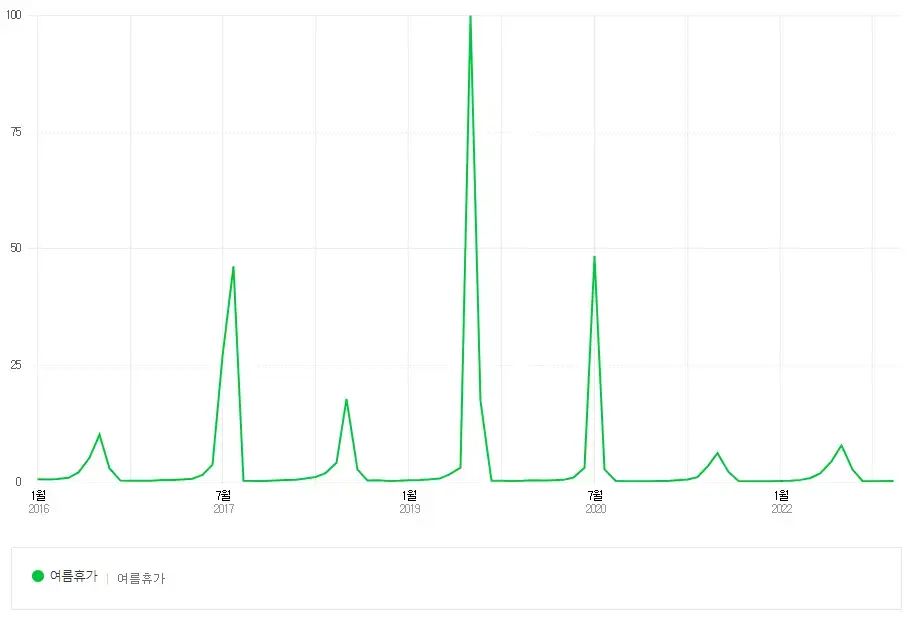
Offering nearly the same functionality as Google Trends, Naver DataLab provides popular search terms and categories by field, search-term trends, and shopping insights.
Analyzing Competitors
Tools like Ahrefs or SEMrush let you see which keywords your competitors are focused on.
Narrowing your search by date range and keyword category in Ahrefs lets you spot keywords whose search volume suddenly spikes around a particular season or event.

Entering a competitor’s domain into SEMrush and analyzing its “Positions” report lets you focus on keywords with seasonal trends and see how your competitor ranks on them.
You can also use traffic share or estimated visit data to gauge each keyword’s potential value.
Combining data from both platforms gives you a more complete picture.
Do you know the long-tail keywords your competitors are focused on right now?
Defining and finding long-tail keywords that capture what customers really want, and how to put them to work in marketing
Using Keyword Research Tools
Seasonal keywords are easy to spot clearly in historical trend data. Tools like Moz or Ubersuggest let you identify long-term seasonal patterns.
The point of using seasonal keywords is to analyze and match the specific needs and interests of your target audience as the season changes. That’s why it’s important to monitor seasonal keywords regularly using a keyword research tool.
For keyword research tools built for a domestic Korean audience, you also have analysis tools like Sometrend and Naver DataLab. Making active use of these can help you uncover the keywords Korean users are talking about each season.
Planning a Marketing Calendar
The single most important thing about using seasonal keywords is preparing ahead of time. That’s why diligent marketers build out a marketing calendar and plan their year ahead every year-end, in preparation for the year to come.
If you’re looking to plan next year around seasonal keywords, take a look at the marketing calendar we at Growth put together. You’ll find explanations and dates for major events each quarter.
Just Remember These Three Things About Using Seasonal Keywords
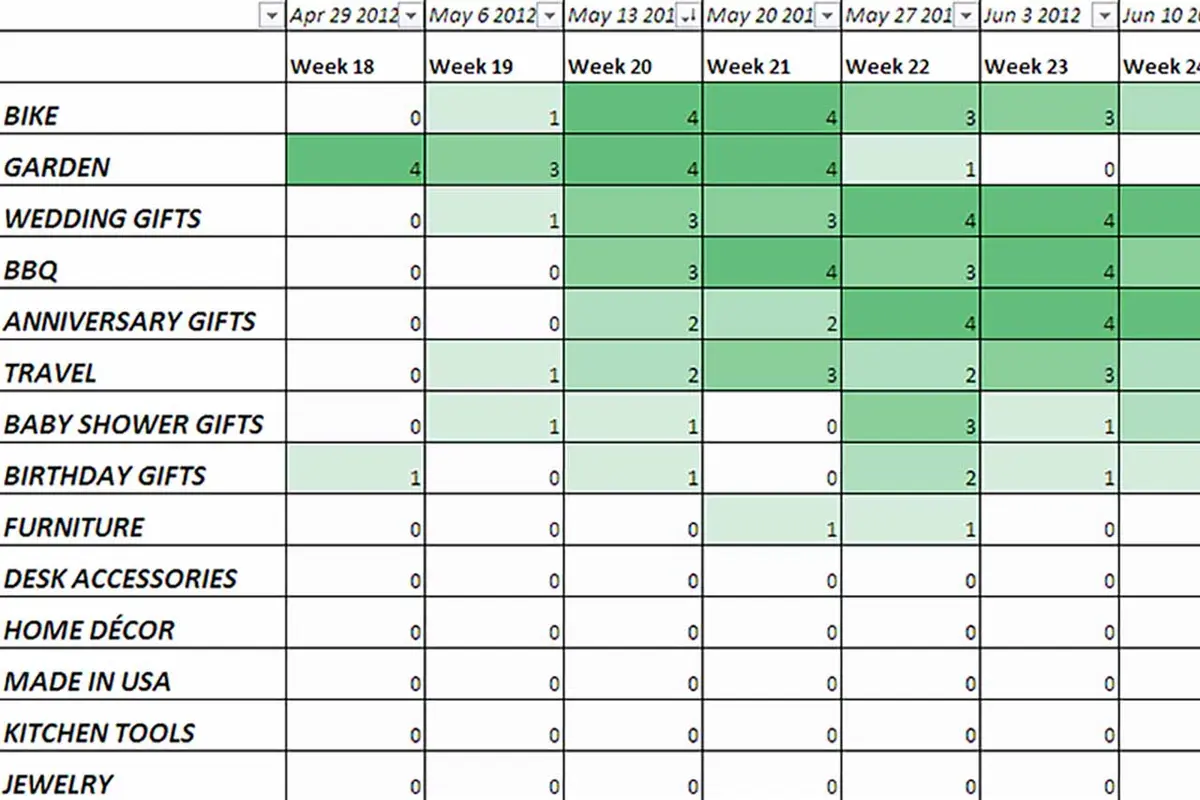
Seasonal keywords play a core role in marketing strategy.
In this article, we’ve taken a close look at the definition and importance of seasonal keywords, how to analyze search volume and trends, and real-world use cases — and now we understand how seasonal keywords can be applied to an ad strategy.
Finally, if you’re just getting started with seasonal-keyword-based marketing, here are the three things to remember.
Keep Testing a Range of Keyword Variations and Combinations
Analyzing and understanding seasonal keywords helps you grasp your consumers’ interests and tendencies. Seasonal keywords are also a big help for identifying how consumer needs shift by season, so you can deliver the right ad message at the right time.
But rather than fixating on a single keyword, experiment with a range of keyword variations and combinations to uncover the hidden gems.
Finish Publishing Before the Season Starts
Building an ad strategy around seasonal keywords lets you deliver a more intuitive, better-targeted message to consumers.
But you need to start researching months before the season begins, so you can lock in campaign resources early. It’s also important to monitor how your seasonal campaign is performing and adjust your strategy based on the data you collect.
Understand Your Customer
Finally, remember that a seasonal keyword isn’t just a search term — it’s a word tied to consumers’ actual lives. That’s why seasonal-keyword-based marketing needs to be built around your audience’s intent and search behavior.
When using seasonal keywords, it’s important to commit to staying one step ahead of how consumers’ thinking and interests shift with the seasons — not treating them as a tool for a fleeting burst of buzz.
Related Reading
- Marketing Keyword Research Strategy, From Kickoff to Feedback
- Does High Keyword Density Mean Better Content?
- Analyzing Keyword Difficulty and Choosing Keywords Efficiently
- Long-Tail Keyword Use Cases and How to Apply Them in Marketing
- What Are Primary and Secondary Keywords? Using Them in Content
Want to apply this to your own business? — Visit our SEO service page to see our approach to growth, or get in touch for a specific diagnosis of your situation. We measure success by the one customer who becomes revenue, not by traffic volume.
Frequently Asked Questions (FAQ)
What exactly is a seasonal keyword?
It’s a keyword whose search volume spikes sharply around a specific time, season, or event. These are terms with high demand during a specific window — a holiday, an event, a season — the classic examples being “air conditioner repair” spiking in summer or “Christmas gifts” spiking at year-end. Optimizing content and campaigns around timely keywords can boost interest and engagement.
How far ahead should you start preparing seasonal keywords?
The key is starting months before the season begins. Search engines favor timely, up-to-date content, so publishing right before a season starts makes it easy to lose out to the competition. As emphasized above, diligent marketers build next year’s marketing calendar at year-end and finish publishing content before the season starts to lock in resources ahead of time.
What tools can you use to analyze seasonal keyword search volume?
Google Trends is the go-to tool for spotting seasonal trends in search volume, along with related and trending searches. In the Korean market, Naver DataLab matters just as much because of the specifics of Korean-language search. Beyond that, Ahrefs and SEMrush can show which seasonal keywords competitors are focused on, while Moz and Ubersuggest can reveal long-term seasonal patterns. Combining data from multiple tools gives you a more complete picture.
Is it okay to focus exclusively on seasonal keywords?
We don’t recommend it. Getting too absorbed in seasonal keywords that briefly drive traffic can leave you without the resources to build evergreen content that stays popular consistently. Peak season can also drive up ad bid costs as competitors chase the same keywords. It’s important to balance seasonal keywords properly against your existing keyword strategy, emphasize your own unique selling points, and plan your budget in advance.