
5 Checklist Items You Need to Nail Before Running a Supporters Program
 임재복
임재복

What can you actually get from a brand supporters program? | Setting a goal
Building brand awareness, securing early reviews, recruiting beta testers, building a pool of brand ambassadors, discovering new ideas — the reasons companies run a supporters (brand ambassador) program are wide-ranging. It’s easy to see why the recommendations and reviews a supporters program generates are so effective: in Nielsen’s Global Trust in Advertising study, 83% of respondents worldwide said they trust a “recommendation from someone they know” more than anything else — which is exactly why word-of-mouth marketing driven by supporters earns more trust than a brand’s own one-sided advertising. And yet, surprisingly many supporters programs are run without a clear objective.
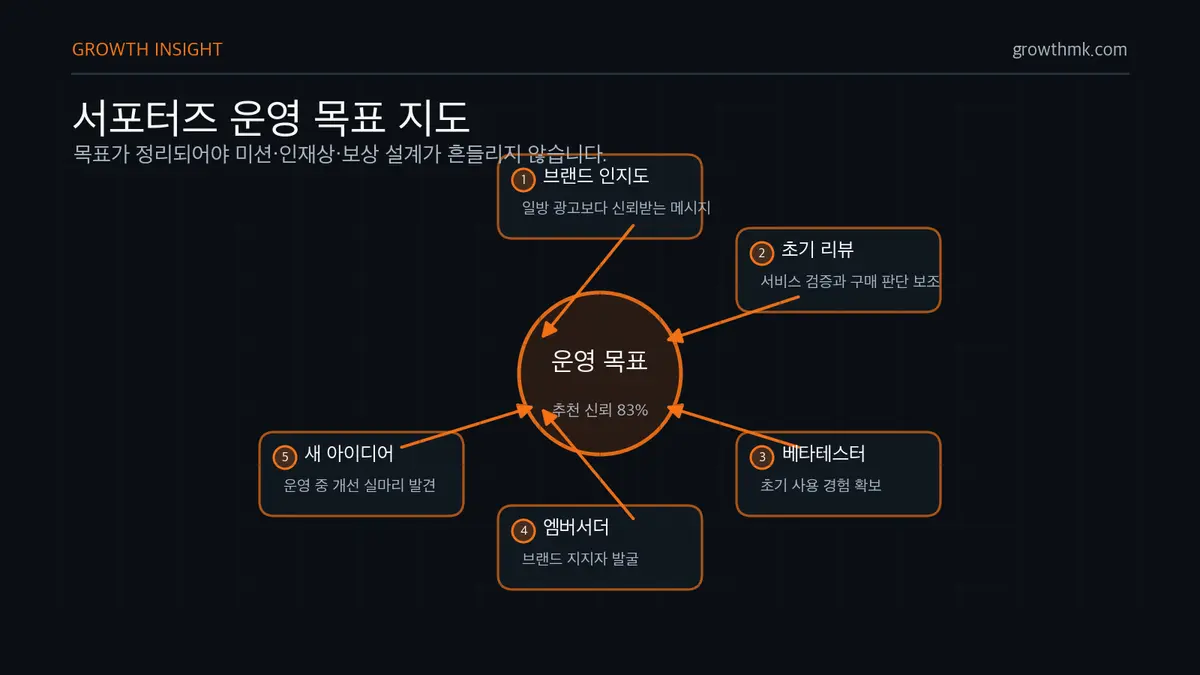
The first thing you need to do to run a supporters program properly is set a clear goal for what you actually want to get out of it.
What mission should you give your supporters? | Setting a mission
This is closely tied to who your target profile is. You need to understand what missions your supporters can actually carry out — and what they’re actually good at. Let me walk through a couple of examples.
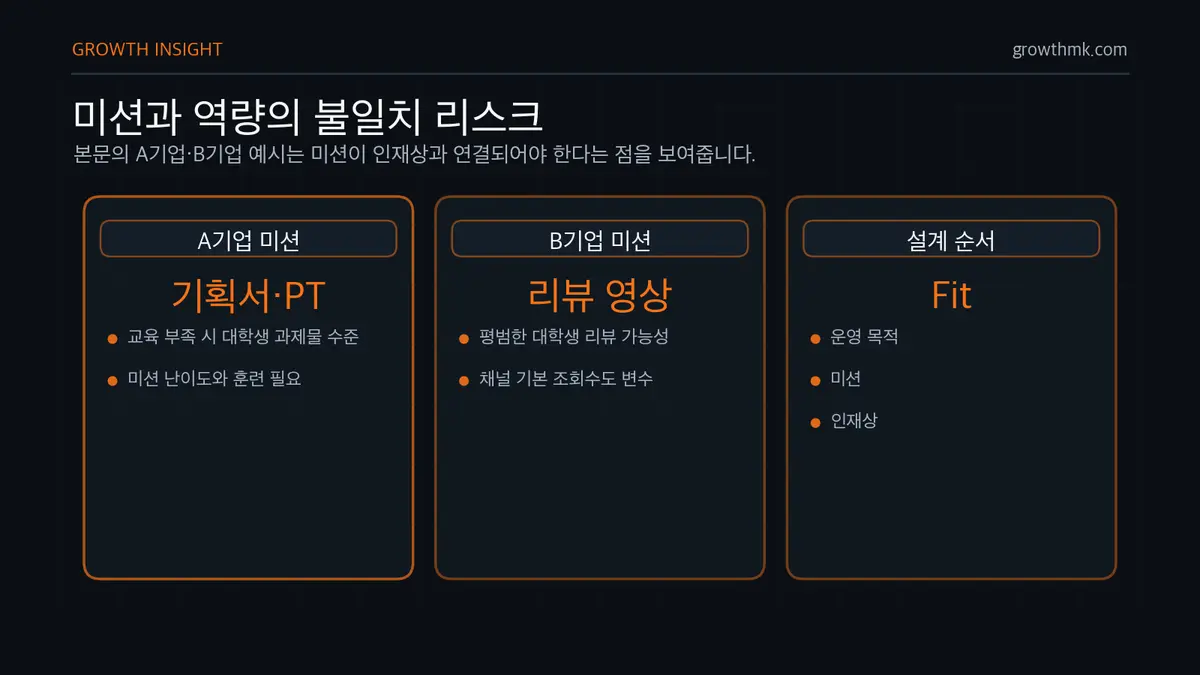
Say Company A runs a college-student supporters program and assigns “write a marketing proposal deck and present it” as the mission. If the supporters aren’t given adequate training in how to write a proposal and present it, the output they produce will end up at roughly the level of a college assignment.
Now say Company B runs a college-student supporters program and assigns “produce a review video on YouTube” as the mission.
The review videos these supporters make won’t be at the level of a “professional review YouTuber” — they’ll be at the level of an “ordinary college student.” And the YouTube channels they upload to won’t have a large subscriber base or a reliable baseline view count either.
Once you’ve decided what mission fits your program’s objective, you then need to define the target profile that matches it.
How do you find the right people? | Defining the target profile
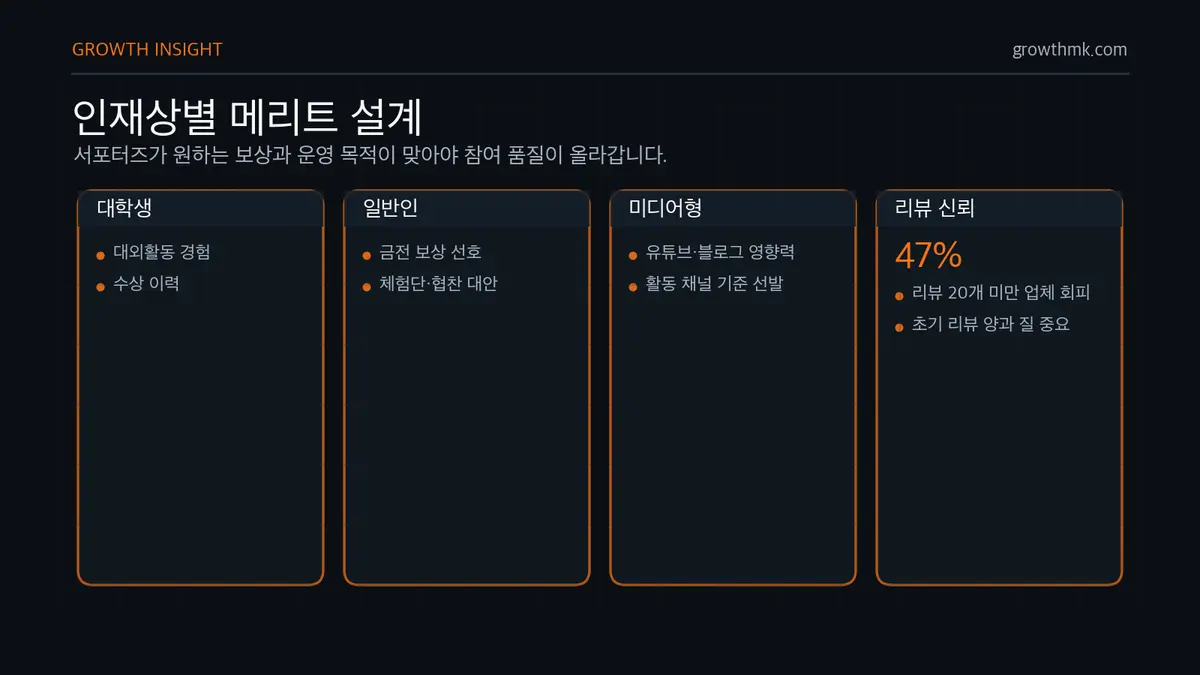
First, you need to define who you’re actually looking for. The right profile could be a college student majoring in a specific field, a consumer who’s genuinely interested in a specific category, or someone with real influence on a specific medium like YouTube or a blog.
To nail down this target profile, you have to define exactly what activities the supporters will carry out and what concrete goal you’re trying to reach through them.
Next, think about what you can actually offer these supporters in return. For college-student supporters in general, what tends to matter most is extracurricular experience and award records they can put on a resume or cover letter.
So one option for making your program more attractive is simply expanding how many awards or recognitions you give out.
General-public supporters, on the other hand, tend to want monetary compensation more often — in which case a paid trial/sampling model or a sponsorship arrangement, where you provide a product or service in exchange for a review, can actually be more cost-effective. Reviews gathered this way have a direct impact on purchase decisions: according to the BrightLocal Consumer Review Survey, 47% of consumers say they won’t use a business with fewer than 20 reviews — which shows just how much the volume and quality of your early reviews matters.
The highlight of any supporters program — how do you prepare the kickoff and closing events?
An in-person event costs money and time, but the bigger issue is turnout.
Since most supporters are students or full-time employees with their own primary obligations, if the venue is far from where they live, they may simply not be able to attend an in-person event.
To account for this, you can limit recruitment to a specific region from the outset, schedule the event on a weekend or public holiday, time a college-student program around school breaks, or run the event online at the same time using a video conferencing tool.
Preparing events in the order of schedule → venue → staffing → supplies → everything else helps minimize mistakes.
How should you communicate with your supporters?
For a small team of staff to communicate with a much larger group of supporters, you need an efficient communication channel. There are plenty of options — a Naver Cafe, a KakaoTalk open chat or group, a KakaoTalk channel — but what matters most is that communication stays centralized and systematic.
For example, if only one staff member handles the supporters and that person suddenly becomes unavailable, forcing a rushed handover — or if two staff members are in charge and give the supporters conflicting information — all kinds of problems can arise when communication isn’t centralized and systematic.
So you should choose a method that keeps a proper record of communication, and start the work only once you’ve settled on clear rules for how that centralization will work.
What should you watch out for before running a supporters program?
By the nature of the work, there are certainly tasks you have to move forward with before every detail is settled.
But with a supporters program, even if not every detail is locked down, starting the work without having at least the five items above clearly worked out can lead to all sorts of problems down the line.
In particular, losing the trust of your supporters is an enormous cost. It’s essentially no different from spending money to run a program only to end up creating a hater instead of an advocate.
Conclusion
Growth has run supporters programs across a wide range of industries. That said, because how you run a program can vary enormously from project to project, from one company or organization to another, and depending on the nature of each supporters group, it’s genuinely difficult to reduce this work to a single manual.
Which means what really matters is the experience and judgment of whoever is running it. If you have to operate a supporters program yourself without prior experience, we’d strongly recommend thinking through the five questions above thoroughly before you begin.
If you’d like to apply this to your own business — you can see Growth’s approach in our content marketing service, and if you need a concrete assessment of your situation, reach out through our consultation form. We answer based on the one customer who becomes revenue, not on traffic volume.
Frequently Asked Questions
What’s the very first thing you should decide before running a supporters program?
A clear “goal.” Supporters programs serve all kinds of purposes — building brand awareness, securing early reviews, recruiting beta testers, building an ambassador pool — and if that purpose isn’t clear, the mission, target profile, and how you run the program all end up shaky. Deciding what you want to get out of it is the first step to running a proper supporters program.
How do college-student supporters differ from general-public supporters?
The two groups want different rewards. College-student supporters place a lot of value on extracurricular experience and award records they can put on a resume or cover letter, so you can raise your program’s appeal by expanding the scope of awards you offer. General-public supporters, on the other hand, tend to want monetary compensation more often, so a paid trial/sampling model or sponsorship — where you provide a product or service and ask for a review in return — can be more cost-efficient.
How should you manage communication with your supporters?
The key is “centralization” and “record-keeping.” You have plenty of channel options — Naver Cafe, KakaoTalk open chats and channels — but if communication isn’t centralized and systematic, you’ll run into trouble the moment a staff member is unavailable or two staff members send supporters conflicting messages. Choose a method that leaves a record, decide on the rules for centralizing communication first, and only then start running the program.
What should you be most careful about when running a supporters program?
Not losing your supporters’ trust. If you lose that trust after investing money in the program, you can end up creating a hater instead of an advocate. So at minimum, clearly work out the five core items — goal, mission, target profile, kickoff/closing events, and communication — before you start, and you’ll cut down on problems along the way.