
A YouTube Marketing Guide for B2B Companies
 임재복
임재복
Right now, the single most-used app in Korea by monthly usage time is, hands down, YouTube (ranked #1 in domestic usage time per Wiseapp data). Naturally, interest in YouTube marketing keeps climbing by the day.
Video marketing in particular delivers dramatically stronger communication power than static formats. In fact, according to Wyzowl’s State of Video Marketing survey, roughly 91% of businesses now use video as a marketing tool — it’s become a mainstream strategy. So it’s no surprise that when companies want to promote a product or service, video is one of the first tactics they reach for.
But before falling for the sales pitch of the countless YouTube marketing agencies out there, it’s worth taking a hard, realistic look at the situation.
If YouTube marketing is booming like this, why don’t we see B2B success stories? Let’s dig into what YouTube marketing actually is, and what it really means for B2B companies.
What Is YouTube Marketing?
Video marketing is a form of content marketing where you create video to promote a product or service. YouTube marketing specifically means uploading those videos to YouTube.
Video has a clear advantage: it can deliver detailed product explanations and user reviews in ways blog posts or photo-and-text content simply can’t. In that sense, it fills gaps that older content formats couldn’t cover.

YouTube reaches viewers worldwide. According to YouTube’s own figures, the platform is localized into 80 languages across more than 100 countries — its reach is enormous. Language barriers are minimal, and it integrates easily with other social platforms. That means even short-form content can carry a genuinely global marketing message.
On top of that, YouTube marketing offers a way to generate revenue directly through video content — for example, paying influential YouTubers to try out and review your product.
A YouTube Guide for B2B Companies
So does YouTube marketing actually work for B2B companies?
The short answer: probably not. You’re more likely to succeed as a YouTuber yourself than to grow a channel and use it effectively as a marketing engine.
The cost and time it takes to produce YouTube content is far greater than most people expect. And if you’re aiming for content that’s actually worth watching — not just a bare-minimum presence — that cost climbs even higher.
You end up pouring in far more resources than other marketing channels require, while genuine success stories remain extremely rare.
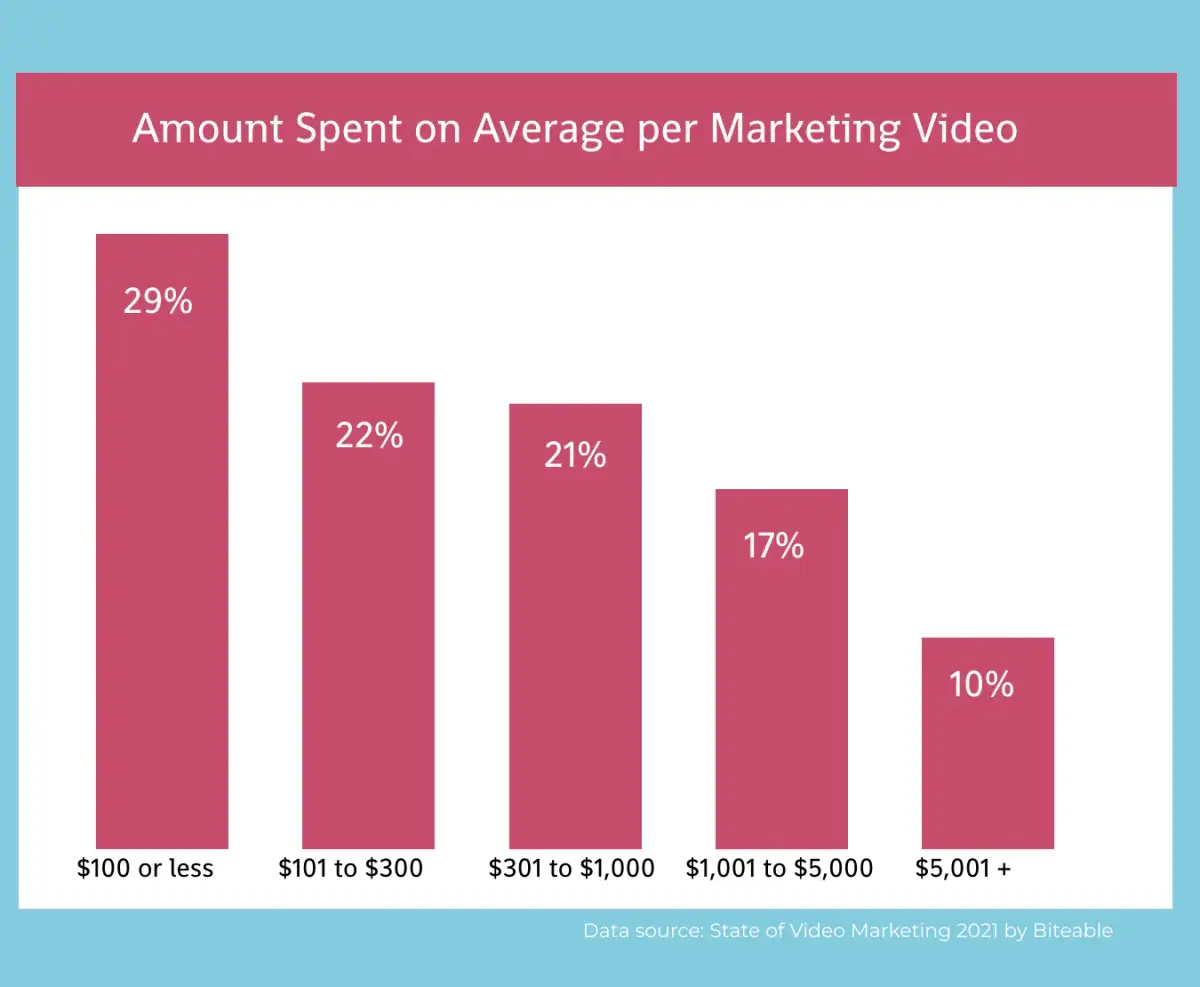
It’s not that success on YouTube is impossible — but when you weigh the probability of success and the resulting impact against the resources required, it’s a strategy with a strikingly low expected return.
Occasionally, people reach out to us after getting curious from reference cases shown by agencies claiming to specialize in YouTube marketing — or after seeing a famous online success story and wanting to replicate it.
But those cases succeeded against extremely long odds. We can say with confidence: 99.99% of the time, a B2B company’s YouTube effort fails.
Are There Any Successful B2B YouTube Marketing Cases?
Some of you might be skeptical — surely YouTube marketing can work for B2B too? Let’s break down both a B2B and a G2C YouTube case in detail.
Onyang Quarry’s “Pet Stones”
Onyang Quarry sells interior decorative stone, a business heavily exposed to the construction cycle. As the construction slowdown ate into revenue, the company was under real pressure.
Around that time, an employee named Kim Myeong-seong — hoping his efforts might help the company’s bottom line even a little — started posting videos, and the view counts he racked up were nothing short of remarkable.
A video that was, at its core, just footage of washing stones ended up topping nine million views. And along with it came a surge of interest in the “pet stone” product Onyang Quarry created.
The pet stone is a smooth, rounded egg-shaped stone with cute eyes, a nose, and a mouth drawn on it, priced at 10,000 won. Their 150 prepared sets sold out completely — a clear sign of how popular it had become.
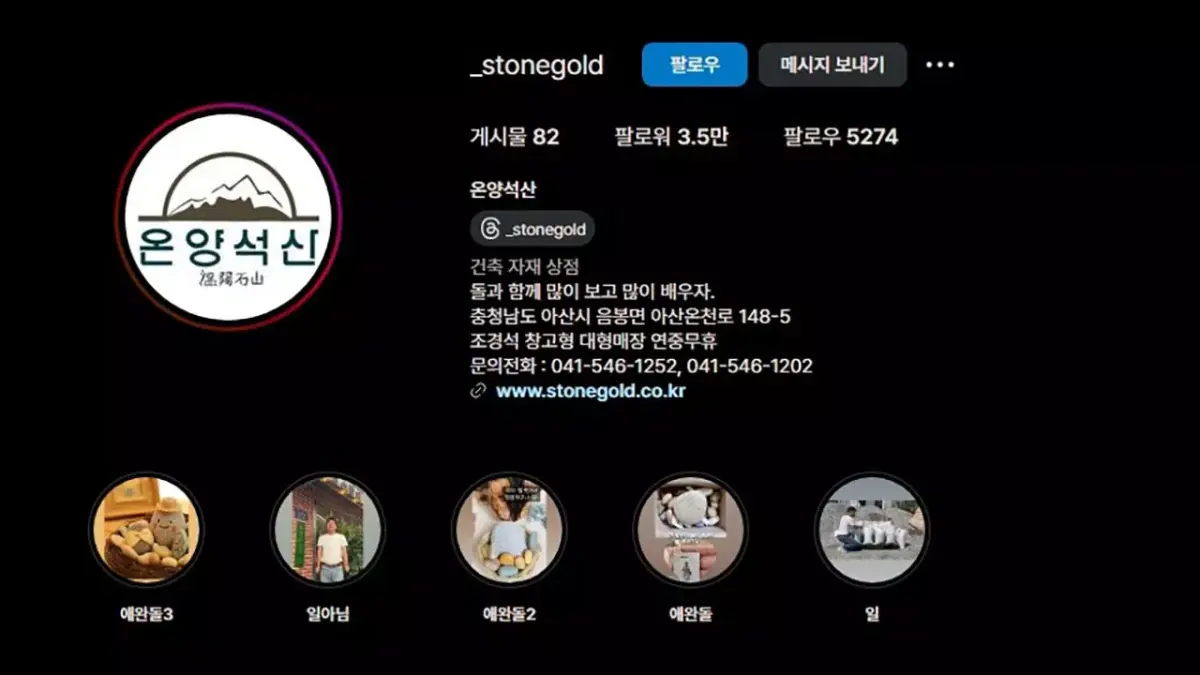
Subscribers who had grown fond of Onyang Quarry’s content suggested that “pet stones” were trending and that the company should launch the product — and the pet stone did indeed generate significant buzz.
But pet stones are a B2C product, and from Onyang Quarry’s own perspective, they were purely an event-style item meant to boost brand awareness — never something meant to move the needle on core revenue.
Let’s take a closer look back at the YouTube channel itself.
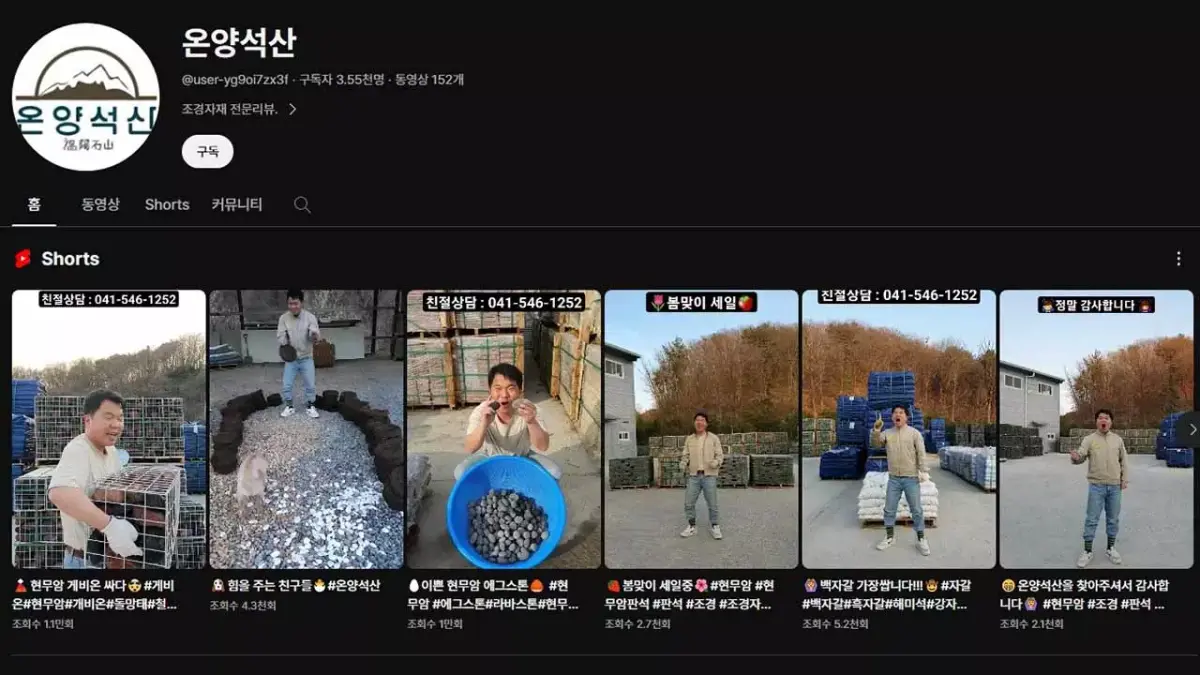
The channel has posted 60 pieces of content, but the average view count sits at only around 7,900. Given that uploads aren’t infrequent and the videos are clearly produced with real care and updated regularly, that’s a fairly disappointing result.
To be fair, in a number of interviews, Onyang Quarry has said its B2B sales saw some improvement after the channel took off. But it would be a stretch to say the video marketing itself delivered meaningful, direct results for the company.
In other words, an influx of B2C attention may have helped raise Onyang Quarry’s brand awareness. But it’s hard to argue it effectively contributed to B2B revenue growth relative to the resources invested.
Chungju City’s YouTube Channel
Compared to other local government YouTube channels, Chungju City’s channel is widely regarded as a genuine success story. The person running it has said, in interviews, that they studied what other municipalities were doing and deliberately did the opposite.
The channel’s highest-viewed video right now is one that uses the “Coffin Dance” meme to promote social distancing.
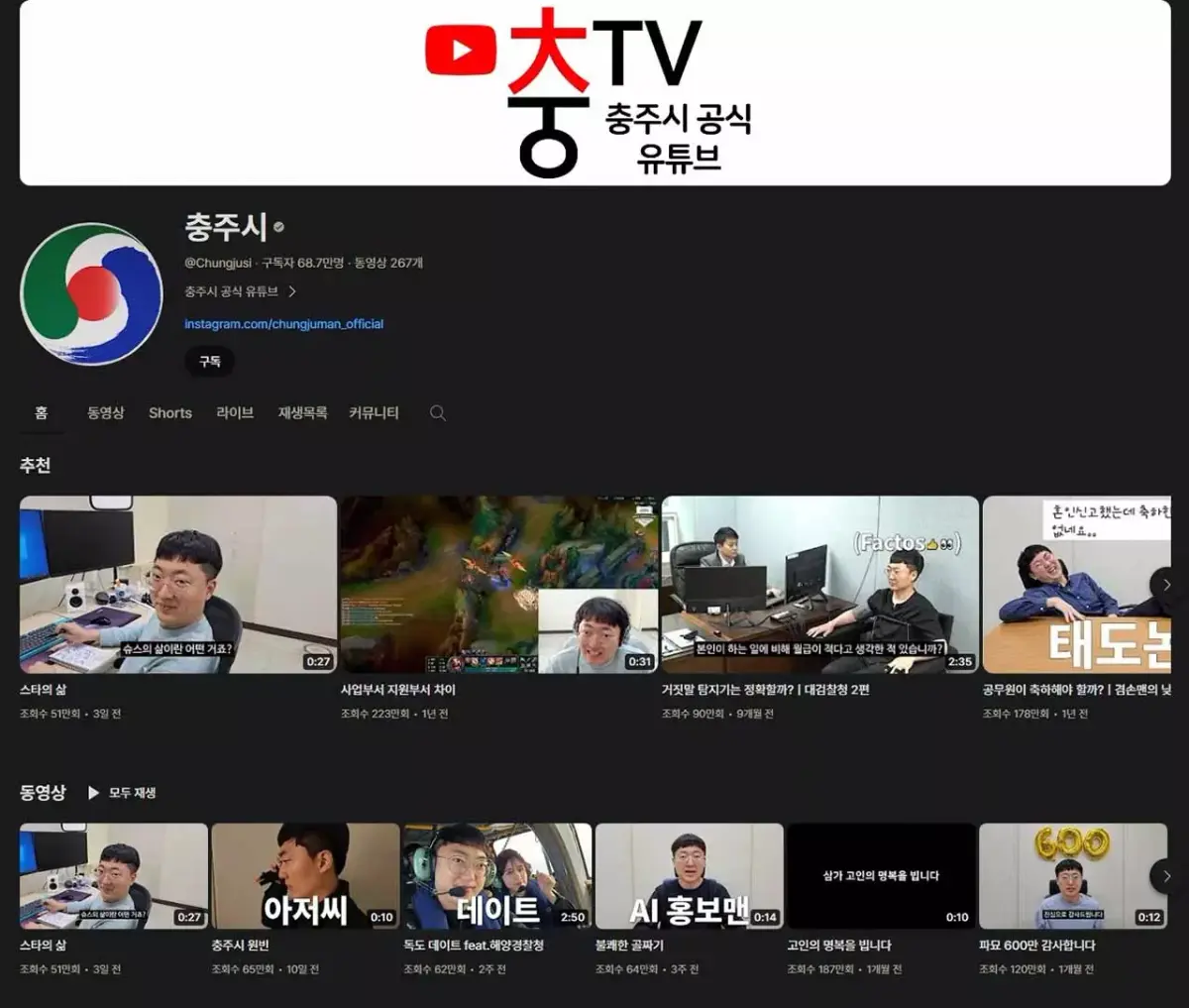
Compared to other local governments and public agencies’ videos, the production quality may be lower — but the channel succeeded precisely because it understood what YouTube audiences enjoy and where the fun is. Call it deliberately “B-grade” marketing.
But would your own company’s executives really support running a channel like that? In fact, the person behind Chungju City’s channel has said they sometimes posted videos over the weekend, when approvals slow down, without waiting for a superior’s sign-off.
Having studied countless local government channels, this person developed a strong conviction that “we need to be different” — and that bold judgment and willingness to execute is exactly what drove the channel’s success. But that kind of behavior could only be tolerated because Chungju City’s channel had already shown clear signs of taking off.
Choosing — and sticking with — a “B-grade” concept before you’ve seen results, before the algorithm has decided to favor you, is genuinely hard. Because it’s so difficult to win internal buy-in for that approach, a B-grade-concept YouTube strategy is, in practice, essentially off the table for a B2B company.
Why YouTube Marketing Is Hard for B2B Companies
Plenty of companies weigh their marketing channel options beyond YouTube too. Broadly speaking, there are three: blogs, Instagram, and YouTube.
Blog content that comes across as genuinely expert can translate directly into traffic.
Or, if you pick a topic where there’s an absolute shortage of content out there — knowledge that’s generally hard to find — a blog can rise quickly into an effective channel, even in a short timeframe.

So what about Instagram and YouTube?
Put bluntly, Instagram is a social platform for showing off “look how well I’m living” — or for watching other people who seem to be living well.
That means its underlying purpose is fundamentally different from B2B. Which search term do you think gets more traction on Instagram: “HR solutions,” “web design agency,” or “nail art”?
Look at global brands’ Instagram accounts and you’ll notice they’re mostly used to project an image or reinforce brand identity — not to drive direct sales.
On YouTube, whether the algorithm picks you up determines success or failure, full stop. If your content isn’t broadly appealing, creative, attention-grabbing, and relatable, the odds of failure are high.
So if you manage to combine broadly appealing subject matter with genuine production quality, it can drive explosive growth in sales. The problem is that pouring the same cost and time into other marketing channels usually delivers even better results.
A YouTube Marketing Guide for B2B Companies
How to Use YouTube in a B2B Business
I once bought a new piece of electronics and pulled out the instruction manual. Even with clear diagrams, the setup was genuinely difficult.
On a whim, I searched for the product name on YouTube and found a video walking through exactly how to install it. It wasn’t owned content from the brand itself, but it was genuinely useful.
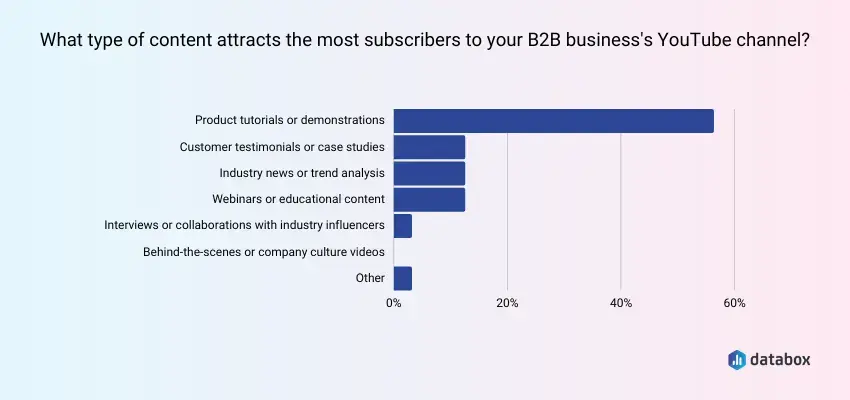
This is exactly where a B2B company’s YouTube channel can genuinely shine: showing usage instructions or setup steps on video. Video communicates far more clearly than a text manual ever could, and it tends to drive real satisfaction as a service touchpoint.
It can also serve as a portfolio. Showing off a company’s success stories on video tends to stick in people’s memory far more than text or photos ever could.
For B2B businesses, we recommend treating YouTube as a channel for conveniently delivering information customers actually need.
What you shouldn’t expect from it is virality — view counts, subscriber growth, or a direct revenue boost from YouTube itself.
If You Still Genuinely Need YouTube Marketing
Search “YouTube marketing” on Google and you’ll find no shortage of agencies. Unfortunately, many are video-production specialists who call themselves a “YouTube marketing agency” without real depth in marketing itself.
If you’re seriously considering YouTube marketing, work only with a team that can confidently point to a track record of actual B2B success on YouTube. (Spoiler: that reference case doesn’t really exist.)
At the very least, we’d recommend consulting with writers, producers, and on-camera talent who have genuine YouTube success experience. But if you ask them directly, in that consultation, what results you should realistically expect, you’ll likely notice they’re reluctant to give you a clear answer — or visibly uncomfortable doing so.
Growth has built a solid B2B marketing strategy from the insights and know-how gained across a wide range of B2B and B2G campaigns. We’re confident in our ability to deploy the most efficient channel strategy for B2B marketing specifically.
If you’re weighing which channels and which approach to take for your B2B marketing, we’d love to think it through with you.
If effective B2B marketing is what you’re after, Growth — a B2B business specialist — is here to help.
Worth Reading Next
- The Complete B2B Marketing Guide — Strategy, Channels, ABM, Lead Generation, and Measurement
- What Should Be Different About Marketing to B2B Decision-Makers
- Where B2B Marketing Should Position Itself in the AI Era
- How Do B2B Marketing Channels Differ From B2C?
- B2B Marketing Approaches: Video vs. Text Content Marketing
Want to apply this to your own business? — See how Growth approaches it on our B2B marketing services page, or if you need a diagnosis of your specific situation, reach out through Contact us. We’ll answer with an eye on the one customer who becomes revenue — not just traffic volume.
Frequently Asked Questions
Can B2B companies actually succeed with YouTube marketing?
It’s not entirely impossible, but the probability of success relative to the resources required is very low. YouTube is a channel where success or failure hinges on whether the algorithm favors you, and content that isn’t broadly appealing and relatable rarely performs. Even in cases that generated real buzz — like the Onyang Quarry and Chungju City examples above — the result was usually improved brand awareness rather than a direct boost to B2B revenue, which means putting the same time and money into other marketing channels is often the more efficient choice.
So how should a B2B company actually use YouTube?
We recommend treating it as an information-delivery tool rather than expecting view counts, subscribers, or direct revenue growth. Video works especially well for product usage instructions, installation steps, or demos — the kind of content that’s hard to explain clearly in text or photos — and drives stronger communication and satisfaction. Surveys back this up: the content type that attracts the most subscribers to B2B channels is product tutorials and demos. It’s also useful as a video portfolio for showcasing past success stories.
What should I check before choosing a YouTube marketing agency?
Make sure they can confidently point to a genuine track record of B2B success on YouTube. Many agencies that brand themselves as “YouTube marketing agencies” are really just video production specialists without real marketing depth. If possible, consult directly with writers, producers, and on-camera talent who have real YouTube success experience, and judge them by whether they answer your questions about expected results clearly and directly.
For B2B marketing, which is better — blog, Instagram, or YouTube?
Each channel has different strengths. A blog can drive traffic relatively quickly if the content reads as genuinely expert, or if it covers a niche topic where information is otherwise scarce. Instagram is closer to a tool for projecting brand identity and isn’t well-suited to driving direct sales. YouTube has real upside potential, but its heavy dependence on the algorithm makes it high-risk. For B2B, the right move is to think in terms of channel mix and choose the medium that fits your specific situation.