
The Impact of Customer Review Marketing: How 93% of Consumers Let Reviews Drive Their Purchase Decisions
 임재복
임재복
Why Did Customer Review Marketing Become a Must-Have Strategy?
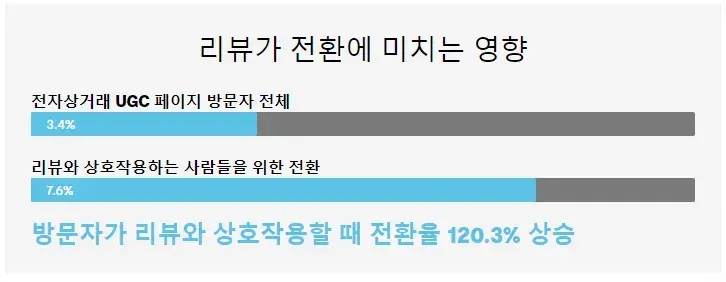
In today’s digital marketing landscape, customer review marketing has gone from optional to essential — because consumer buying patterns have fundamentally changed. Understanding the modern [AISVAS Consumer Purchase Decision Model] makes the importance of review marketing even clearer.
Unlike in the past, today’s consumers trust vivid, real customer reviews grounded in actual purchase experience more than they trust one-sided brand advertising. That’s because they understand the [difference between customer needs and wants] and want information rooted in real necessity.
According to the latest 2025 research, 93% of online shoppers say reviews influence their purchase decisions, and 98% consider reviews an essential resource when making a purchase decision. That shows just how much more important customer review marketing has become.
Even more striking: 44% of consumers say they won’t buy from a business that has no reviews at all. This means customer review marketing isn’t a nice-to-have supplement — it’s a core marketing channel with a direct impact on revenue.
What’s the Actual ROI of Customer Review Marketing?
The effectiveness of customer review marketing is clearly proven in the numbers. According to the latest research, roughly 70% of consumers say they’re more likely to buy a product with positive reviews. On the flip side, BrightLocal’s consumer review survey found that 77% of consumers hesitate to buy after seeing negative reviews — showing just how powerful a deterrent negative reviews can be.
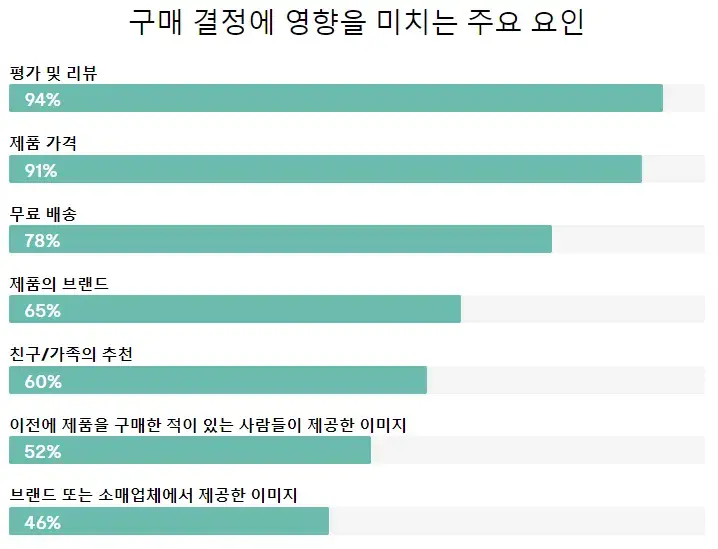
But that’s just the beginning. The real power of customer review marketing shows up in how consumer preference shifts with review count. According to the research, 43% of consumers prefer businesses with 100 or more reviews. As review count grows, the sample size grows too — so the star rating reflects a product’s actual quality more accurately, which is why consumers tend to trust businesses with a rich body of reviews more.
These numbers show that customer review marketing delivers more reliable results than nearly any other marketing channel. The fact that 70% of consumers respond to positive reviews, and 43% prefer businesses with a robust review base, underscores just how much review management matters.
When It Comes to Reviews, Quantity Is What Matters Most
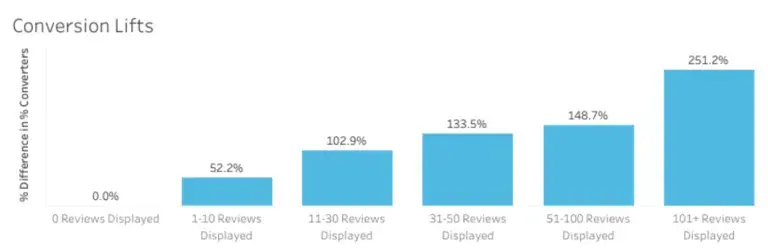
One of the most important questions in customer review marketing is: “Is more reviews always better?” Professor Sungsik Park of the University of South Carolina offered a clear answer in a Wall Street Journal op-ed.
As he explains it: “In the end, it all comes down to sample size. The more reviews there are, the more likely those comments are to reflect a product’s actual quality.” That logic holds up statistically, too — as review count grows, extreme opinions cancel each other out, converging on a more balanced overall assessment of the product.
Consumers may not consciously register it, but they place more trust in products with a large number of reviews. This ties directly to what psychology calls the “social proof” effect: the more people who’ve bought and reviewed a product, the safer a choice it appears to be.
A Guide to Building a Customer Review Marketing Strategy

Running customer review marketing successfully takes a systematic approach. Rather than blindly chasing review count, you need to strategically build up a base of high-quality reviews.
The first thing to think through is building a review-collection system. You need an automated flow that prompts customers to leave a review at the right moment after purchase. Ask too soon, and customers haven’t used the product enough to write a meaningful review; ask too late, and the purchase experience has faded, so response rates drop.
Using [an effective approach to trial-group marketing] or choosing [the right trial-group marketing channel] can also be an effective review-collection strategy.
Second is review quality management. Text reviews packed with specific usage experience carry far more marketing weight than a bare star rating alone. Providing customers with clear guidelines or prompting questions helps them write more detailed reviews.
Third is a strategy for handling negative reviews. Rather than trying to hide or delete negative reviews, treat them as an opportunity to demonstrate the quality of your brand’s customer service through a fast, genuinely thoughtful response. Done well, this can actually boost brand trust rather than damage it.
Customer Review Marketing Is No Longer Optional
When you’re weighing how to allocate marketing budget, ROI and ROAS are impossible to ignore. Paid ad spend, headcount for content production — every marketing activity comes with a clear cost-benefit analysis attached. But customer review marketing is one of the few channels that delivers reliable results while sidestepping [the limits of ad budgets and the ROI/ROAS trap].
Customer review marketing is a genuinely reliable investment that transcends that whole calculation. As the data above shows, its ROI is clearer and more sustained than almost any other marketing channel. It’s simply one of the surest bets in your marketing mix.
If you’re wondering [which marketing channel actually delivers real results], we’d recommend starting with review marketing. If you’re looking for [reliable results from performance marketing], review marketing deserves to be a top priority — because reviews you’ve built up once keep influencing new customers’ purchase decisions on an ongoing basis.
If you’re currently pouring significant resources into optimizing product pages or paid ads while overlooking customer review marketing, it’s time to reconsider your marketing priorities. Customer review marketing is no longer a nice-to-have add-on — it’s essential infrastructure for online business success.
Successful customer review marketing requires a systematic approach across the entire lifecycle — collection, management, and use. Get that right, and you can capture both brand trust and revenue growth at once. It’s a similar approach to [building a content marketing strategy], and it deserves the same kind of clear performance metrics as [measuring content marketing KPIs].
Related Reading
- Content Marketing: A Guide From Definition to Strategy
- Earned Media
- Evergreen Content
- A Guide to Brand Content Marketing
- ESG Content Marketing: Real Cases and Practical Strategy
If you want to apply this to your own business — see how Growth approaches this in our content marketing service, or if you need a concrete diagnosis of your specific situation, reach out through our contact page. We answer with the one customer who becomes revenue in mind — not raw traffic volume.
Frequently Asked Questions
How many reviews do you need before they start making a difference?
There’s no fixed threshold, but the more reviews you have, the larger the sample — and the more accurately the star rating reflects the product’s actual quality. In fact, 43% of consumers say they prefer businesses with 100 or more reviews. Steadily building up a solid base of reviews matters for establishing trust.
Should negative reviews be deleted?
No. Rather than hiding or deleting negative reviews, it’s better to respond quickly and thoughtfully. That response becomes an opportunity to demonstrate your brand’s customer service quality, which actually builds trust. A “perfect” rating with zero negative reviews at all can even come across as suspicious.
Is a star rating enough on its own?
Text reviews with specific usage details deliver far more marketing impact than a bare star rating. Providing the right prompts or guidelines to help customers write detailed reviews gives prospective customers richer information to draw on when making a purchase decision.
When is the best time to ask for a review?
Ask once a customer has had enough time to genuinely use the product after purchase. Too early, and limited experience leads to low-effort reviews; too late, and the purchase experience fades, dragging down response rates. A system that automatically prompts for reviews at the right moment lets you steadily collect high-quality reviews over time.