Brand Content Marketing Guide
 임재복
임재복
The Concept and Importance of Brand Content Marketing
Definition and Characteristics of Brand Content Marketing
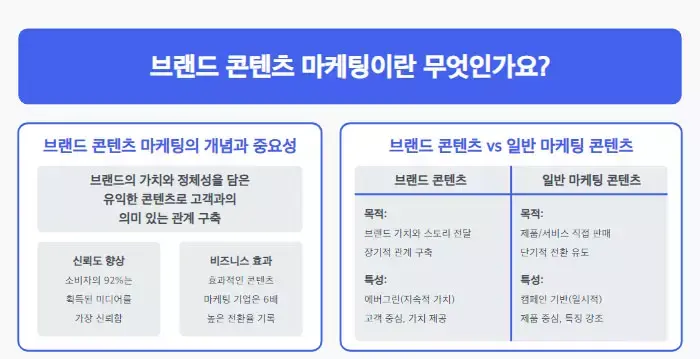
Brand content marketing is a strategic approach that goes beyond plain advertising messages, building a meaningful relationship with customers through useful content that carries a brand’s values and identity. Where traditional advertising focuses on directly selling a product or service, brand content marketing naturally builds trust and loyalty through valuable information, educational content, inspiring storytelling, and entertainment. What sets it apart is its focus on building long-term brand equity rather than short-term sales.
This approach extends the general concept of content marketing, so it helps to first understand the basic definition and strategic approach to content marketing. The US-based Content Marketing Institute (CMI) defines content marketing as “a strategic marketing approach focused on creating and distributing valuable, relevant, and consistent content to attract and retain a clearly defined audience — and, ultimately, to drive profitable customer action” — rather than directly pitching a product.
What matters most is that it’s a customer-centered approach that consistently conveys a brand’s authenticity and unique point of view through content, while always delivering real value to the customer.
Why Brand Content Matters in Today’s Marketing Landscape
As the digital landscape has evolved, consumers face an endless stream of advertising messages, and their fatigue with — and resistance to — traditional advertising has grown sharply. Millennial and Gen Z consumers in particular weigh the quality and value of a brand’s content heavily when choosing which brand to support. As consumers gain easier access to information and more choices, content that shows the values a brand stands for and its cultural relevance matters more than simply highlighting product features.
The Business Impact of Brand Content Marketing
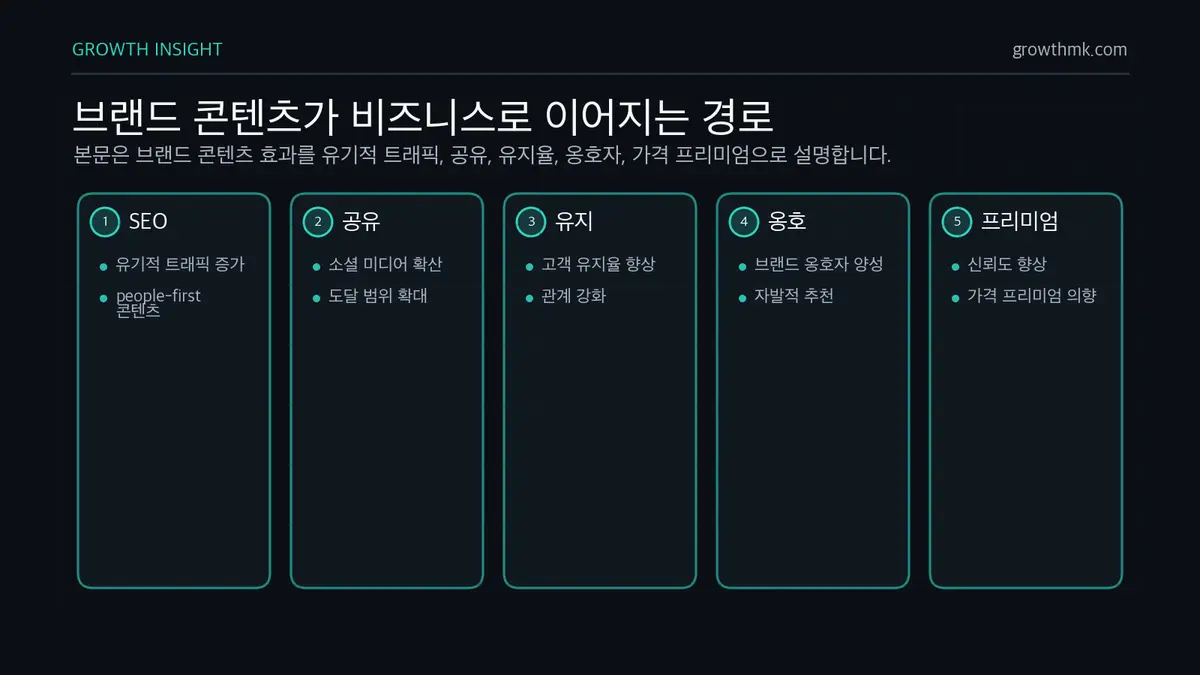
Even though brand content marketing centers on emotional connection, its effects ultimately show up in business results. Brand content drives business growth in a range of ways: organic traffic growth through SEO, wider reach through social sharing, higher customer retention, and cultivating brand advocates. Google’s own helpful content guidance emphasizes that “people-first content” — not content aimed at ranking — succeeds in search, which lines up closely with the idea that brand content centered on customer value is exactly what drives organic visibility. Over the long term, it plays a central role in building a loyal customer base willing to pay a price premium, through stronger brand awareness and trust.
Brand Content vs. General Marketing Content
Differences in Purpose and Approach
General marketing content and brand content differ clearly in their underlying purpose and approach. General marketing content is built around a product or service’s features, benefits, and pricing, and focuses on driving a direct sale or conversion. This kind of content is built to answer the question: “Why should I buy this product?”
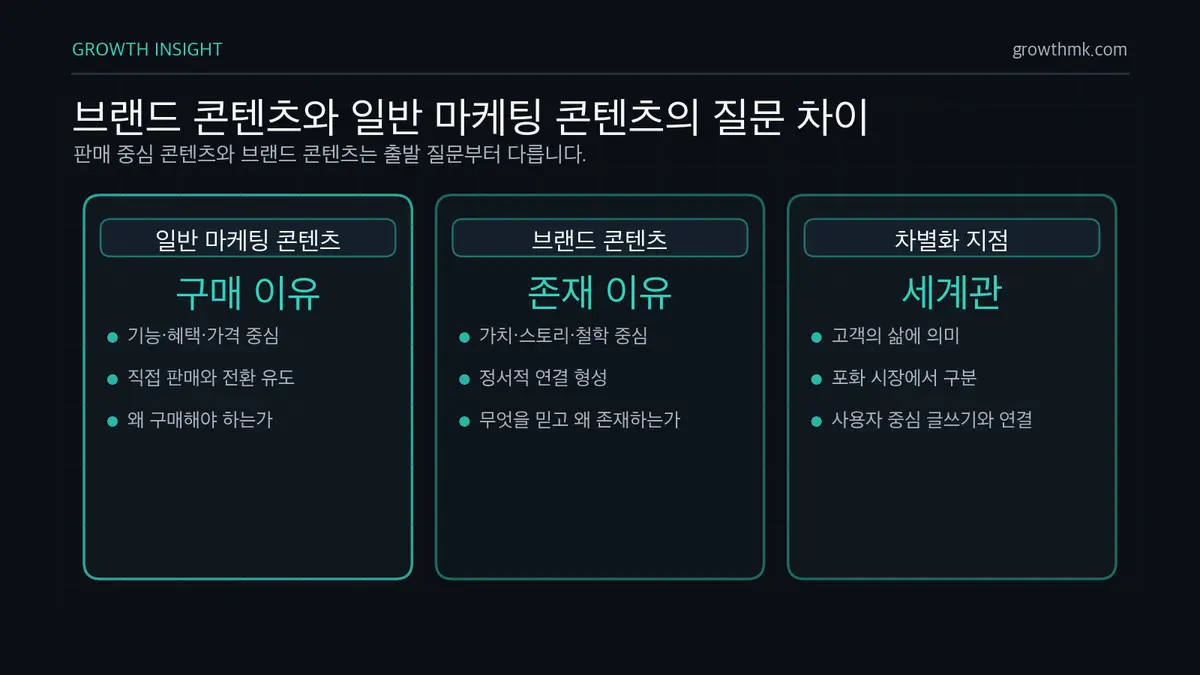
Brand content, by contrast, tackles a more fundamental question: “What do we believe, and why do we exist?” It carries a brand’s values, story, and philosophy, and aims to have a meaningful impact on customers’ lives. It focuses on forming an emotional connection with the customer rather than selling a product, sharing the worldview and values the brand represents. That differentiated approach becomes a critical way for a brand to stand apart from competitors in a saturated market.
This approach ties closely to user-centered writing principles, making sure a brand’s message reaches customers in a way that genuinely resonates.
Comparing Format and Content Characteristics
General marketing content and brand content also differ clearly in format and character. General marketing content mainly leans on formats tied directly to sales — product catalogs, promotional emails, sales landing pages, spec sheets. This kind of content has a clear call-to-action (CTA) and uses product-centric language.
Brand content, on the other hand, takes a wider range of more creative formats — storytelling-driven documentaries, educational blog posts, podcasts, social campaigns, user-generated content. Patagonia’s environmental documentaries, Apple’s “Shot on iPhone” campaign, and Airbnb’s traveler stories are all classic examples of brand content that effectively conveys a brand’s core values without ever directly mentioning a product to sell. Content like this offers value customers actively seek out and share.
Differences in Measurement and Lifecycle
General marketing content and brand content also differ clearly in how their effectiveness is measured and how long they live. General marketing content is typically used short-term, tied to a campaign period or promotional cycle, and evaluated on direct performance metrics — click-through rate, conversion rate, sales volume, ROI. Its value tends to drop off sharply once the period ends.
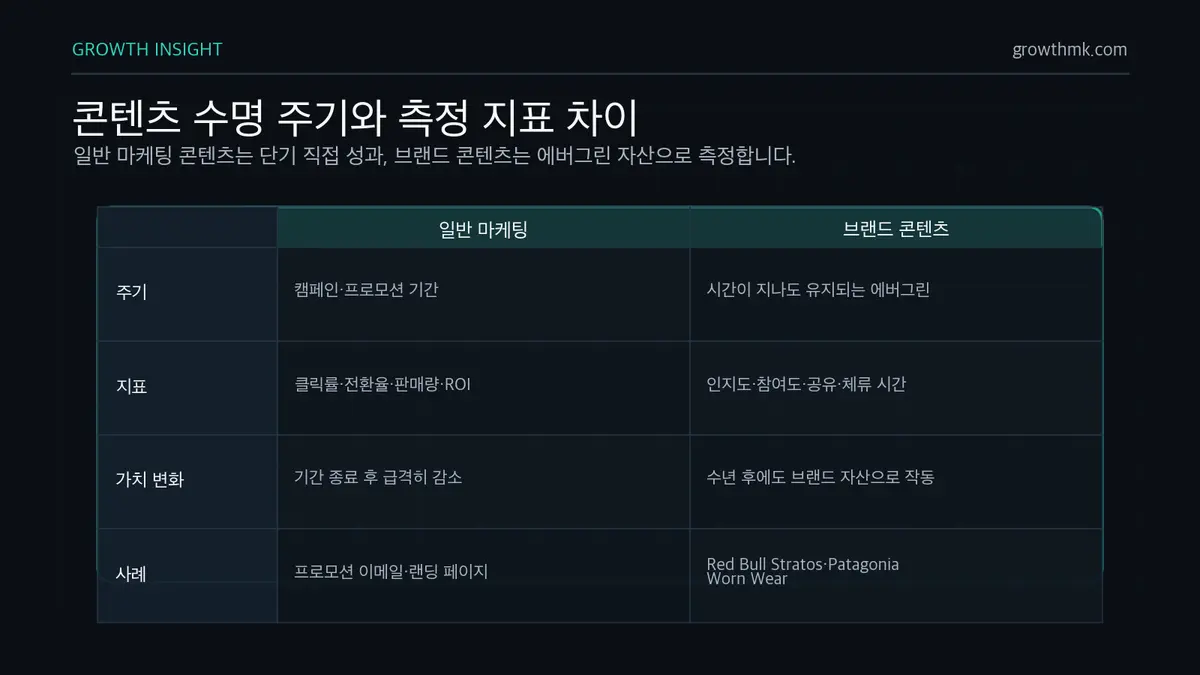
Brand content, on the other hand, has an “evergreen” quality that holds its value over time, and its effect is measured through more long-term, qualitative indicators — brand awareness, customer engagement, social sharing, time on page, brand associations. Brand content like Red Bull’s “Stratos” project or Patagonia’s “Worn Wear” campaign retains its value as a brand asset for years afterward, continuing to communicate the brand’s values to new customers.
Key Elements of Successful Brand Content Marketing
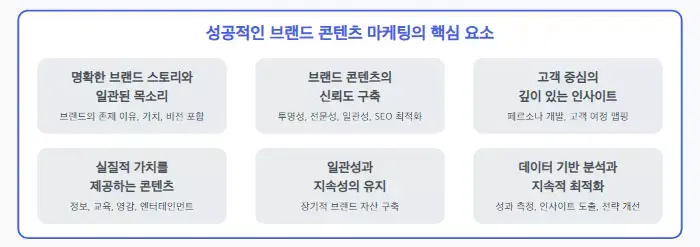
A Clear Brand Story and a Consistent Voice
The first pillar of successful brand content is a clear brand story told in a consistent voice. A brand story isn’t just a company history — it’s a comprehensive narrative that covers why the brand exists, the social problem it’s trying to solve, the values it believes in, and its founder’s vision.
Apple weaves the consistent brand story of “creativity and innovation through technology” into everything it produces, applying it consistently from product design through to marketing communication. A clear brand story like this acts as a compass for content creation, setting the standard for which topics fit the brand and what tone should be used to deliver them.
An effective brand story resonates most powerfully when it positions the customer as the protagonist and the brand as the guide, structured as a journey that helps the customer succeed.
Building Trust in Brand Content
In the digital landscape, the credibility of brand content has emerged as a more important differentiator than ever. According to Edelman’s latest Trust Barometer survey, brand website content remains an important trust channel, but overall trust is trending downward due to the spread of misinformation and AI-generated content.
In this environment, brands need to make an even more deliberate strategic effort to build trust — through content transparency, expertise, consistency, UX-driven design, and SEO optimization.
Deep, Customer-Centered Insight
Effective brand content always starts with a deep understanding of the customer. That means going beyond simple demographic data to gain deep insight into customers’ lifestyle, values, pain points, aspirations, and information consumption habits. Building that understanding requires combining multiple methods — persona development, customer journey mapping, social listening, in-depth interviews, and data analysis. In this process, distinguishing and analyzing a customer’s basic needs from their psychological wants is the foundation of effective brand communication.
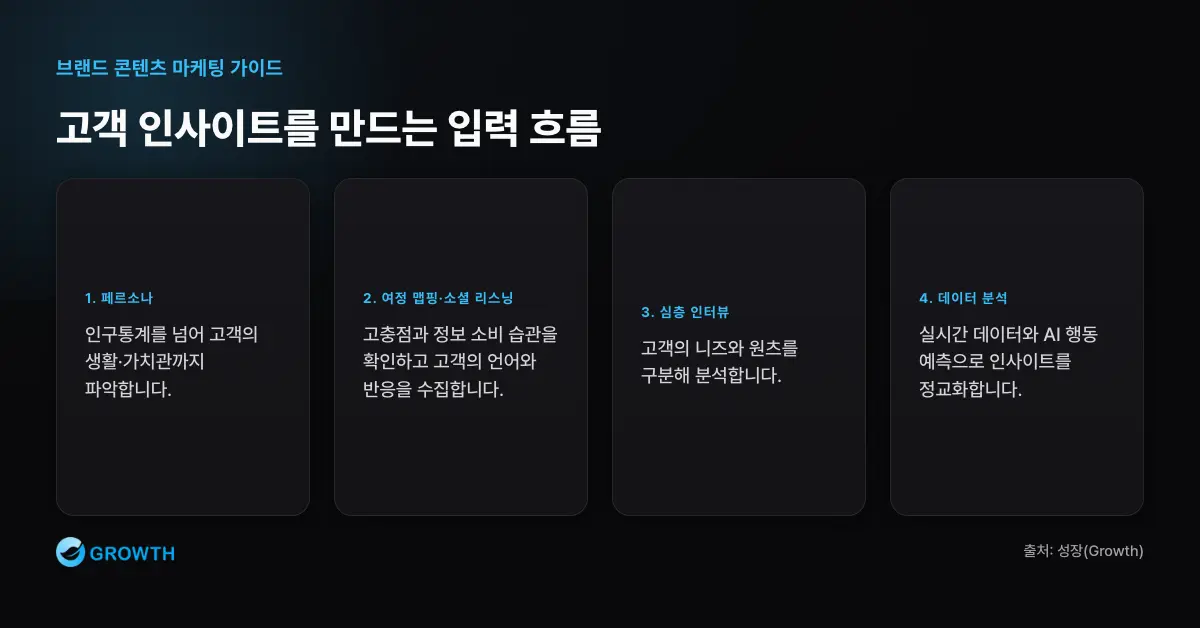
Content built on customer insight creates the emotional connection of “this brand really gets me,” which becomes a powerful foundation for brand loyalty. More recently, there’s a clear trend toward drawing even more sophisticated customer insight through real-time data analysis and AI-powered behavior prediction models.
Creating Content That Delivers Real Value
Whether brand content succeeds or fails comes down to the real value it delivers to the customer. That requires a systematic approach to consistently developing high-quality content, with a brand’s expertise and authenticity reflected naturally throughout.
All brand content needs to deliver clear value — information, education, inspiration, or entertainment. Practical content that solves a customer’s problem or answers their question, in particular, is an effective way to naturally showcase a brand’s expertise while building trust.
Strategic Channel Selection and Optimization
Choosing and optimizing the right channels is essential to maximizing the impact of brand content. Not every channel fits every brand, so you need to thoroughly analyze your brand’s character and your target customer’s media consumption habits to build the most effective channel mix.
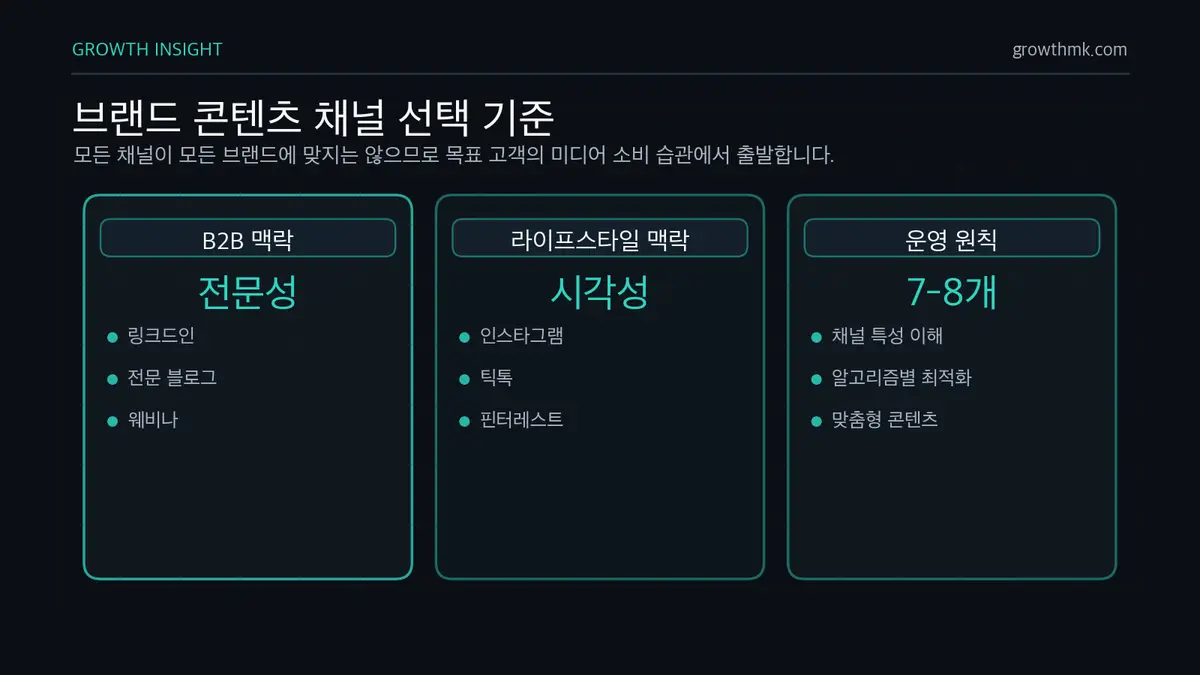
B2B companies may do well focusing on LinkedIn, expert blogs, and webinars, while fashion or lifestyle brands may find visual platforms like Instagram, TikTok, and Pinterest a better fit. B2B companies, in particular, can reach their target audience effectively by building a channel strategy informed by the latest B2B marketing trends. It’s also important to understand each channel’s characteristics and algorithm and optimize content accordingly.
On LinkedIn, for example, professional insight and data-driven content perform well, while on Instagram, striking visuals and emotional storytelling get a bigger response. Recent research shows successful brands typically use an average of 7-8 distinct channels, each with a tailored content strategy that accounts for that channel’s unique character.
Maintaining Consistency and Persistence
Consistency and persistence are core to building brand awareness and trust in brand content marketing. Consistency means a content’s message, tone, visual identity, and quality bar all align with a brand’s core values and stay unified across every touchpoint. Persistence means building an ongoing relationship with customers through long-term content production and management rather than one-off campaigns.
Red Bull has consistently produced extreme sports and adventure content for more than 20 years, establishing itself as a lifestyle brand that goes well beyond an energy drink. According to marketing expert Mark Schaefer, brand content’s success rests on “cumulative narrative” — formed by the consistent delivery of a brand’s story and values, built up gradually over time. Building an effective editorial calendar and a content governance system is the practical way to maintain that consistency and persistence.
Data-Driven Analysis and Continuous Optimization
A successful brand content strategy depends on ongoing, data-driven analysis and optimization. You need to collect and analyze a range of metrics — content performance, customer engagement, conversion rate, emotional response — to continuously refine your content strategy. Use analytics tools like Google Analytics, social media insights, heatmaps, and A/B testing to gather quantitative data, while also factoring in qualitative data from customer feedback, comment analysis, and sales team insight.
Netflix has succeeded in delivering a personalized user experience by deeply analyzing viewing data to optimize content production and its recommendation system. Effective data analysis needs to go beyond the question “which content works?” and focus on understanding “why does it work?” That’s how you identify patterns of success and evolve your content strategy from there.
Major Formats and Channels of Brand Content Marketing
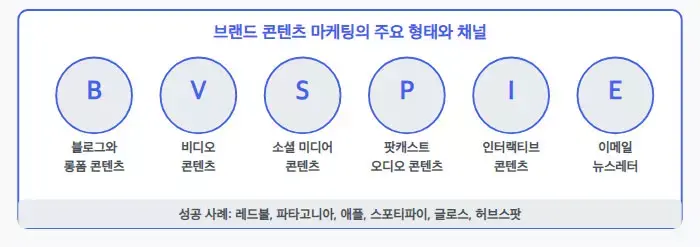
Strategic Use of Blogs and Long-Form Content
Blogs and long-form content are among the most effective formats for establishing a brand’s expertise and authority. In-depth industry analysis, expert guides, case studies, whitepapers, interviews — a range of formats let you showcase a brand’s knowledge and insight. From an SEO standpoint, blogs also play an important role in attracting organic traffic.
Making the most of this format requires a systematic SEO marketing strategy — see our complete A-to-Z guide to SEO marketing — and structuring your primary and supporting keywords properly, which maximizes the value of a pillar piece of content.
HubSpot has established itself as an authority in B2B marketing by consistently publishing deep blog content on marketing, sales, and customer service. In-depth long-form content can cover a topic broadly and tends to favor social sharing and backlink acquisition, and often shapes the buying process in B2B fields in particular, where decisions are complex. That said, length itself should never be the goal — Google has stated explicitly that it has no preferred word count, so what matters is the depth with which you actually cover the topic, not the word count.
Video Content and Visual Storytelling
Video is one of the most powerful brand content formats, excelling at conveying complex information effectively and forming an emotional connection. HubSpot’s compiled marketing statistics also show short-form video as the format marketers rank both most popular and highest-ROI. Platforms like YouTube, Instagram, and TikTok let you produce a range of video content formats — brand stories, product demos, tutorials, interviews, documentaries.
YouTube, in particular, is emerging as a powerful brand content channel even in B2B, and building an effective YouTube strategy for B2B companies can deliver a differentiated brand experience.
Social Media Content and Community Building
Social media is the most effective channel for direct communication between a brand and its customers, and for building community. The key is producing content optimized for each platform’s character and driving two-way engagement that gets customers to participate.
LinkedIn suits professional insight and sharing industry knowledge; Instagram suits visually compelling brand storytelling; Twitter (X) suits timely conversation and customer service; TikTok suits short, creative entertainment content.
Succeeding with social content requires a regular posting schedule, staying responsive to trends, real-time customer engagement, and gathering customer insight through social listening.
The Rise of Podcasts and Audio Content
Podcasts and audio content are among the fastest-growing brand content formats right now. Through in-depth conversation and storytelling, they’re effective at showcasing a brand’s expertise and forming an emotional connection. They’re also a good fit for the busy modern lifestyle, since they can be consumed alongside other activities — during a commute, while exercising.
Podcast success comes down to delivering genuine value to listeners, maintaining a consistent publishing schedule, and ensuring professional audio quality. The growing adoption of smart speakers and voice assistants has also sharply raised interest in voice search and conversational audio content recently.
Interactive Content and Driving User Participation
Interactive content is a brand content format that drives active participation instead of passive consumption. Its core value lies in delivering a personalized experience, instant value, and an opportunity to gather user data. Quizzes, calculators, assessment tools, interactive infographics, virtual experiences, and games are just some of the formats that drive user participation and raise engagement.
The Value of Email Newsletters and Direct Communication
Email newsletters remain an effective brand content channel even as the digital landscape keeps shifting. They excel at securing a direct customer touchpoint and building an ongoing relationship, and they deliver content reliably without being affected by algorithm changes. Regularly sharing personalized content, brand updates, industry trends, and useful information helps raise brand awareness and loyalty.
An effective newsletter needs a clear value proposition, a compelling subject line, a scannable layout, mobile optimization, and the right send frequency and timing. To measure the effect of brand content like a newsletter, you need to systematically set up and manage content marketing performance metrics.
Related Reading
- Content Marketing: From Definition to Strategy
- Earned Media
- Evergreen Content
- ESG Content Marketing Case Studies and Practical Strategy
- Content Marketing Case Studies and the Latest 2025 Trends
Want to apply this to your own business? Take a look at how Growth approaches it in our content marketing service, or if you need a diagnosis of your specific situation, reach out through our contact page. We answer in terms of the one lead who becomes revenue — not raw traffic volume.
Frequently Asked Questions
What’s the difference between brand content marketing and regular advertising?
Regular advertising focuses on the direct sales question of “why should I buy this product,” while brand content marketing forms an emotional connection with customers by conveying values and story — “what do we believe, and why do we exist.” The key difference is that it focuses on long-term brand equity and trust rather than short-term sales.
How do you measure the performance of brand content marketing?
While general marketing content is evaluated on short-term metrics like click-through rate, conversion rate, and ROI, brand content is measured through more long-term, qualitative indicators — brand awareness, customer engagement, social sharing, time on page, brand associations. It’s best to combine quantitative data (Google Analytics, social insights, A/B testing) with qualitative data like customer feedback.
Does longer content always help SEO?
Length by itself isn’t the answer. Google has officially stated it has no preferred word count, and it emphasizes that people-first content is what succeeds in search. Long-form content can be useful for covering a topic broadly, but what matters isn’t the word count — it’s the depth that delivers real value to the reader and satisfies search intent.
Which channel should you start with?
Not every channel fits every brand. You need to analyze your own character and your target customer’s media consumption habits to pick the most effective combination. For example, LinkedIn, expert blogs, and webinars can work well for B2B, while visual platforms like Instagram and TikTok can work well for fashion and lifestyle brands. We recommend focusing on one or two channels first to establish consistency, then expanding from there.