
Earned Media
 임재복
임재복
What Is Earned Media?
Earned media refers to any form of brand exposure or promotion that a company doesn’t pay for directly, and that gets created and shared voluntarily by a third party — customers, press, influencers, and the like. It’s distinct from traditional paid advertising (paid media) and channels a company owns and operates directly (owned media), and it’s marked by a high degree of consumer trust.
Because earned media is exposure that gets “earned” naturally through authentic content, positive brand experiences, or effective PR work, it can have a significant impact on prospective customers’ purchase decisions. As emphasized in Viral Marketing Starts and Ends With Planning, it’s a core driver of organic spread.
The History and Origins of Earned Media
The concept of earned media started with traditional public relations (PR) work. Since the early 20th century, when Edward Bernays — often called the father of modern PR — emphasized the importance of promotion through the press, companies began recognizing the value of brand exposure earned through media coverage.
The concept of earned media expanded dramatically with the arrival of the digital era. The rise of blogs in the early 2000s opened an era where individuals themselves became media, and the arrival of social media platforms — Facebook in 2004, Twitter in 2006, and others — let anyone create and share content. This dramatically expanded the scope of earned media beyond press coverage to include user-generated content, social media mentions, and online reviews.
In Korea, the importance of earned media began to stand out alongside the spread of blog culture in the late 2000s. As covered in Content Marketing Case Studies — From Understanding Customer Intent to Highlighting Your USP, customers voluntarily creating and sharing content became a core marketing strategy.
Key Characteristics and Components of Earned Media
Key Characteristics
Here’s what sets earned media apart from other media types. First, no direct payment — you don’t pay directly for this kind of media exposure. Second, creation and control by a third party — since content creation and distribution happen through parties outside the brand, it’s difficult for a brand to directly control the message.
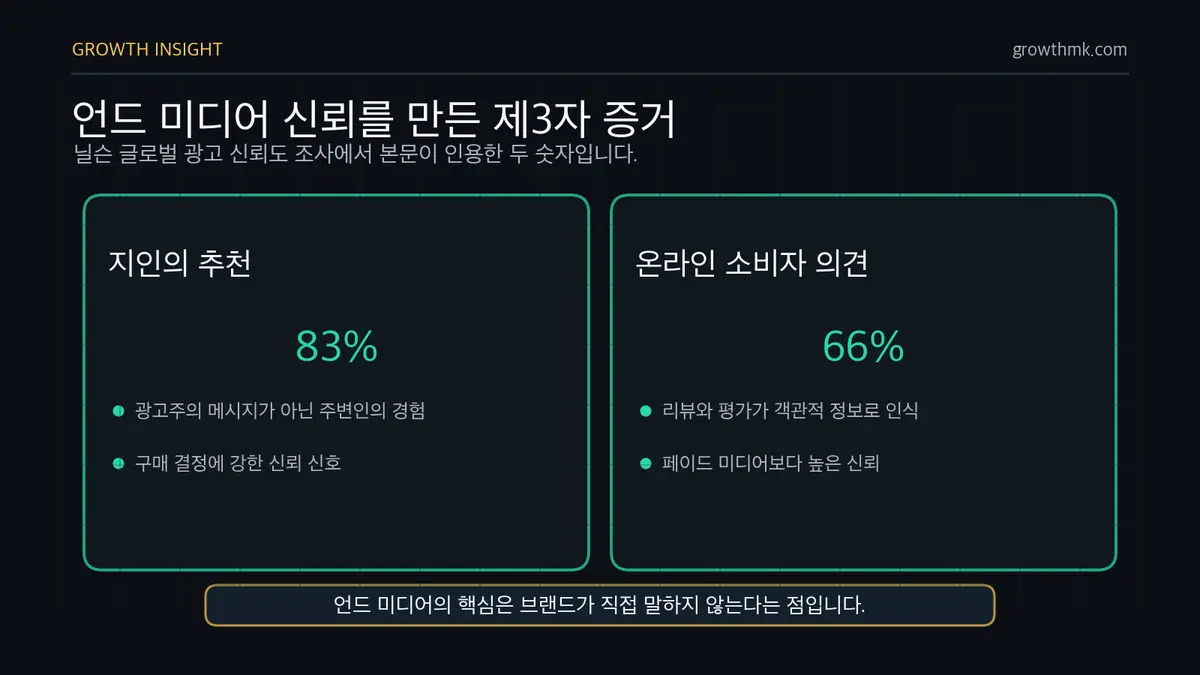
Third, high credibility — consumers strongly tend to perceive it as objective information or a genuine experience, rather than something driven by an advertiser’s intent. The Nielsen Global Trust in Advertising survey found that 83% of respondents trusted recommendations from people they know, and 66% trusted consumer opinions posted online — both higher than trust in paid media. This directly contributes to a higher engagement rate as well, and it plays an important role in understanding the difference between customer needs and wants.
Key Components
Earned media can take many forms. Press coverage refers to brand-related articles published in newspapers, magazines, broadcast media, or online news outlets. Social media mentions and shares happen when customers or the general public voluntarily mention a brand or share content about it on social platforms.
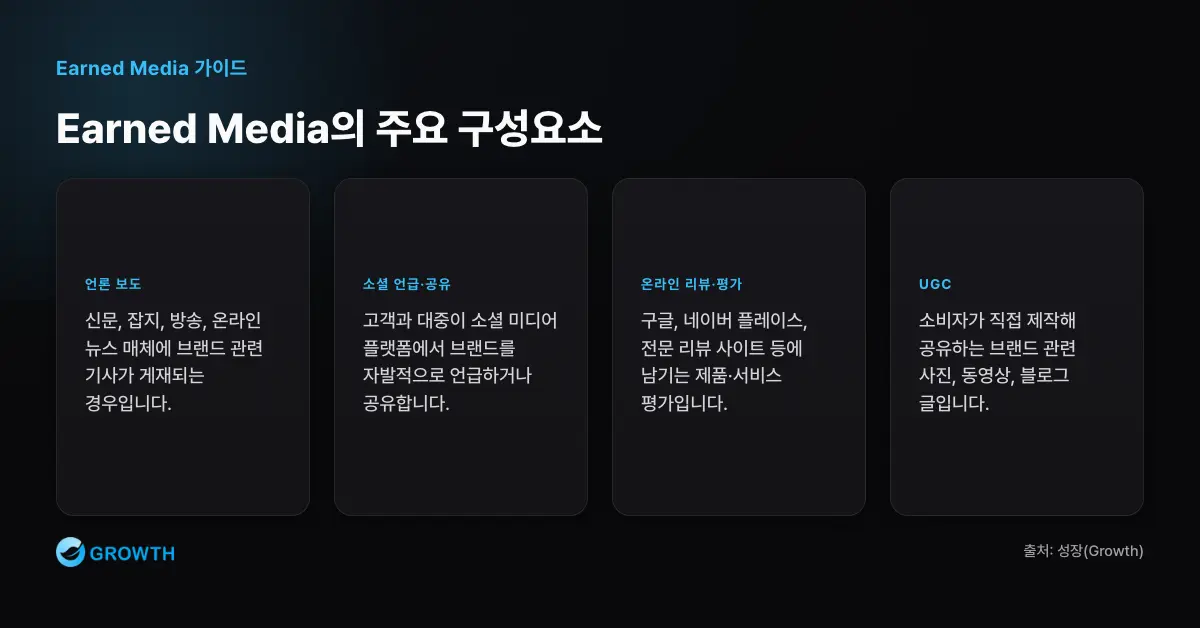
Online reviews and ratings include product and service evaluations customers leave on Google, Naver Place, and dedicated review sites. User-generated content (UGC) refers to brand-related photos, videos, and blog posts that consumers create and share themselves.
Earned Media Use Cases and Strategy
Connecting With Content Marketing
One of the most effective strategies for earning earned media is producing content that’s valuable and worth sharing. As emphasized in The Content Marketing Guide — From Definition to Strategy, high-quality content that offers your target audience something useful or entertaining naturally drives voluntary sharing.
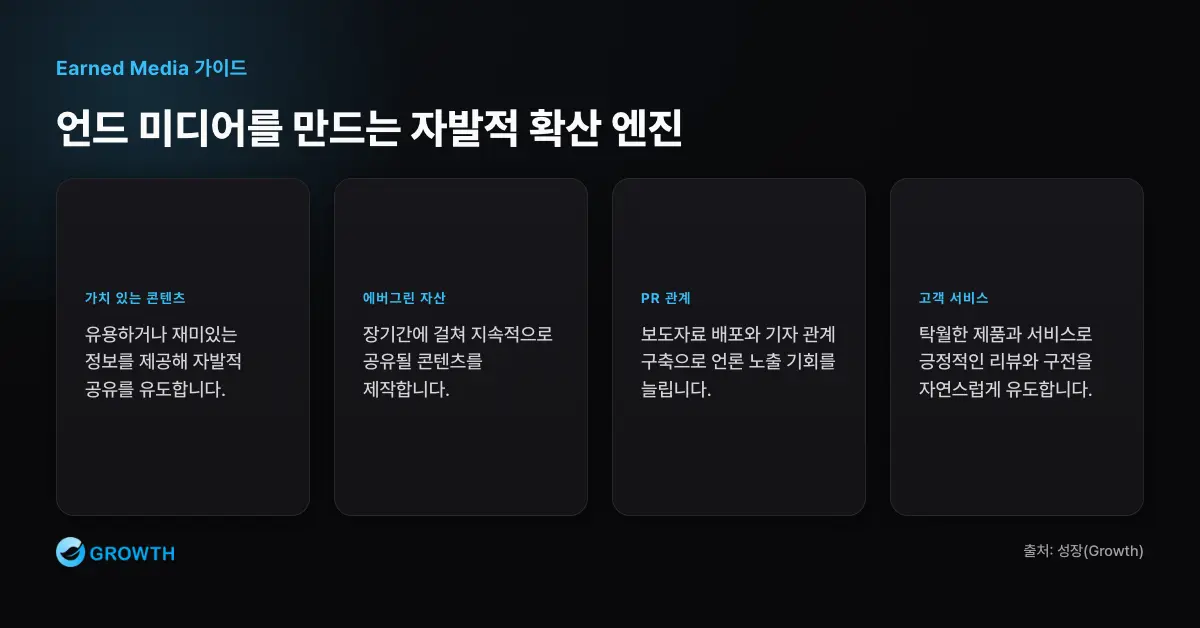
In particular, using an evergreen content strategy to produce content that keeps getting shared over the long run can maximize the impact of earned media. Brand storytelling, covered in What Is Brand Content Marketing?, also plays an important role in generating earned media.
PR Activity and Building Media Relationships
Traditional PR work is still a core strategy for earned media. You can increase your press exposure opportunities by building positive relationships with media outlets, distributing timely press releases, and holding press briefings. This is also closely tied to the B2B communication covered in B2B Newsletters — Do They Actually Drive Revenue?
Raising customer satisfaction through outstanding products and customer service matters too. This naturally drives positive reviews and word of mouth, and it connects to the experience-based marketing covered in How to Run an Experience-Group Marketing Program Well.
Earned Media in a Digital Environment
Earned media has grown even more important in the digital era. Using generative AI to produce more personalized, more relevant content can help encourage voluntary sharing.
Search engine optimization, emphasized in SEO Marketing Case Studies — A Content Strategy Built on Keyword Research, is also closely tied to earned media. Ranking near the top of search results through quality content and SEO effort leads to organic exposure with an earned-media-like character.
Key Concepts Related to Earned Media
The PESO Model and Integrated Marketing
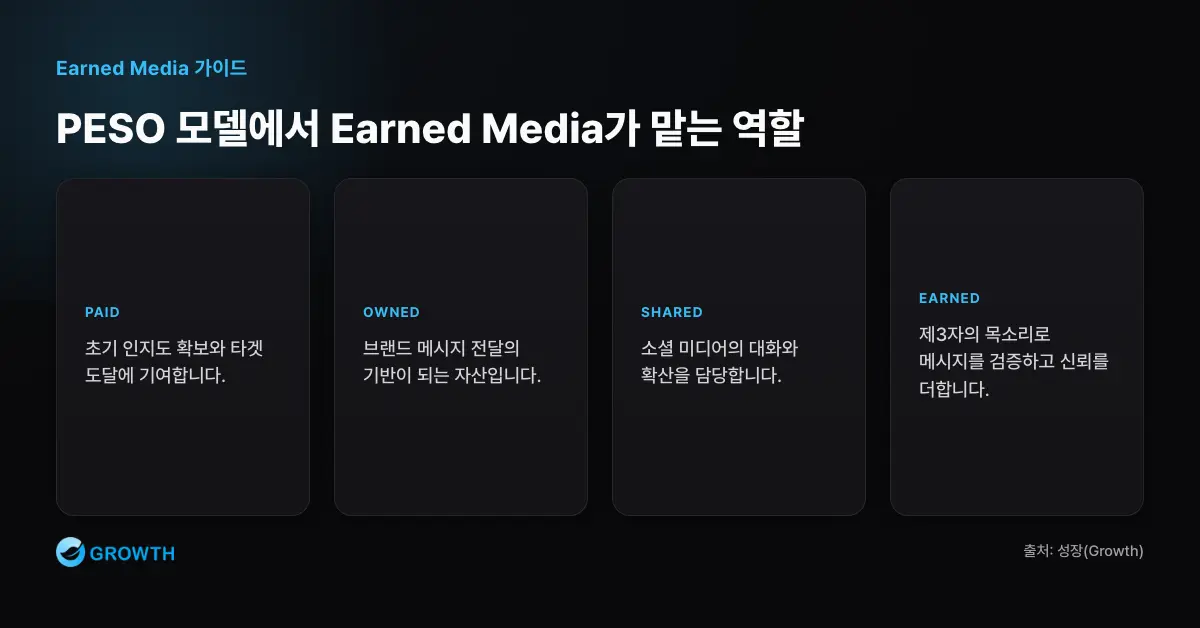
Earned media is a core component of the PESO model (Paid, Earned, Shared, Owned media). It also plays an important role in the results-focused approach emphasized in The Performance Marketing Reference — For When You Need Real Results. If paid media contributes to early awareness and reaching your target audience, and owned media is the foundation for delivering your brand message, earned media acts as the catalyst that validates and spreads that message through third-party voices.
You also need to factor in earned media’s contribution when measuring ROAS (Return on Ad Spend). Because earned media happens without direct ad spend, it can significantly improve overall marketing ROI.
Measurement and Analysis
Measuring the impact of earned media is one of the complex issues covered in The Limits of Ad Budgets — the Trap of ROI and ROAS. Key metrics include media mention volume, social media engagement rate, reach, website traffic and referral sources, and sentiment analysis.
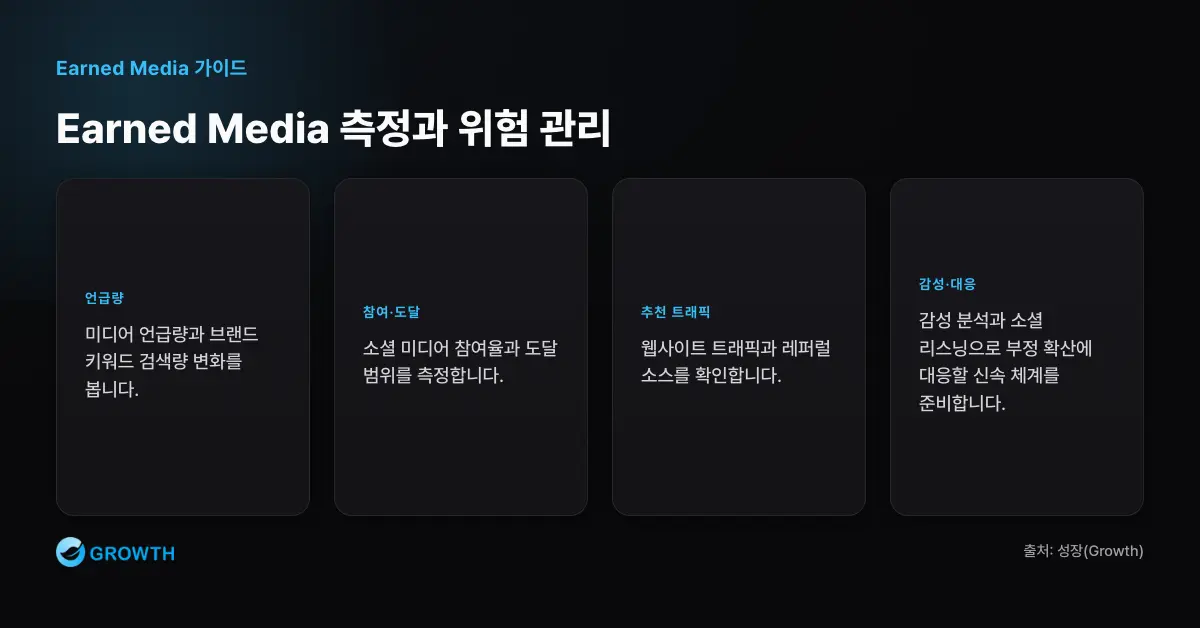
Keyword monitoring is also an important tool for measuring earned media. Tracking changes in search volume for brand-related keywords and trends in social media mentions can help you gauge earned media’s impact.
Risk Management and Response
One of the two-sided realities of earned media is that negative content can spread just as quickly. It’s important to prepare a crisis response plan in advance, alongside a remarketing strategy. Building a system for brand monitoring through social listening and rapid response is essential.
Community management, covered in How Much Budget Do You Need to Run a Supporters Program?, is also an important factor in the earned media landscape. Brand advocates and loyal customers can be a core driver of generating positive earned media.
Future Outlook and Trends
As mentioned in 2025 SEO Trends — Why a New Approach Is Needed, shifts in the search landscape are also affecting earned media strategy. As AI-powered search and personalized content delivery spread, the shape and spread patterns of earned media are changing too.
The diversification of content formats, covered in Video vs. Text: Which Carries More Weight in B2B Marketing?, also opens new opportunities for earned media. In particular, video content’s power to spread virally is a powerful tool for maximizing the impact of earned media.
Related Reading
- The Content Marketing Guide — From Definition to Strategy
- Evergreen Content
- The Brand Content Marketing Guide
- ESG Content Marketing Case Studies and a Realistic Strategy
- Content Marketing Case Studies and the Latest 2025 Trends
If you’d like to apply this to your own business — you can see Growth’s approach on our content marketing service page, and if you need a specific situational diagnosis, reach out through Contact Us. We’ll answer based on the one customer who becomes revenue — not the volume of traffic.
Frequently Asked Questions (FAQ)
What’s the difference between earned media and owned media?
Owned media refers to channels a company directly owns and can control the message on — its own website, blog, or official social accounts, for example. Earned media, by contrast, is exposure that a third party — customers, press, influencers — creates voluntarily; a company can’t directly control it, but it comes with a correspondingly higher level of trust.
Why is earned media so trusted?
Because it reads as objective third-party information or a genuine experience, rather than a message shaped by an advertiser’s intent. In Nielsen’s Global Trust in Advertising survey, 83% of respondents said they trusted recommendations from people they know, and 66% trusted consumer opinions posted online — both higher than trust in advertising a company runs directly.
How can you generate earned media?
The most effective approach is producing content that’s genuinely worth sharing. It helps to combine evergreen content and brand storytelling to drive voluntary sharing, alongside traditional PR — press releases, building relationships with journalists — and outstanding products and customer service that drive positive word of mouth and reviews.
How do you measure the impact of earned media?
Key metrics include media mention volume, social media engagement rate, reach, referral traffic (referral sources), and sentiment analysis. Monitoring changes in search volume for brand-related keywords and trends in social mentions can help you gauge the impact earned media is generating.
Marketing Insights
Marketing insights, delivered weekly
Practical growth and GEO/B2B marketing insights, summarized in your inbox every week.
Subscribe for insights