
How to Add and Edit Company Information on Wikipedia
 임재복
임재복
You’ve probably noticed this before: you search Google for some piece of information, and a certain kind of website keeps showing up near the top. Sites like Wikipedia and Namuwiki are collaboratively built online encyclopedias — free resources where users around the world create and edit content on an enormous range of topics.
We often get asked how to add company information to Wikipedia. For companies that are just getting started, Growth also helps directly with getting a company page published on Wikipedia. In this article, we’ll cover why this matters and what you need to watch out for.
Why does a Wikipedia company page matter?

Wikipedia is used by huge numbers of people worldwide. Having your company information published there increases your visibility — customers, investors, journalists, and job seekers researching your company can find information about it easily.
Wikipedia is also seen as a neutral, trustworthy source, which helps users feel a stronger sense of credibility about your company.
And it’s not just users. Search engines treat Wikipedia as a highly reliable site too, so simply having your company information on Wikipedia can influence your search engine rankings over the long term.
In other words, getting your company information onto Wikipedia essentially builds a kind of backlink that broadcasts your company’s information widely, at no extra cost.
What to watch out for when adding company info to Wikipedia
Maintain neutrality
In principle, Wikipedia discourages companies from directly editing their own pages, in the interest of fairness and neutrality. This comes from two of Wikipedia’s five pillars — “neutral point of view” and “verifiability” — and content that reads as promotional or lacks sourcing can be edited or removed by other editors.
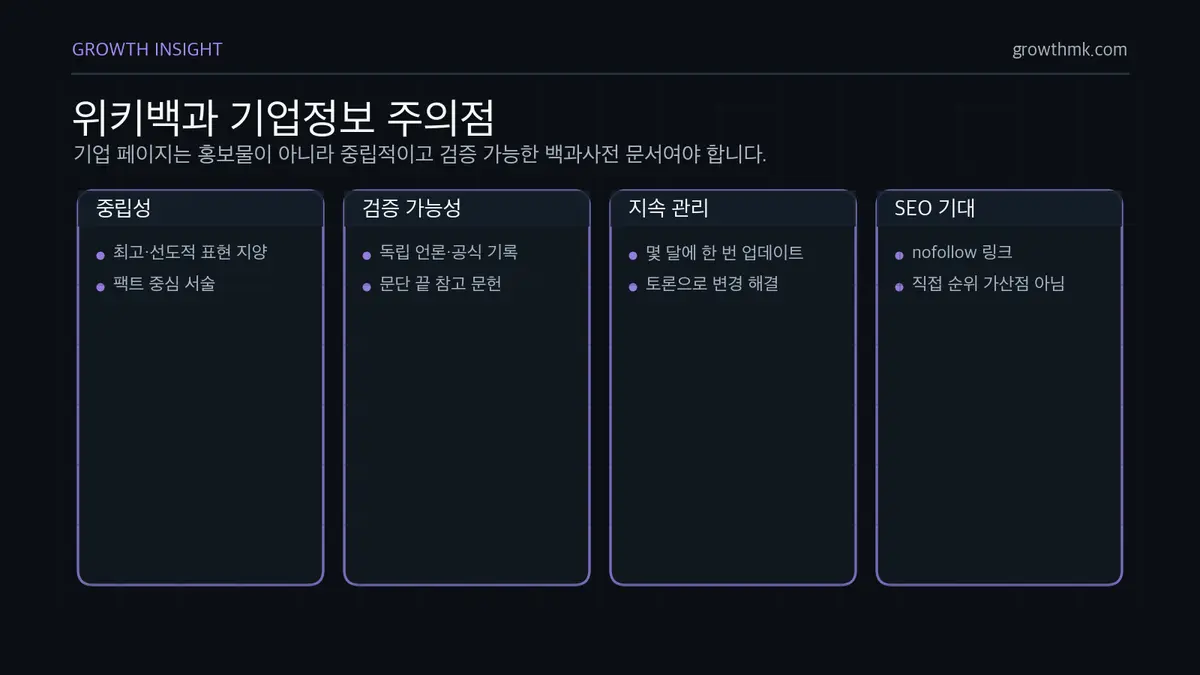
Wikipedia’s mission is to deliver factual, objective information. And that information needs to have real value.
Pages often get deleted specifically because they read like company promotion. Naturally, you should avoid inflated language like “best” or “leading.” Start by aiming to state only the facts.
Verifiable information
Every claim needs to be backed by a reliable external source.
Your own company website or press releases aren’t easy to verify as sources. Wikipedia’s standards judge credibility based on independent press coverage or official records.
Don’t forget to cite your references clearly at the end of each paragraph, either.
Ongoing maintenance
A Wikipedia page isn’t something you write once and leave permanently. You need to periodically check whether other users have made edits, and resolve any inappropriate changes through discussion.
Updating the information at least every few months to keep it current also steadily improves the page’s credibility.
Setting realistic SEO expectations
We mentioned above that a Wikipedia listing might help improve your search engine ranking. In practice, though, Wikipedia doesn’t have a direct effect on SEO.
It’s absolutely true that Wikipedia is treated as an authoritative platform by search engines. So it’s tempting to assume that getting your website linked from a site like that would give a major boost to search engine optimization.
The catch is that every outbound link on Wikipedia carries a nofollow attribute. In Google’s official documentation on qualifying outbound links, Google states that user-generated content (UGC) and links marked nofollow “will generally not be followed,” and don’t pass ranking signals. So a Wikipedia link itself doesn’t give you a direct SEO ranking boost.
So rather than treating Wikipedia as an SEO tactic, it’s better to think of it as a long-term “bonus point” that builds your website’s credibility and authority over time. The benefit may not be visible right away, but the accumulated effort pays off further down the line.
How to add company information to Wikipedia
Prepare objective material
Start by gathering company-related information from reliable external sources. Articles from credible news outlets, official reports from government agencies, and academic papers or books can all make good sources.
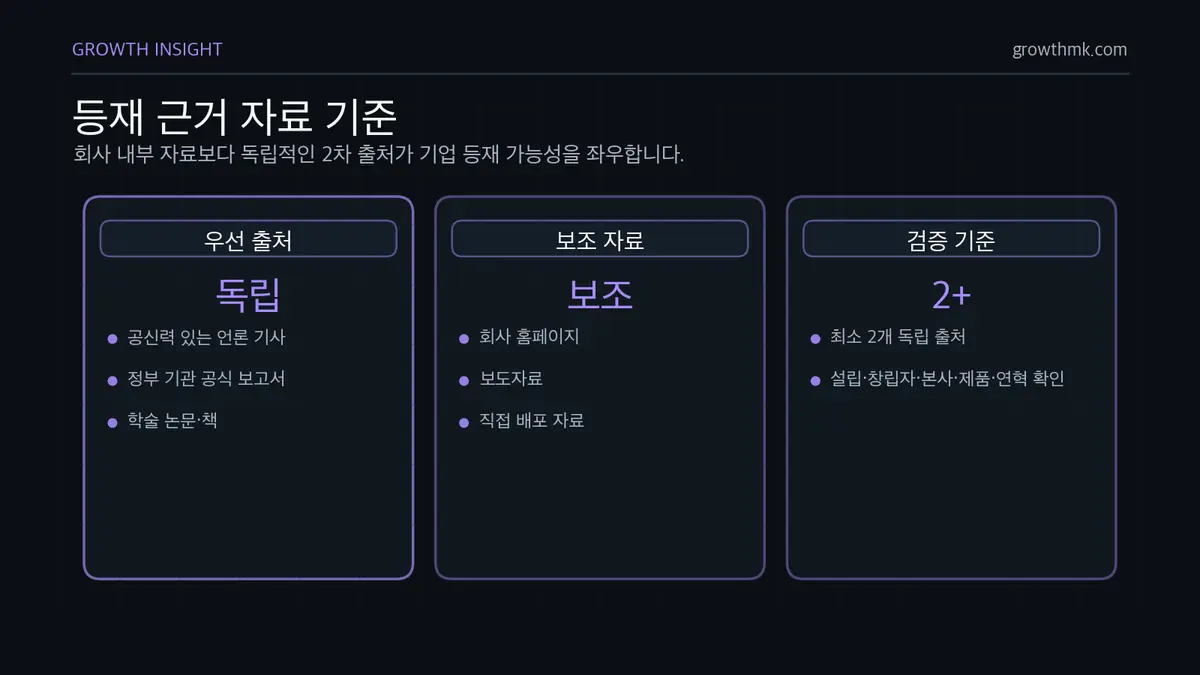
From there, put together the company’s founding year and founders, headquarters location, key products or services, its position and significance in its industry, and major milestones or achievements.
Most companies structure their Wikipedia page with a table of contents like this:
- Overview
- History
- Products and services
- Corporate structure
- Financial information
One thing to watch for here: your company website and press releases should only be used as supporting material. Every piece of information needs to be verifiable through at least two independent sources.
Know Wikipedia’s company page policies
Wikipedia’s five pillars are: (1) an encyclopedia, (2) neutrality, (3) free content, (4) civility, and (5) flexibility. You also need to understand core policies around verifiability, maintaining neutrality, and copyright.
Wikipedia applies especially strict guidelines because it actively works to avoid becoming a vehicle for company or product advertising, or politically motivated promotion.
Notably, Wikipedia doesn’t accept a page for just any company. It’s limited to publicly traded companies, companies with a long history, or companies that are large or play a significant role in their industry. English Wikipedia’s notability guidelines for organizations and companies state that a page can only be created if there’s “significant coverage” in multiple reliable secondary sources independent of the subject, and that press releases or company-authored material don’t count as evidence of notability.
So it’s important to make sure your Wikipedia company information clearly demonstrates this.
Content on Wikipedia also needs to be original. If you copy text directly from somewhere else, it will likely be removed quickly. You need to write the content yourself, matching Wikipedia’s tone and style.
If you use images, only upload ones that are copyright-free or that you have permission to use.
Propose an edit
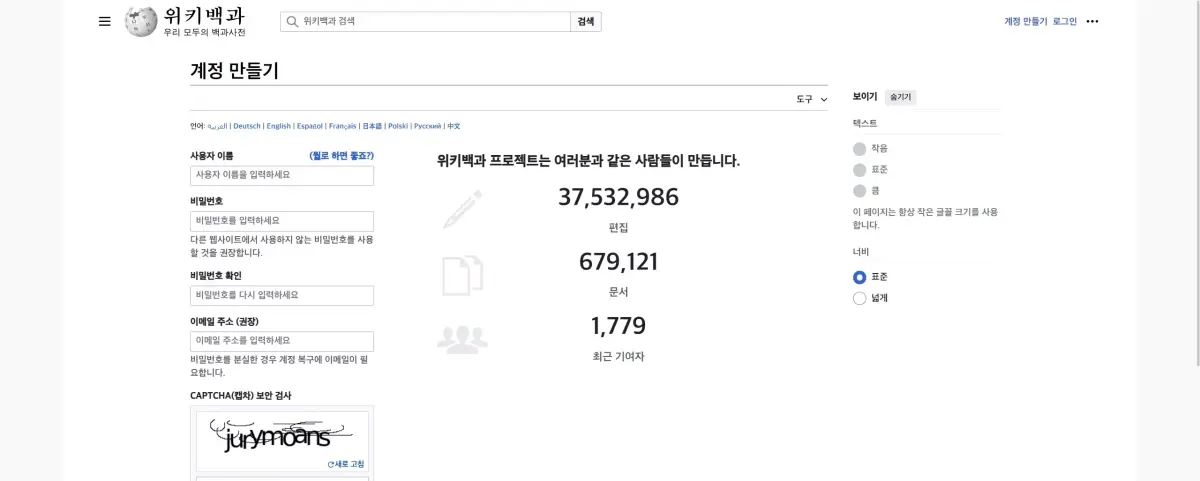
Now let’s actually get the content published on Wikipedia. First, create an account on Wikipedia. It’s better to register under a pseudonym rather than your real name.
If a page related to your company already exists, click the “Talk” tab on that page and create a new section titled something like “Proposed addition: company information.” Write up your proposal there, specifying the information you’d like to add along with your reasoning and sources.
One important thing here: if the person writing has a relationship with the company in question, they need to clearly disclose that on the talk page. Disclose the conflict of interest, and state your commitment to staying transparent.
After posting, wait at least a week or so while gathering feedback from administrators and other editors, and revise the content accordingly. If there’s feedback on your proposal, it’s important to engage in the discussion respectfully.
Use your sandbox
It’s hard for anyone to write a great encyclopedia entry from a blank page. That’s why Wikipedia provides its own “practice space” feature.
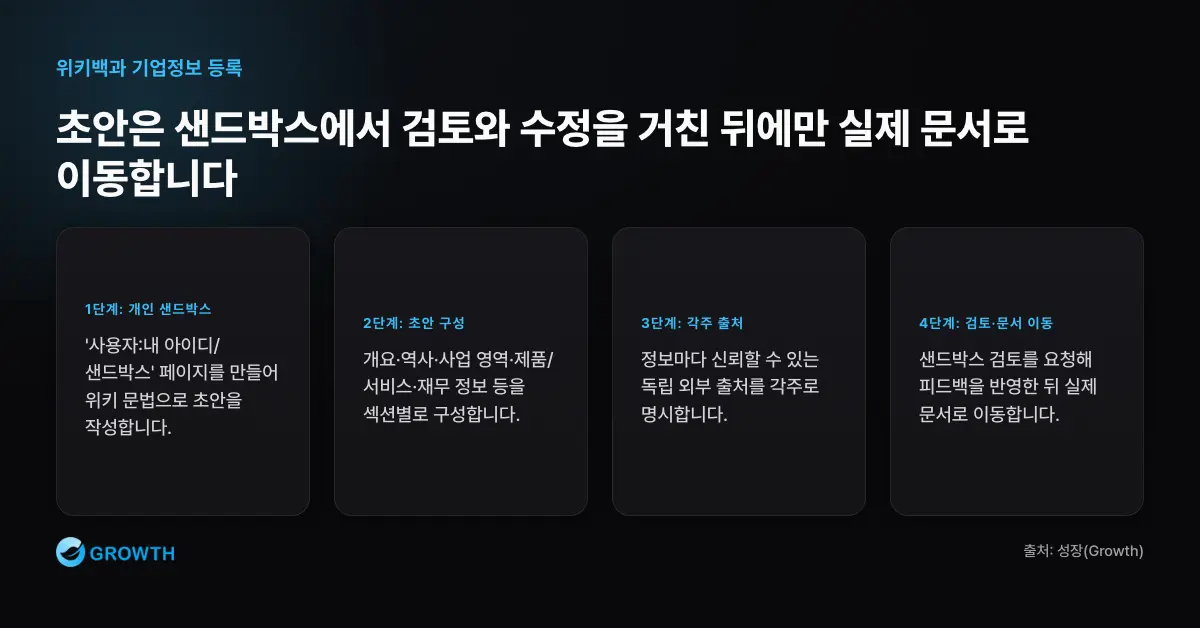
Any registered Wikipedia user can create a personal sandbox page titled “User:MyUsername/sandbox.” You can use wiki markup there to draft your company information page.
Using the material you gathered earlier, structure sections for overview, history, business areas, key products/services, and financial information, and cite a source with a footnote for each piece of information.
Once your draft is ready, you can request a review at Wikipedia’s sandbox review request page, along with a link to your draft. After incorporating feedback from other editors and going through review, moving the content from your sandbox into a live article completes the process.
You can find the specifics in Wikipedia’s editing guidelines — we’d especially recommend reading the guidance on writing about companies closely.
That said, the rules tend to be lengthy and complicated, so rather than trying to follow every single one perfectly from the start, it’s better to work through them step by step.
We’ve simplified the process quite a bit here, but getting company information published on Wikipedia is actually a fairly demanding process in practice. For a company that hasn’t yet been recognized as notable, for example, getting a page approved is considerably harder.
Wikipedia also tracks the IP addresses of contributors internally. If an IP is found to be promoting a specific company, it can be permanently banned from writing and editing — so it’s worth being deliberate about how you create content.
At Growth, we help clients get their company information onto Wikipedia based on credible source material. If you need help getting your company information onto Wikipedia, talk to a Growth expert.
Related reading
- Must-read before choosing a website CMS: comparing 6 CMS platforms for 2025
- Boosting SEO by recycling old content
- SEO-friendly CMS recommendations: a guide to choosing the best content management system for SEO
- Why SEO experts are hard to find in Korea
- SEO trends driven by shifting search engine share in South Korea
If you’d like to apply this to your own business — you can see Growth’s approach on our content marketing services page, and if you need a specific diagnosis for your situation, reach out via consultation inquiry. We’ll answer based on the one customer who becomes revenue, not just traffic volume.
Frequently asked questions
Can any company get a Wikipedia page?
No. Wikipedia doesn’t consider every company eligible for a page. Under English Wikipedia’s notability guidelines for organizations and companies, only companies covered in significant depth by multiple reliable secondary sources independent of the company — press coverage, academic material, and similar — qualify for a page. Press releases or content from the company’s own website don’t count as evidence of notability, so it’s worth first checking whether enough independent outside coverage exists.
Can a company write its own Wikipedia page?
Wikipedia discourages companies from writing or editing their own page directly, due to conflict of interest. If someone with a connection to the company does get involved in writing it, they should transparently disclose that connection on the talk page, and it’s recommended to submit the content as a “proposed edit” for other editors to review rather than editing the article directly.
Does adding company information to Wikipedia improve search rankings (SEO)?
Every outbound link on Wikipedia carries a nofollow attribute, and according to Google’s official documentation, links like these generally don’t pass ranking signals. So a Wikipedia listing itself doesn’t directly boost search rankings. It’s more accurate to think of it as a long-term “bonus” that builds credibility and visibility for brand searches over time.
Does a page stay the same once it’s published?
Because Wikipedia is collaboratively edited, anyone can modify a page. Even after publication, you need to periodically check the edit history and resolve any inappropriate changes through discussion. Updating the information at least every few months also helps steadily maintain the page’s credibility.