
How Search Engines Work, Explained Simply
 임재복
임재복
Before you dive into SEO, understanding how search engines actually work makes everything that follows much easier. Out of the enormous pool of websites and documents out there, knowing how search engines rank content and decide what deserves a good score makes it far easier to meet that bar yourself.
Plenty of guides already explain what SEO is and why it matters. But for non-experts, if you skip learning the underlying mechanics, you’ll eventually hit a wall you can’t work around.
For anyone curious about search engine optimization, Growth has put together a guide that starts from the basics and stays approachable throughout. Read it to the end, and you’ll know exactly what you need to prepare before starting your SEO work.
What’s covered in this article
- A basic guide to search engines
- The search engine indexing process
Search Engine Basics — Definition, Purpose, and Revenue Model
What Is a Search Engine?
Before we get into exactly what a search engine does, let’s start with a basic definition. A search engine is a searchable database of web content.
This massive database serves two roles. First, it acts as a digital library of information about webpages — essentially, a library that curates an enormous number of documents in one place so you can browse them.
Second, it’s also a computer program whose job is to match search index results to a query. In plain terms: it’s software that constantly analyzes and classifies data so that when someone searches “shoes,” the results actually match what they meant.
What Is a Search Engine’s Purpose?
Every search engine aims to deliver search results that match user intent. How well it does that determines user satisfaction — and that satisfaction directly translates into market share.
How Do Search Engines Make Money?
Look at any search results page, and you’ll notice it’s split into two sections.
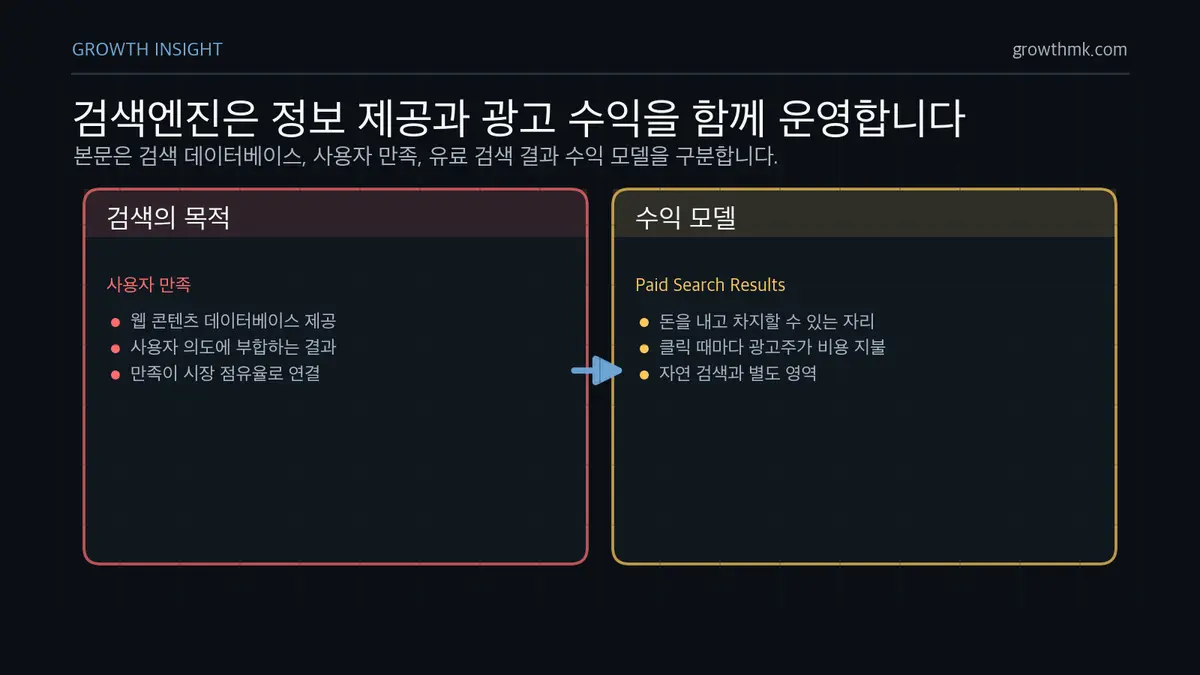
One section is Paid Search Results — the spots you can occupy by paying for them. Every time someone clicks a paid result, the advertiser pays the search engine.
This is what’s known as PPC (pay-per-click) or CPC (cost-per-click) advertising. The more users a search engine has, the more valuable those ad slots become — and the more profitable the search engine gets.
Below that sits Organic Search Results. No amount of money paid to Google buys you a spot at the top of this section.
You can absolutely earn a strong organic position through the right strategy and real effort — which is exactly why you should be wary of any SEO agency that “guarantees” top rankings without any real strategy behind it.
How Search Engines Work — How They Discover and Fetch Websites
When we type a query into a search engine, we get search results back.
Those results are a dynamically assembled page, built by Google pulling documents from countless websites and stitching them together.
Before we get into how search engines distinguish good content and assemble results, let’s look at how they actually fetch content in the first place.
How Search Engines Find You — URL Discovery and Crawling
Just as every building and location has an address, every website page needs a URL to reach it.
Google collects tens of thousands of new website URLs a day — but there’s simply no way to read all of them.
Instead, it focuses on and recognizes URLs that fall into a handful of special cases.
Google has already crawled hundreds of billions of websites. Now imagine a site Google already knows about creates a link to a brand-new page.
A link on another website pointing back to yours is called a “backlink.” When Google spots a backlink, it takes notice and looks closer. Google’s own documentation confirms this directly, stating that it uses links as a primary means of discovering new pages.
Or, you can proactively announce your own existence to Google.
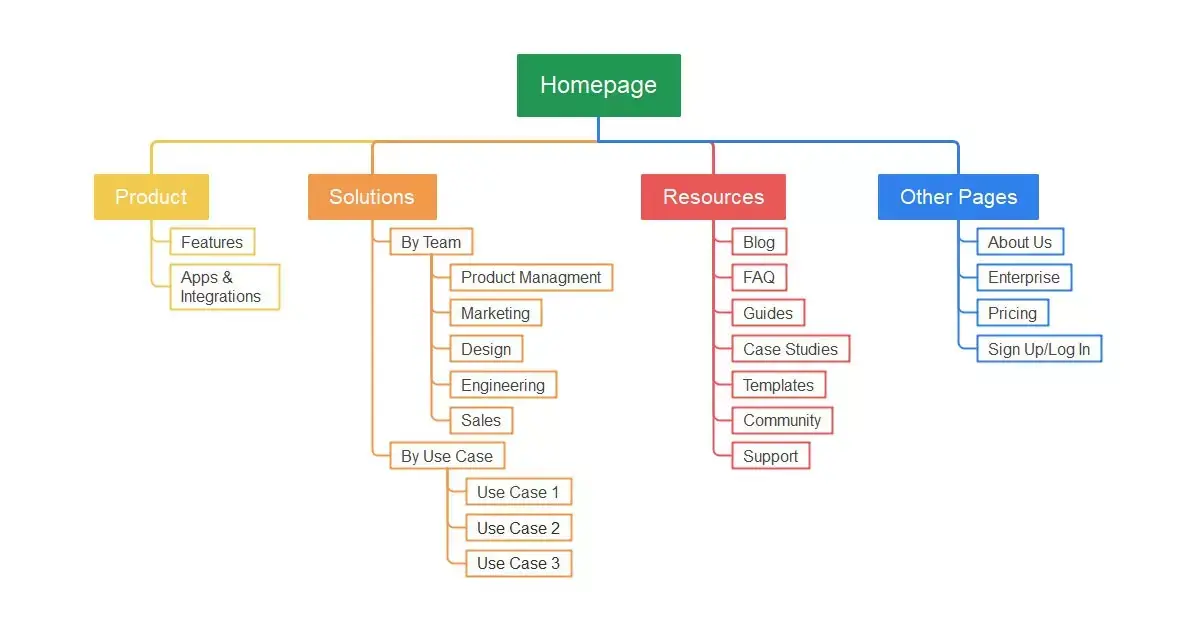
Think of it like a newly opened restaurant handing out flyers with a map printed on them: you build a “sitemap” that gives a high-level overview of the important content on your site. A sitemap is a file that hands search engines a site’s page information so they can crawl more efficiently — and doing this raises the odds of Google discovering your website faster.
Finally, site owners can also directly request crawling for a URL through Google Search Console.
From there, Google’s search bot visits the website, downloads the URLs it’s now aware of, and adds them to the set of sites it knows about.
Get this far, and you’ve understood roughly 80% of how search engines actually work.
Search Engine Curation — Rendering and Indexing
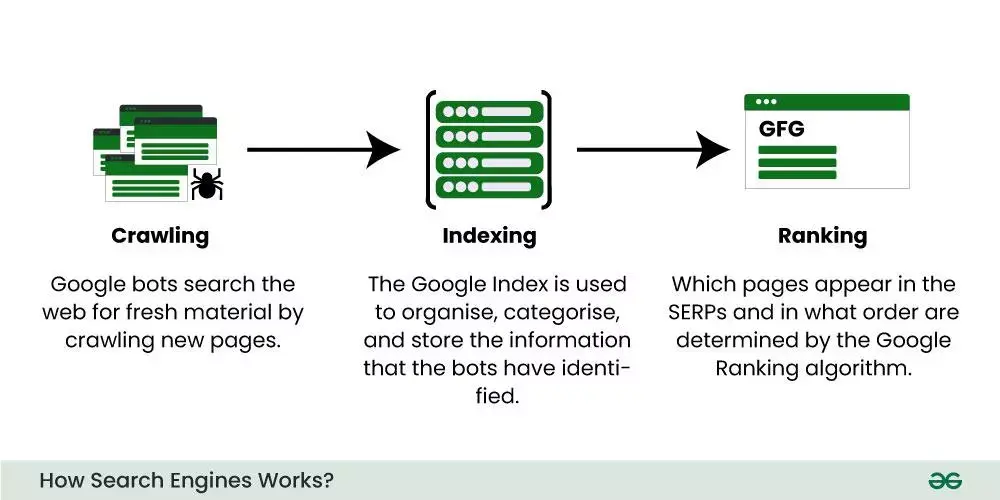
Once crawling wraps up, Google works through a process of understanding and extracting the key information on that website. Google calls this step indexing, explaining that it analyzes a page’s text, images, and video and stores that information in its massive database, the Google index.
To do this, Google runs through a process of rendering the page. Since it can’t feasibly read every word of text, it analyzes on-page SEO elements — page code, H1 through H4 headings, alt text, and similar signals.
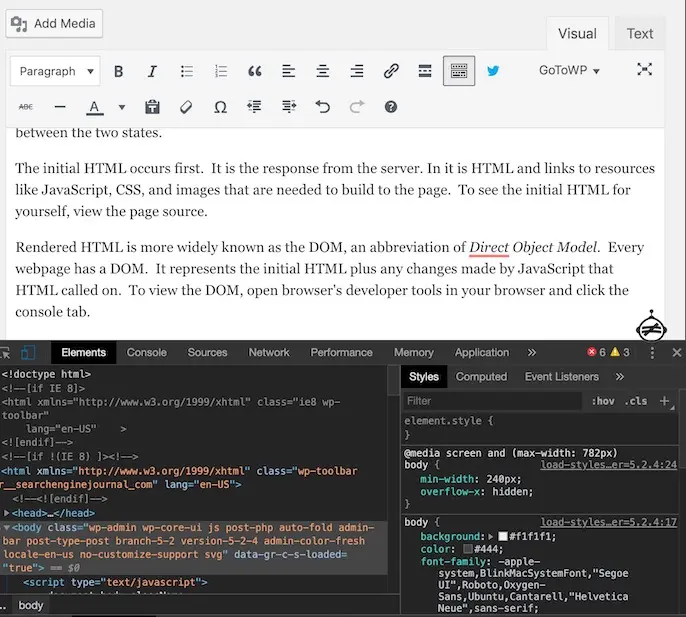
Think of this stage as an evaluation of a website’s genuine substance. Alongside content quality, sites that are user-friendly and properly configured for SEO earn a better score.
The process of analyzing a website to make that evaluation is what’s called rendering.
Finally, once indexing is complete, that content becomes eligible to appear in search results. When a user searches, Google selects and serves the results from its index that are most relevant to that query.
That said, if content doesn’t score well, or doesn’t match user intent, it will almost always land outside the top 100 results initially.
From there, the real work is chipping away at that gap — iterating and experimenting repeatedly to earn better results over time.
That covers how search engines actually work, before you dive into SEO strategy itself.
Understanding how search engines work is, in our view, a genuinely important first step toward understanding the digital marketing and SEO strategy you’ll build from here.
Still feels like SEO is a lot to take in? Plenty of people are already well ahead, with real know-how built up over time.
Figuring it out entirely on your own has its merits, but having expert support makes preparing for it — and actually seeing results — a lot easier. Start your SEO journey alongside Growth’s team of experts.
Related Reading
- The Complete A-to-Z Guide to SEO Marketing
- How to Write Titles and Links That Boost Search Rankings (+ Prompts)
- SEO Marketing Case Studies — Content Strategy Built on Keyword Analysis
- Video Search Optimization: How to Use YouTube Titles, Descriptions, and Tags
- Why Image Search Optimization Matters, and How to Use It
If you want to apply this to your own business — see how Growth approaches this in our SEO service, or if you need a concrete diagnosis of your specific situation, reach out through our contact page. We answer with the one customer who becomes revenue in mind — not raw traffic volume.
Frequently Asked Questions
What exact stages does a search engine go through?
As covered above, search engines broadly go through crawling (discovering and collecting pages across the web), rendering and indexing (analyzing page content and storing it in an index), and ranking and serving (selecting and displaying results matched to a query). Google’s own documentation describes the same three stages: crawling, indexing, and serving results.
How can I get Google to discover a newly published page faster?
The three methods covered above all work well. First, link to the new page from other already-indexed pages, internal or external (backlinks and internal links). Second, build a sitemap to tell search engines about your page list. Third, directly request crawling for the URL through Google Search Console.
What’s the difference between crawling and indexing?
Crawling is the process of Googlebot following URLs to discover pages and download their content. Indexing is the process of analyzing that downloaded content — text, images, and more — and storing it in Google’s massive database. As covered above, not every crawled page gets indexed; quality and how well it matches user intent both play a role.
Does getting indexed guarantee a top ranking?
No. Indexing simply makes you eligible to appear in search results at all. As noted above, content that doesn’t score well or match user intent often starts out ranked outside the top 100. From there, improving your content and iterating through repeated experimentation is what actually moves the ranking.