Content Marketing Case Studies and the Latest 2025 Trends
 임재복
임재복
Marketing is important, but no company can keep spending without results. Regardless of company size, most organizations want to use their marketing budget efficiently. Boosting sales through advertising may be the simplest lever, but it has clear limitations. If your ad performance has plateaued or you want to raise efficiency, content marketing case studies are where you’ll find the answer.
It’s not an exaggeration to say content marketing capability is a company’s marketing competitiveness. In the past, consumers made purchase decisions passively, based on the ads companies served them. Today, even middle and high school students can spot product placement on sight — marketing literacy has risen sharply.
Consumers no longer buy based on an ad alone; they’ve evolved to actively compare similar products and even request products directly from companies.
Amid this shifting environment, content marketing has evolved away from forced exposure and toward earning voluntary engagement from consumers. Providing the information and value customers actually need to build trust, and turning that into a long-term relationship, has become the core strategy.
In this article, we’ll look at successful content marketing case studies and build a strategy for how to get started with content marketing.
Success stories by content marketing channel
Social media content marketing success stories

One standout example of 2024 social media content is Seongsu-dong’s Beetles Bank flower shop, built on the concept of “you have to dance to buy flowers here.” This flower shop went viral through Instagram Reels and drew attention for its unconventional marketing strategy.
🚩 Viral marketing starts and ends with “planning”

Binggrae is a Korean company known for long-loved products like Banana Milk, Yoplait, and Melona. Given its size and long history, it had long taken a conservative approach to marketing — but the character “Binggrae-us,” introduced in 2021, and its use of social media rebuilt its brand image from the ground up.
Early on, there was internal concern that turning Banana Milk into a character would tarnish the company’s own established brand asset, and the slow, complicated approval process made it hard to keep up with fast-moving marketing trends. But through sustained persuasion and demonstrably successful marketing results, the internal culture shifted, and the brand successfully wove a so-bad-it’s-good sensibility into its corporate image.

Wix made heavy use of GIFs to turn complex, technical subjects into something bright and approachable. By pairing hard-to-parse content — like how to calculate SEO ROI — with a GIF of someone visibly struggling to do mental math, they achieved visual appeal and information delivery at the same time.
Innovative examples of owned-website content marketing
US toothpaste maker Colgate turned its own website into a space for engaging with customers. Rather than typical promotional content, it took the approach of providing the information consumers actually wanted to know. The company placed over 1,000 pieces of valuable content with major outlets like Fox News, CNN, People, and Health and Prevention, resulting in an engagement rate more than 25% higher than display advertising.

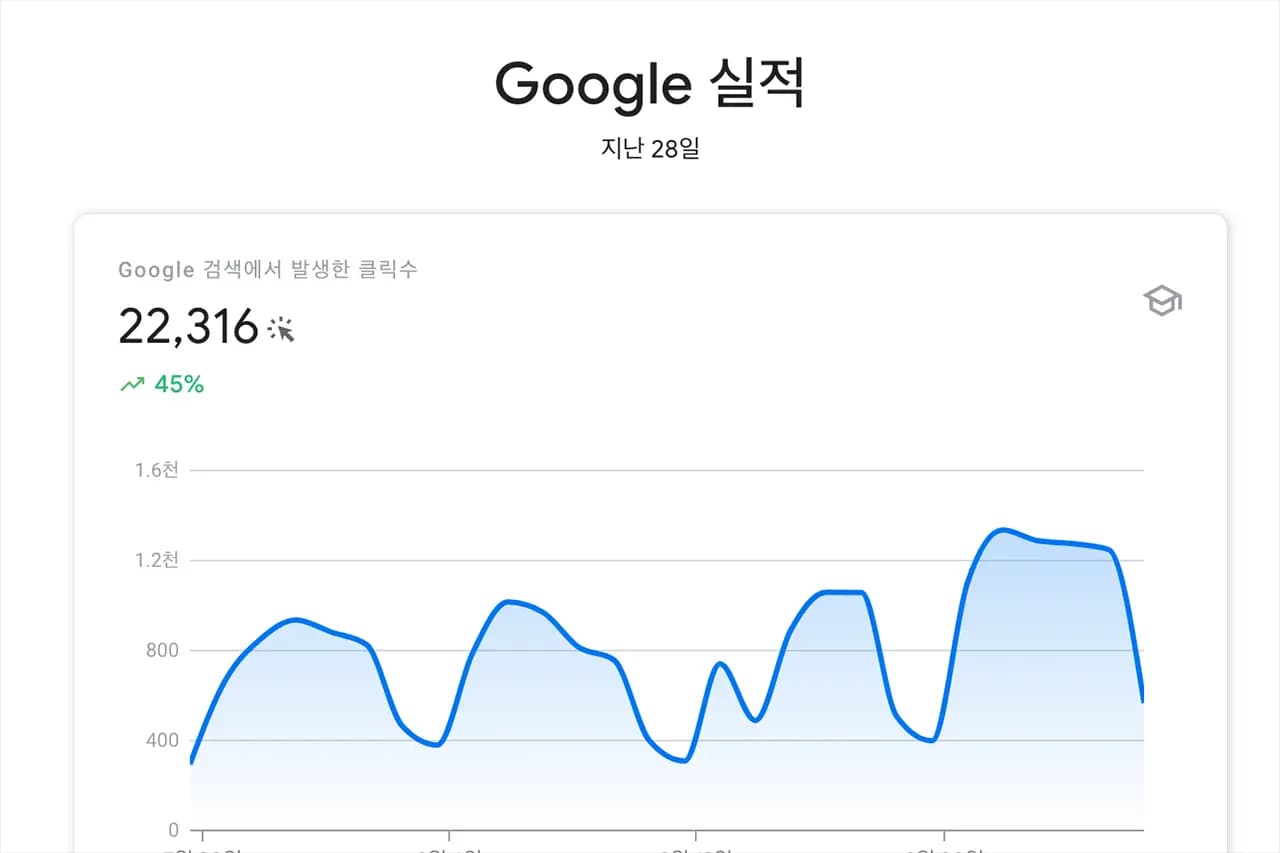
DataHunt, a subsidiary of the global company FiscalNote, is a data-processing startup. DataHunt analyzed the keywords decision-makers search for and built technical content around them. Working from a solid grasp of AI fundamentals, it built out its own content covering technical explanations, use cases, and case analyses — and achieved the #1 Google ranking even for a keyword with 22K in search volume.
In 2024, expert-led content has only grown more important for building brand trust and improving search visibility. Content aligned with Google’s E-E-A-T (Experience, Expertise, Authoritativeness, Trust) guidelines is more likely to achieve strong search rankings. Google’s official documentation explains that, among the four E-E-A-T elements, it weighs trust most heavily, and recommends content that demonstrates firsthand experience actually using the product or service.
Effective thought leadership content formats include bylined articles from in-house experts, brand-produced industry trend forecast reports, survey reports, and customer case study content.
An innovative approach to video content marketing

Grainger is an industrial supplies and equipment distributor that entered the Fortune 500 on the strength of its content strategy alone. It produced a video series called “Everyday Heroes,” capturing the stories of customers working tirelessly to run their businesses. The 4-5 minute videos featured moving stories from a diverse range of customers who use Grainger products — glassblowers, firefighters, ice castle builders, janitors, coffee roasters, and blacksmiths.
🚩 A YouTube marketing guide for B2B companies
Founded in 2011, Dollar Shave Club sells razors and personal grooming products by subscription. Its 90-second video, “Our Blades Are F***ing Great,” released on March 6, 2012, generated 12,000 orders within two days and became a massive talking point. With a sharp sense of humor, it delivered the brand name and service in a memorable way, using such an unconventional approach that it was barely recognizable as a grooming company’s ad at first glance.

In 2024, Hyundai Motor produced a 10-minute “snack movie” called “Night Fishing” starring actor Son Suk-ku, pioneering a new content genre. This format sits between short-form and long-form content, effectively delivering brand messaging and storytelling in a short window.
This snack-movie format allows for deeper storytelling than traditional advertising while remaining far easier to consume than a full-length film or drama series.
The AI-driven content revolution: cases and strategy
The state of AI adoption in content marketing
The changes AI technology has brought to marketing accelerated further in 2024. According to Semrush’s “2024 AI Content Marketing Report,” 67% of the 2,600 companies surveyed use AI tools for content marketing and SEO.
Even more notable, 52% of companies are already piloting AI in video production. This trend is a key indicator that AI is no longer confined to text generation and is expanding across content formats.
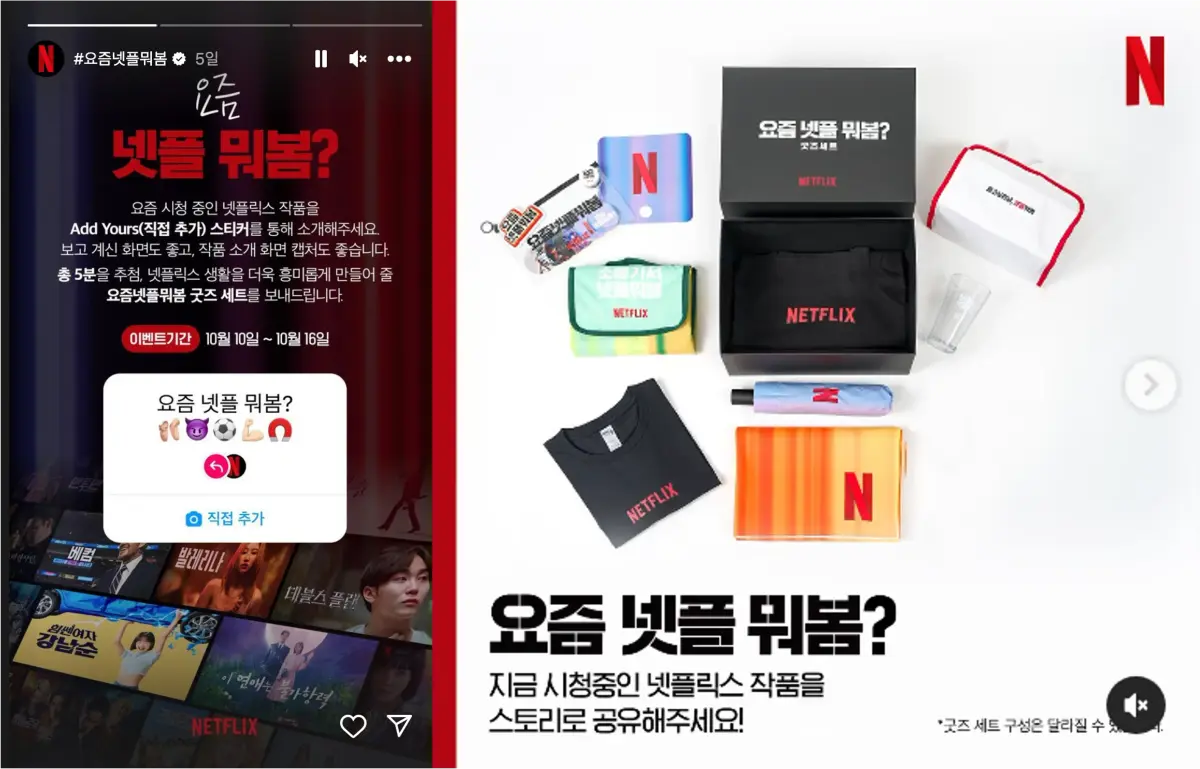
Among AI-driven content marketing case studies, Netflix’s success has drawn the attention of many marketers. Netflix delivers personalized content via an AI-based recommendation algorithm, achieving results in increased content consumption time and improved retention of new subscribers. It’s widely regarded as a comprehensive content marketing case study that goes beyond simply applying technology, improving the overall user experience.

Cosmetics company Sephora’s content marketing case study also demonstrates an innovative approach combining AI and AR technology. Sephora introduced virtual product try-on and rolled out AI-driven email campaigns. This case proves that the fusion of technology and marketing can translate into real business results.
Coca-Cola’s “Y3000” project

Among the most talked-about AI-driven content marketing cases in recent memory is Coca-Cola’s “Y3000” project. Through its “Coca-Cola Y3000 — Created with AI and Humans” project, Coca-Cola wove an AI-imagined vision of the future into its brand storytelling. The project drew attention for going beyond simple product promotion, taking a novel approach to predicting and expressing content for a future era.
What makes Coca-Cola’s case special is that it used AI not just as a production tool, but as a creative collaboration partner. The marketing team posed AI the question, “What might Coca-Cola of the future look like?” — and fed the resulting images and concepts into actual products and campaigns.
In the process, consumers got an indirect taste of a future beverage experience, and the brand reinforced its innovative image. Coca-Cola’s Y3000 project, among AI-driven content marketing cases, demonstrated a balanced approach that achieved technical innovation while preserving the brand’s essence.
Format polarization: a coexistence strategy for short-form vs. long-form
Short-form content success stories
The clearest trend to emerge in the content marketing landscape is the polarization of content formats. On one end, short, punchy short-form content; on the other, in-depth long-form content — and the coexistence of the two is only intensifying. This trend is an important indicator that consumer content consumption habits are diversifying.

This trend has also expanded Korea’s short-form drama market. Companies including Krafton, Spoon Labs, Fox Media, and Watcha are investing in this space, and content formats that can be conveniently consumed in one to two minutes are becoming firmly established. These content marketing cases can be understood as a strategic response to the fragmentation of consumer attention in the digital environment.
A strategic analysis of long-form content

Even as short-form content draws attention, long-form content marketing cases that defy expectations keep emerging. A representative example is “Pungyanggo,” a variety show produced by Antenna’s “Ddeun Ddeun” studio. Despite averaging 1.5 hours per episode, its first episode drew 10 million views — a major success. It’s a meaningful content marketing case that breaks the conventional wisdom that only short content can succeed in the digital environment.
Analyzing what drives success in long-form content marketing cases shows that depth and building empathy are the key factors. Multiple cases demonstrate that even long content will be consumed to the end if the viewer or reader feels it delivers enough value.
This is especially true in B2B fields that require expertise, or product categories that involve complex decision-making, where long-form content offering detailed information is often actually more effective.
Recent successful content marketing cases suggest that, whether long-form or short-form, what matters is not the format itself but choosing what fits the target audience’s needs and consumption context. Short-form and long-form aren’t competitors — they’re complementary, playing different roles at different stages of the customer journey.
A content-length strategy tailored to brand identity
Analyzing content marketing cases from 2024 and 2025 shows that building a content-length strategy suited to a brand’s identity and goals is a key success factor. The first consideration is the target audience’s content consumption habits.
Gen Z and Gen Alpha generally lean toward short, high-impact content, but they actively consume in-depth long-form content in areas they’re genuinely interested in. It’s more effective to build strategy on actual behavioral data rather than relying purely on generational stereotypes.
A second important factor is clearly identifying which stage of the customer journey a piece of content is targeting. In multiple content marketing cases, it’s proven effective to drive interest with short, punchy short-form content at the awareness stage, then use detailed long-form content to drive conversion at the consideration and decision stages.
Ultimately, successful content marketing cases show that the value and quality of information inside the content matters more than its length. Whether short or long, content needs to deliver useful, relevant information to its target audience. Some companies have adopted a strategy of producing content on the same topic in multiple lengths and formats, letting customers choose what fits their own situation and preference.
Content marketing enters the era of taste-based targeting
The rise of taste-based targeting, and why it’s happening
One of the most important shifts in the 2025 content marketing landscape is a paradigm shift in targeting. Moving away from traditional age-based targeting, targeting based on taste and context is becoming increasingly important. This shift stems from the insight that consumption patterns vary widely within the same age group, depending on individual interests and lifestyle.
Recent content marketing cases show that targeting based on actual behavior and taste — not just demographics — delivers stronger results.
Effective taste-based content marketing cases share a common strategy: focusing on the “context” in which a product is used. That is, they focus on when, where, and why a consumer uses a product, and create content that delivers value fit for that specific situation. This approach makes the touchpoint between brand and consumer feel more natural and meaningful.
CU’s content marketing strategy targeting the MZ generation

CU has drawn attention for a content marketing strategy built on a deep understanding of its target customers’ taste and cultural codes. In particular, a range of content marketing cases precisely targeting the MZ generation (Korea’s Millennial-and-Gen-Z cohort) have driven high engagement and buzz.
The mockumentary “Future Strategy Snack Team,” featuring witty cast members like model Jung Hyuk and comedians Nam Hyun-seung and Nam Hyun-woo, introduces unusual “modisumer” (modify + consumer) combinations built around CU’s popular products.
CU has also released the “Anigeundae” (“Wait, but…”) series, in which entry-level office worker Haru, job-seeker Siwoo, and their friends sit on a convenience-store chair that forces them to speak only the truth, unpacking relatable episodes about romance, worries, and slice-of-life realism.
Even before this, CU had already scored hits with series like “Convenience Store Veteran” and “Convenience Store Ttukttaki.” CU’s content marketing is widely regarded not as simple product promotion, but as a fresh approach that reflects its target consumers’ actual consumption behavior and taste.
What makes CU’s content marketing cases stand out is that its approach isn’t based simply on age brackets, but on a deep understanding of the MZ generation’s actual interests and consumption context, reflected directly in the content. In particular, its strategy of naturally connecting with consumers who share a specific taste through content at the intersection of entertainment, food, and lifestyle is an approach other brands would do well to benchmark.
💡 How should you approach B2B marketing? (vs. B2C marketing)
Content marketing strategy for the senior generation
Another notable shift in the content marketing landscape is the expansion of strategies targeting the senior generation. As the economic slowdown has reduced young people’s spending power, seniors — who relatively have more disposable income and enjoy spending on themselves — have emerged as a new consumer segment.
💡 Adding a 1% edge to the consumer purchase decision model: the AISVAS model

One senior-targeted content marketing case is Selex, an adult nutrition brand, which launched a powdered health supplement targeting seniors, who commonly fall short on protein. Rather than emphasizing only the product’s functional aspects, the company built content reflecting seniors’ genuine interest in an active retirement and health management.

One particularly notable senior-targeted content marketing case makes use of celebrities who were active in the 1980s and ’90s. This emotionally resonant approach taps into nostalgia for the senior generation, strengthening the emotional connection between brand and consumer.
Successful senior-targeted content marketing cases share a common trait: rather than treating seniors as a single monolithic group, they recognize them as individuals with diverse interests and lifestyles, and provide content that meets their genuine needs and desires.
29CM’s personalized push notifications
A content marketing case that clearly demonstrates the power of taste-based targeting is 29CM’s personalized push notification strategy. 29CM analyzed user characteristics across dimensions like gender, age, purchase history, and brand preference, and sent personalized push notifications based on that analysis.

Notably, this strategy achieved a click-through rate more than six times higher than standard push notifications.
Specifically, over a 46-hour test window, 29CM recorded a click-through rate 3 percentage points higher than generic push notifications — a result that demonstrates the importance of content that reflects a customer’s actual interests and taste, not just message delivery. 29CM’s content marketing case shows how a data-driven, personalized approach can translate into real business results.
The important lesson from 29CM’s case is that effective content marketing is shaped not just by the content of the message, but heavily by timing, context, and the level of personalization. Sophisticated segmentation and targeting built on customer data is a core strategy for achieving high efficiency at low cost.
Deeply understanding customer taste and behavior patterns, and building a content strategy around it, will be the key to success. Content marketing cases that reflect actual interests and consumption context — rather than surface-level traits like age or gender — are already delivering stronger results, and this trend is expected to continue.
The shifting landscape of content marketing platforms
The rise of text-based social media and how it’s being used
In 2025, the influence of text-centric social media like LinkedIn and Threads is expected to keep expanding. Notably, what was once mostly individual-user activity is increasingly evolving into a stage for companies’ content marketing efforts.
LinkedIn currently has 4.14 million users in Korea and has established itself as a hub for personal branding and business networking. As the world’s largest business network, used by over 1.3 billion people across roughly 200 countries, it’s considered a core stage for B2B content marketing.
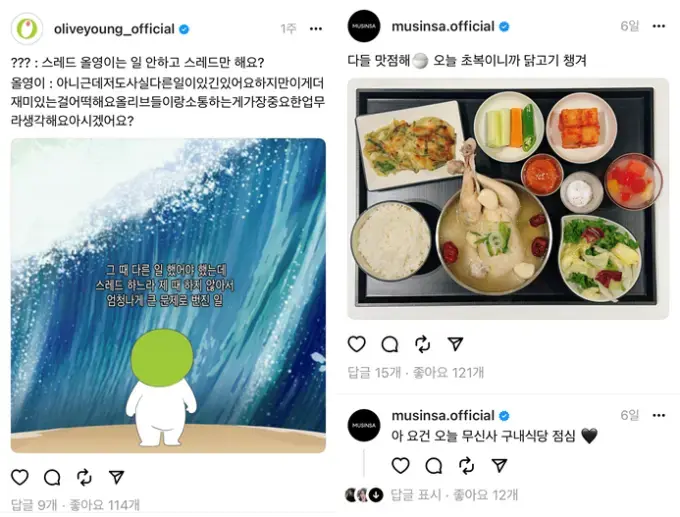
Meanwhile, Threads, launched in August 2023, grew rapidly, reaching 4.08 million users in Korea within just a year. Centered on writing that showcases expertise, the platform offers an environment well suited to in-depth content marketing.
In practice, several leading content marketing cases have successfully built brand trust and authority on Threads by sharing industry insight and specialized knowledge.
Content marketing cases that make effective use of text-based social media share a few common traits. They build thought leadership by offering in-depth industry analysis and specialized knowledge. They also make sophisticated topics accessible through a casual, authentic tone. And ultimately, a community-focused content strategy can drive active conversation and engagement.
B2B content marketing success stories and strategy
Another notable shift in B2B content marketing is that influencer marketing — long a B2C staple — is spreading into B2B. B2B influencers, as industry experts and thought-leadership content creators, have enabled many B2B companies to build trust and authority through partnerships with them.
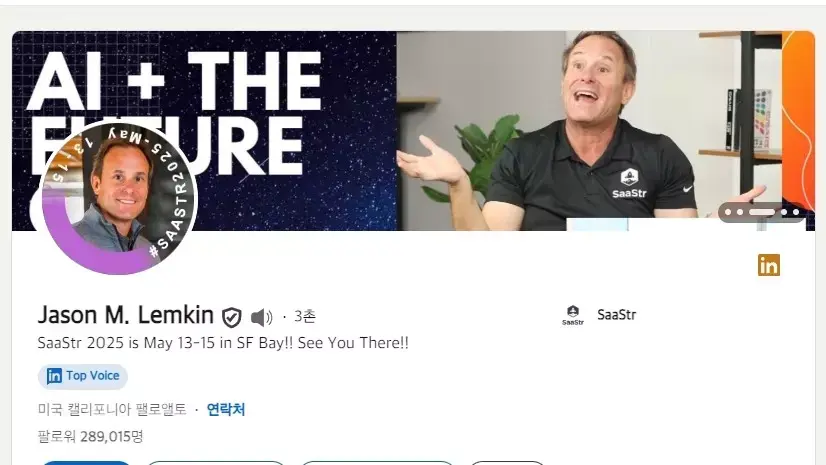
Jason Lemkin’s content marketing case shows the power of a B2B influencer well. A SaaS expert and community builder, he wields significant influence in the business software industry by sharing his expertise. Many practitioners follow his insights and participate in the SaaStr community he runs, which has become an effective marketing platform for related companies.
Successful B2B influencer content marketing cases share a few key strategies. First, they offer industry insight and genuinely valuable information, not just product promotion. On that foundation, they deliver a consistent message over the long term through sustained partnerships.

The B2B SaaS company Slack’s content marketing case is also worth noting. Slack already had strong brand awareness both globally and in Korea — most startup employees, marketers, and developers already knew what Slack was. So instead of chasing more awareness, Slack focused its content marketing on converting prospects stuck at the “decision” stage.
The representative content format for this is the “customer story” — introducing a client company, showing their pain point, and explaining how Slack resolved it.
Conclusion: what stays constant about content marketing in a changing landscape
The content marketing landscape is changing rapidly, driven by advances in AI, platform diversification, and shifting consumer behavior. Yet through all this change, the essence of content marketing remains the same: how deeply you understand your target customer.
Every successful content marketing case shares one thing in common — accurately understanding the target customer’s needs and preferences and delivering value that matches.
“Nudge” marketing is an approach that reflects this shift well. This strategy — indirectly guiding purchase decisions without directly pressuring consumers to buy — has evolved, in combination with the 5C framework (customer value, concept, customer experience, communication, channel), toward “guiding customers to what they want through a story that captures their heart.”
This approach offers advantages like focusing on segmented target groups to deliver personalized messages, building trust through deep interaction with small groups, and maximizing word-of-mouth impact through the influence of niche groups.
The key trends to watch in the current content marketing landscape are as follows.
- AI-driven content creation and personalization will continue to spread.
- The polarization of content into short, punchy short-form and in-depth long-form will become more pronounced.
- Thought leadership content will grow even more important.
- B2B influencer marketing will continue to spread.
- As social media increasingly functions as a search engine, content strategies suited to that shift will become necessary.
Ultimately, understanding and adapting to these trends matters for successful content marketing — but more fundamentally, the key is deeply understanding your target customer and creating content that delivers real value to them.
Content marketing will become a valuable long-term asset for a company, not just a short-term performance play. Even as the landscape keeps changing, the essence of content marketing — delivering valuable information and experiences to customers — will remain just as important.
Related reading
- Content marketing: a guide from definition to strategy
- Earned media
- Evergreen content
- A guide to brand content marketing
- ESG content marketing cases and a practical strategy
If you want to apply this to your own business — you can see Growth’s approach on our content marketing services page, and if you need a concrete diagnosis of your situation, reach out via Contact us. We answer based on the one customer who becomes revenue, not on traffic volume.
Frequently Asked Questions (FAQ)
What’s the advantage of content marketing over advertising?
Advertising can boost revenue quickly, but it has limited cost-effectiveness, and exposure disappears the moment you stop spending. Content marketing, by contrast, builds trust and long-term relationships by providing the information and value customers actually need — well-made content remains a company asset over time, generating ongoing traffic.
Should we focus on short-form or long-form content?
The target audience’s needs and consumption context matter more than format. It’s effective to use them in a complementary way — capturing attention with punchy short-form content at the awareness stage, and driving conversion with detailed long-form content at the consideration and decision stages. The two aren’t competitors; they cover different stages of the customer journey.
What matters most for content that ranks well in search?
Google prioritizes people-first content that demonstrates Experience, Expertise, Authoritativeness, and Trust (E-E-A-T), and weighs trust most heavily among the four. Content is more likely to rank highly when it shows firsthand experience and expertise from actually using the product or service, has a clearly identified author, and precisely answers search intent.
Does content marketing work for B2B companies too?
Yes. In B2B fields that involve complex decision-making, content offering detailed information is often actually more effective. Common strategies include using customer case study content to help convert prospects, and sharing industry insight on text-based platforms like LinkedIn and Threads to build thought leadership and authority.