Does a B2B Newsletter Really Drive Revenue?
 임재복
임재복
Analyzing the Real Conversion Impact of B2B Newsletters
If you work in B2B marketing, you’ve probably asked yourself this at some point: is the newsletter you send out every week actually driving business results? Beyond the satisfaction of “sending good content,” let’s look at concrete data on how much newsletters actually contribute to lead generation and revenue conversion.
The strategic value of email in B2B marketing
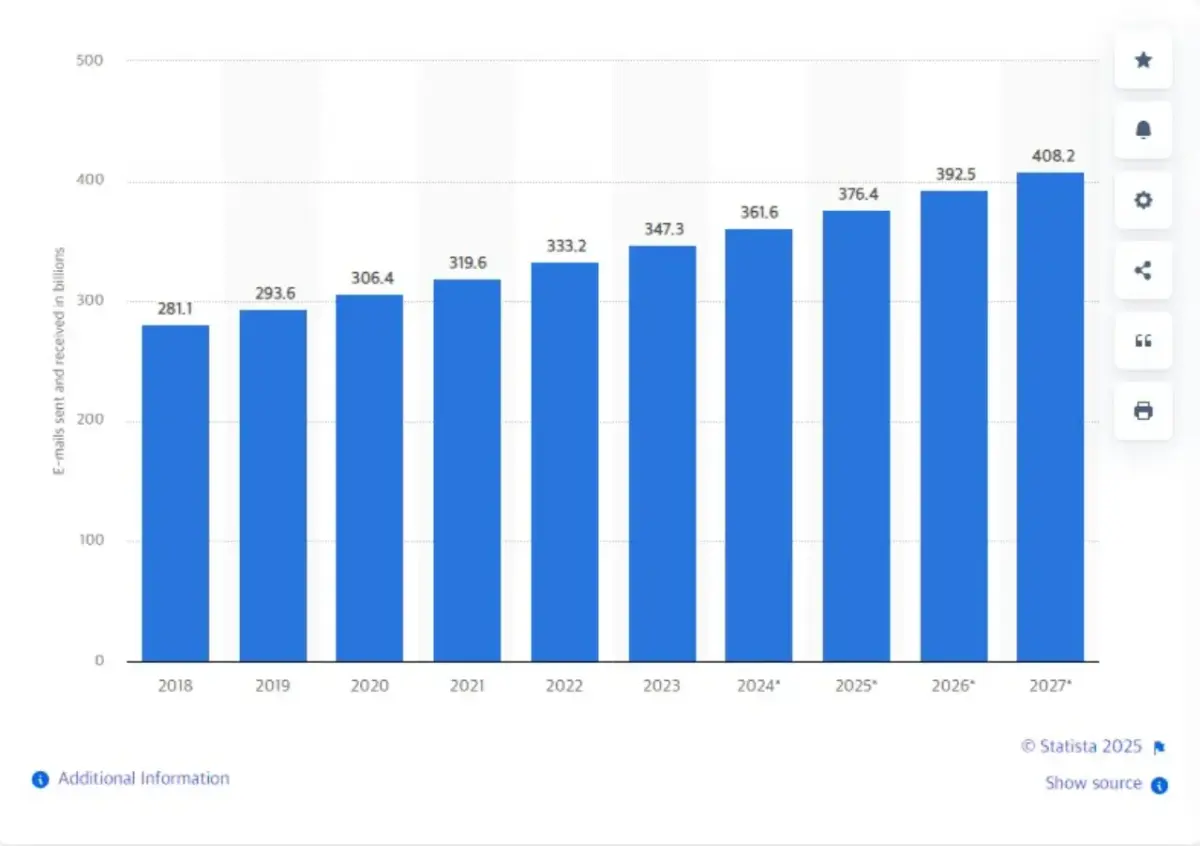
Did you know email marketing still forms a core pillar of B2B marketing? The number of email users worldwide is expected to reach 5 billion by 2025. Remarkably, 99% of email users check their inbox up to 20 times a day. That’s not just a number — it represents an unprecedented marketing opportunity for B2B service providers.
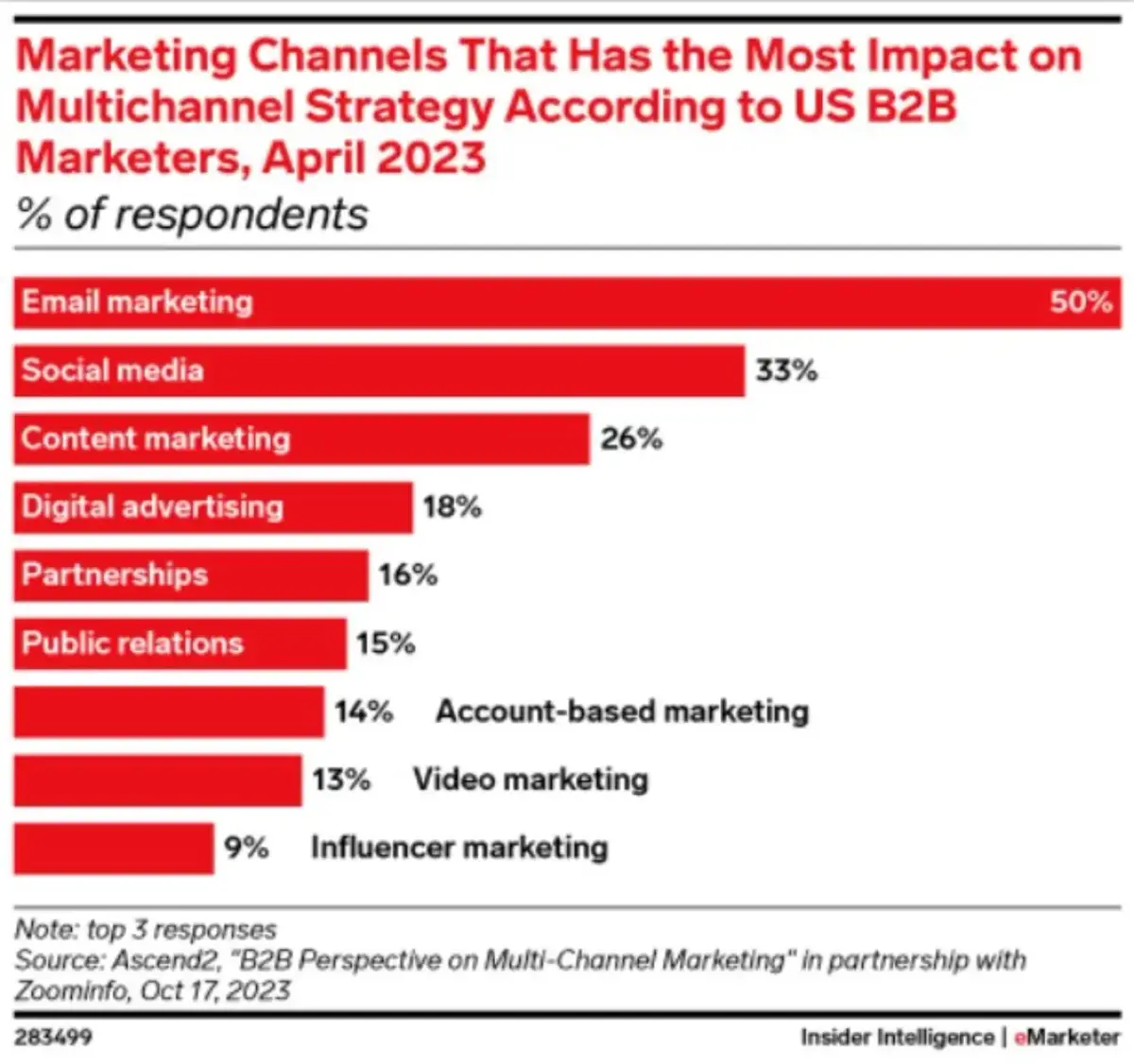
B2B marketers’ own assessments back this up. More than half of B2B marketers name email as their highest-revenue-generating digital channel, and most marketers say it’s the most efficient way to attract leads. More specifically, 44% of US-based B2B marketers say email delivers the most visible results as a service or product distribution channel.
What sets email apart from other marketing channels is its “direct ownership.” Social media and search ads depend on the algorithms and policy changes of third-party platforms. Email, by contrast, gives companies full control over message delivery and the customer relationship. That direct line of communication matters even more when B2B’s long sales cycles demand sustained relationship-building.
Email marketing efficiency through the lens of ROI
The real power of email marketing shows up clearly in its return on investment. According to Litmus’s analysis, email’s average ROI is $36 for every $1 invested — higher than any other channel — and it’s overwhelmingly ahead when compared with other marketing techniques. Companies with more mature email programs sometimes achieve an ROI far higher than that.
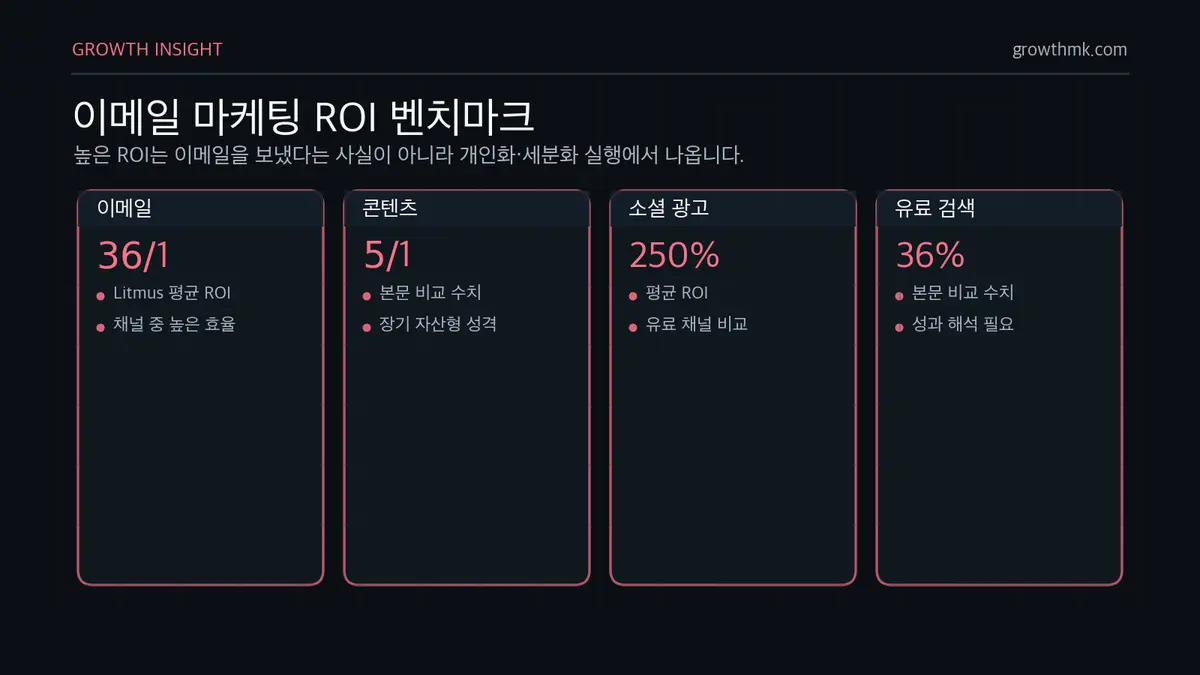
Comparing that figure with other channels makes it even clearer how strong it really is. Content marketing returns $5 for every $1 invested. Social media ads average around 250%, and paid search sits at about 36% — against that backdrop, email marketing’s efficiency is in a league of its own. Thanks to this sustained profitability, the global email marketing market is worth roughly $13 billion a year.
But here’s the catch: not every email campaign delivers that kind of ROI. These results are only possible when you actually use email’s core strengths — personalization and segmentation. In other words, simply “sending an email” doesn’t automatically produce a high ROI; how you send it makes all the difference.
Reading the key performance metrics of B2B email campaigns
To objectively evaluate the real performance of B2B email marketing, you need to understand the key metrics precisely. Starting with lead generation, email marketing delivers an average of 32% engaged leads — the second most efficient lead-generation method after live events and in-person pitches (33%). The average conversion rate for B2B email marketing campaigns is over 2.5%, which holds up well against B2C’s average conversion rate of 2.8%.
Looking more closely at the metrics reveals an interesting pattern. Average open rates vary widely by source, from 15% to 42%. Average click-through rate (CTR) sits between 2.4% and 3%, and click-to-open rate (CTOR) is around 7.4%. Bounce rate stays low, at around 2.5%.
What’s worth noting is the wide gap in open rates. A spread from 15% to 42% can’t be explained by luck or industry differences alone — it means results vary dramatically depending on the quality and sophistication of the email marketing strategy. Most high-performing campaigns are the result of systematic segmentation, thorough personalization, and a value-first content strategy.
The power of personalization and segmentation is genuinely striking. A personalized subject line alone can lift email open rates by 26%, and segmented campaigns raise open rates by 14.31% and click rates by a staggering 100.95%. Personalized emails are opened 82% more often than generic mass emails, and research even shows segmented emails generate “18 times more revenue.”
What should a B2B newsletter actually do?
The role of newsletters in the B2B customer journey
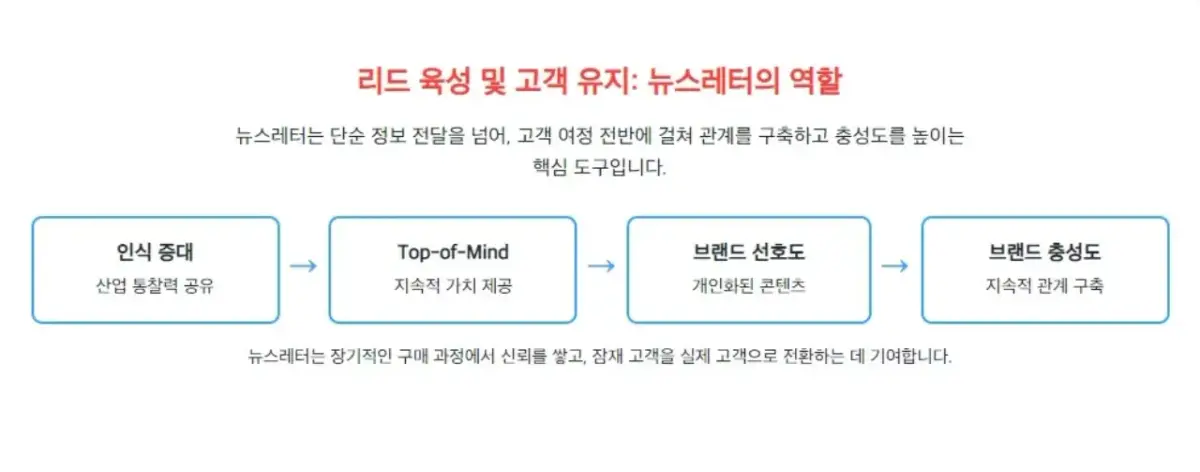
Newsletters play an essential role in nurturing leads and retaining customers in a B2B environment. By nurturing leads over time with content that matches their evolving needs, newsletters increase the likelihood of conversion. Combining B2B lead nurturing and customer engagement strategy with sales funnel optimization has been shown to create loyal, high-value customers.
Newsletters effectively support multiple stages of the customer journey. First, they raise awareness by sharing industry insights and trends. Second, they consistently deliver expert content that builds “top-of-mind awareness” beyond simple brand recognition. Third, personalized content builds “brand preference.” Ultimately, by showcasing success stories, offering exclusive content, and continuing to deliver value after purchase, newsletters help convert that brand preference into “brand loyalty.”
A well-built newsletter also establishes thought leadership, positioning the brand as a trusted resource in its industry. Consistently delivering valuable, relevant content builds trust and deepens engagement with the audience. To re-engage readers who have drifted away, offering exclusive value — early access to reports, tailored content, unique insights — matters a great deal.
A newsletter strategy for building long-term relationships
Newsletters are effective for lead nurturing and retention precisely because they’re a relationship-building tool, not just an information-delivery channel. B2B purchase decisions involve multiple stakeholders, cover complex service requirements, and unfold over a very long sales cycle. In that environment, newsletters are especially good at “sustaining the relationship over a long purchase process” and “facilitating communication between qualified prospects and the sales team.”
A B2B newsletter functions as more than a “marketing message” — it’s a relationship-centered mechanism for delivering ongoing value. Rather than simply pushing information, it focuses on consistently delivering relevant, educational content that anticipates and addresses the evolving needs of multiple stakeholders within the buying center. This kind of sustained, permission-based communication builds deep trust and positions the brand as an indispensable resource.
As a result, it effectively shortens the sales cycle by engaging and nurturing leads early. It also significantly increases customer lifetime value (CLTV) by reducing churn through sustained engagement after purchase. This long-term, value-first approach is what sets it apart from short-term, transaction-focused marketing efforts. It’s also ideal for “delivering educational content that demands attention,” systematically giving B2B buyers the information they need to make complex decisions.
A guide to building a B2B newsletter that succeeds
Building a value-first content strategy
The first key element of a successful B2B newsletter is value-first content. The most successful newsletters consistently prioritize delivering value to their audience over promotional content. Educational content can include industry analysis, research findings, expert interviews, and practical how-to guidance. Aim for an ideal ratio of roughly 80% educational content to 20% promotional material.

Because B2B readers are busy, newsletters need to be concise and quick to consume. Keep it to no more than five or six sections, staying focused and tight around the core message. Visual elements also matter for engagement — emails with images see a 30.27% higher open rate than text-only emails, and including video can boost open rates by 19% and click-through rates by 65%.
Use charts, infographics, and images to break up text and improve readability. A clear call to action (CTA) also matters, guiding the recipient to the next step. Include a clear, compelling CTA and route recipients to an optimized landing page.
How to implement personalization and segmentation
Personalization and segmentation are essential to making a newsletter relevant. A generic, one-size-fits-all newsletter rarely delivers meaningful results in the B2B space. Instead, segment your audience by industry, job function, company size, stage of the buying journey, or past content interactions. Sophisticated personalization tailors newsletter content at the individual level, drawing on data points like past content engagement, purchase history, or specific business challenges.
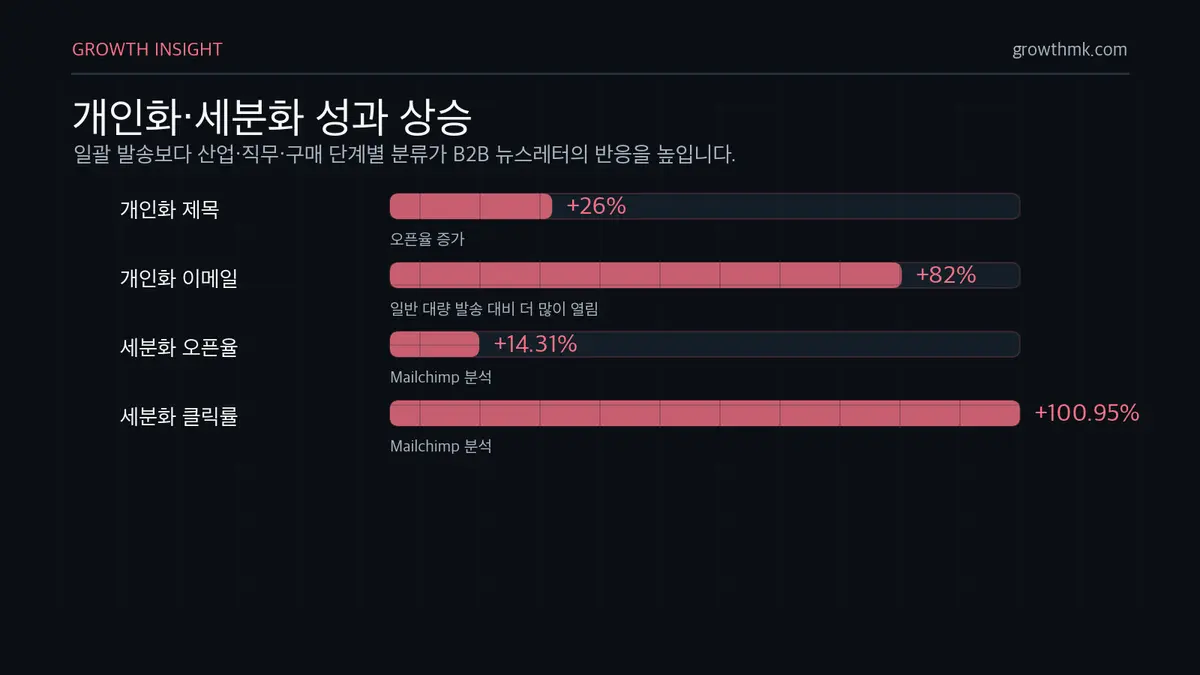
In concrete terms, a personalized subject line can lift email open rates by 26%, and personalized emails are opened 82% more often than generic mass emails. Mailchimp’s campaign analysis found that segmented campaigns lift open rates by 14.31% and click rates by 100.95%. In even more dramatic cases, thorough email segmentation increases open rates by 30% and click rates by 50% versus unsegmented campaigns.
The reason for this gap is clear: B2B buyers simply don’t engage with generic messages that have nothing to do with their specific business situation. When they receive content tailored to their industry, company size, and current challenges, they show far more interest — and that interest translates into real action.
Technical factors for newsletter optimization
Mobile optimization is no longer optional. According to statistics compiled by HubSpot, more than 55% of emails are opened on mobile devices, so you need to make sure your email campaigns are mobile-friendly. A poor mobile experience can immediately lead to deletion and unsubscribes. Apply responsive design, keep buttons touch-friendly in size, and optimize load times.
Publishing cadence and timing also need to balance your audience’s availability with your team’s content-production capacity. Monthly newsletters are most common in B2B, giving you enough time to develop content without overwhelming subscribers. B2B emails perform best during weekday business hours (Tuesday through Thursday), particularly around 10 a.m. What matters more than frequency is keeping a consistent schedule.
The synergy of these elements forms the foundation for building trust and authority in B2B newsletter marketing. Combining high-quality, value-first content, deep personalization, and a consistent, well-timed cadence goes well beyond simply delivering information. The goal should be becoming a trusted resource that consistently anticipates and addresses the recipient’s professional needs — turning the newsletter into a “genuine commitment” to your audience, evolving from a mere marketing tool into a valuable industry resource.
If your B2B newsletter doesn’t seem to be working

Everything we’ve covered so far confirms that B2B newsletters are a powerful engine for driving business results, not just a tool for delivering information. The data alone tells you newsletters remain one of the most efficient marketing channels available.
But the most important distinction is that “how you send it” determines success or failure. The fact that average open rates range from 15% to 42% shows just how sharply outcomes diverge based on the sophistication of your strategy. That means a B2B newsletter isn’t a tool you can simply “set and forget” — it’s a sophisticated marketing system that requires deliberate strategy and continuous optimization.
Key strategic elements for success
The core of a successful B2B newsletter comes down to value-first content (80%), thorough personalization and segmentation, and long-term relationship-building. The key is establishing thought leadership by offering industry insight, expert interviews, and practical methodology — going well beyond simple product promotion. Because B2B buyers go through a complex decision-making process involving multiple stakeholders, newsletters need to sustain value and maintain the relationship throughout that long journey.
For B2B email marketing success, mobile optimization, an appropriate cadence (monthly), and sending at the optimal time (Tuesday–Thursday, around 10 a.m.) all matter. Visual elements and video significantly improve open and click rates, while a clear CTA linked to an optimized landing page raises conversion.
But the most important thing is positioning your newsletter as a “trusted industry resource,” not just a marketing tool. It needs to become a “genuine commitment” that consistently anticipates and addresses the recipient’s professional needs. Only that kind of approach pre-engages and nurtures leads, shortens the sales cycle, sustains the relationship after purchase, and maximizes customer lifetime value (CLTV).
From theory to execution: the real-world challenges
The data and strategies covered so far may look compelling, but plenty of practical constraints and challenges await once you actually put them into practice. The resources a company can dedicate to running a newsletter vary enormously depending on its size and situation, from startups to large enterprises. A startup with a five-person marketing team and a large enterprise running a 100-person marketing organization simply can’t use the same playbook — differences in budget, headcount, time, and technical infrastructure completely change how execution actually looks.
An even bigger problem is the common mistakes many companies make when starting a newsletter. Dazzled by an attractive ROI figure, many launch hastily and end up disappointed when results don’t match expectations. Even companies that understand the importance of personalization and segmentation often end up batch-sending to everyone, and despite pledging to build value-first content, they frequently drift toward product promotion. Especially when early results fall short of expectations, it’s common to make the mistake of giving up or constantly changing direction.
Looking at real success stories, even the companies achieving standout results weren’t perfect from day one — they built their own optimized systems through a great deal of trial and error. Conversely, most failed cases repeat a similar pattern of mistakes. If you can recognize and avoid these failure patterns in advance, you can save unnecessary time and money and reach results faster. In the next installment, we’ll cover everything you need to know at the execution stage — from realistic resource-allocation strategies by company size to the specific mistakes that come up most often in the field and how to avoid them. Build on this theoretical foundation with practical, field-tested know-how to complete a truly effective B2B newsletter strategy.
Related reading
- The Complete B2B Marketing Guide — Strategy, Channels, ABM, Lead Generation, and Measurement
- What Should Be Different About Marketing to B2B Decision-Makers?
- Where Should B2B Marketing Position Itself in the AI Era?
- How Do B2B Marketing Channels Differ from B2C?
- B2B Marketing Approaches: Video vs. Text Content Marketing
If you’d like to apply this to your own business — see how Growth approaches it in our B2B marketing service, and if you need a diagnosis for your specific situation, reach out through our contact page. We answer in terms of the one customer who will become revenue, not traffic volume.
Frequently asked questions (FAQ)
What’s the right publishing cadence and send time for a B2B newsletter?
Monthly newsletters are most common in a B2B setting, since they give you enough time to develop content without overwhelming subscribers. Send times during weekday business hours (Tuesday through Thursday), especially around 10 a.m., tend to perform best. That said, consistency matters more than frequency.
Is email marketing’s ROI really that high?
Yes, with a caveat. Per Litmus’s analysis, email’s average ROI is about $36 for every $1 spent — higher than any other channel. But not every campaign achieves that. It’s only possible when you genuinely leverage email’s core strengths, like personalization and segmentation — how you send it determines success or failure.
What’s the right ratio of value content to promotional content?
The most successful B2B newsletters aim for roughly 80% educational/value content and 20% promotional content. Content that gives subscribers real value — industry analysis, research findings, expert interviews, practical methodology — should be the core, and because B2B readers are busy, it’s best to keep things concise, with no more than five or six sections.
Do personalization and segmentation actually make a difference?
A big one. A personalized subject line lifts open rates by 26%, and personalized emails are opened 82% more often than generic mass emails. Per Mailchimp’s analysis, segmented campaigns lift open rates by 14.31% and click rates by 100.95%. Because B2B buyers don’t respond to generic messages unrelated to their industry, company size, or current challenges, segmenting by industry, job function, and buying stage is essential.