
How Do You Actually Build an SEO Budget?
 임재복
임재복
Building an SEO budget is one of the most important steps for growing your marketing without spending recklessly. It sounds obvious, but marketing spend should never hurt your business — it should help you earn more revenue.
In this article, we’ll walk through how to build an SEO budget, what an average SEO budget plan looks like, and how to structure your budgeting process. If you’d like a detailed SEO quote, feel free to reach out to Growth.
Why SEO Budget Planning Matters
What an Average SEO Budget Looks Like

That said, most of what’s listed here — backlink work, temporary blog-ranking boosts — targets purely short-term effects. For long-term lead and traffic growth, tactics like this can actually work against you.
On average, many companies spend roughly ₩1–2 million (KRW) per month on SEO, or ₩1–30 million per project. Depending on a company’s needs and goals, it’s common to allocate somewhere between 5% and 40% of the total marketing budget to SEO.
If figuring out a quote feels difficult, work backward from the revenue you’re trying to generate through SEO. Think about how much lead volume and traffic you’ll actually need. For example: “To grow revenue by X, we need to lift traffic by 25%.”
You’ll also need to decide whether to run SEO in-house or with an agency. Regardless of which route you take, an average budget typically needs to account for these processes and services:
- Competitor analysis
- Keyword research
- Content production (content SEO)
- On-page SEO / off-page SEO (technical SEO)
- Results analysis
Why Do You Need to Set an SEO Budget?
Like any other business process, choosing and executing the right services requires knowing how much you can actually spend on SEO. Costs vary depending on which tools, services, and processes a given need actually requires.
You also need to confirm you’re spending the right amount and actually generating a return. Build a plan before committing fully to any single service.
Setting your SEO budget plan in advance also lets you focus on the high-impact strategies that make your budget go further. Instead of worrying about money, you can pay closer attention to the process itself. Ultimately, setting your intended spend deliberately makes it much easier to measure whether you’re actually succeeding.
Getting Started With SEO Budgeting
Here’s the sequence we’ll walk through for building an SEO budget:

- Set your business goals
- Review your existing marketing budget
- Decide which areas to focus on
- Assess your in-house capability (in-house vs. agency)
- Explore SEO services
- Evaluate cumulative results
Understanding SEO as a Project

SEO is a project that typically starts delivering steady results after roughly six months to a year — it’s not a strategy that wraps up in a single push. In fact, Google’s own Search documentation notes that in most cases, it takes 4 months to a year to apply improvements and start seeing their effect. You’ll only see long-term results if you keep SEO running throughout that window — so it’s best to think of it as a long-term investment aimed at sustained results.
You should only spend what’s actually appropriate for your business on SEO. On average that’s 5–40% of the marketing budget, but the right figure depends on what other strategies you’re running and how much you can actually afford. For reference, according to the Gartner CMO Spend Survey, total marketing budgets themselves sit at a low single-digit share of company revenue on average (7.7% in 2024) — which means deciding how much of that goes toward SEO deserves even more careful thought.
Setting Your Business Goals
Before you sketch out a budget, ask yourself what you actually want to get out of SEO. Ultimately, the most important goal is generating more revenue — but what does that look like in practice? More leads? More traffic? More clicks?
If you’re running other marketing campaigns in parallel, it’s also worth assessing how much revenue you specifically want SEO alone to generate. Setting goals and deciding what matters most helps you get the most out of your future budget.
Let’s walk through a few examples.
Company A’s goal was getting more people to book appointments online. Their SEO focus should center on encouraging more contact and simplifying that process.
Company B, on the other hand, wanted to raise their online commerce purchase rate. Their SEO strategy should center on page optimization.
Company C wants more traffic across the entire site. Their SEO budget and plan should focus primarily on content.
Reviewing Your Existing Marketing Budget
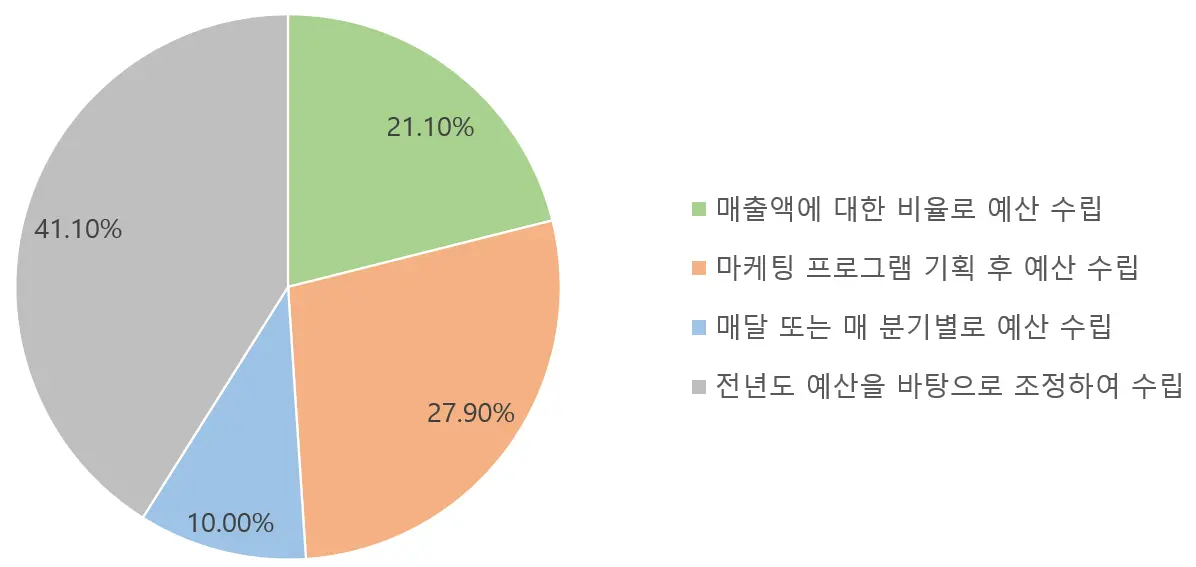
Next, take a look at what you’re already spending money on, and figure out how SEO can fit into that existing plan.
Typically, once you’ve started marketing, you already have channels actively running — CPC ads, social media, email, content marketing, and so on.
Say you’re spending ₩10 million a month on CPC (cost-per-click) advertising, but your site isn’t optimized for SEO, so conversion is weak. If that ₩10 million in ad spend is only generating ₩200,000 in revenue — is CPC really the priority right now?
Running SEO and improving the UI/UX that drives conversion can actually be a huge help in optimizing the performance of your other campaigns too. Even if you pause part of your paid media strategy to get SEO started, you can end up driving more traffic — and higher returns — through that same strategy afterward.
Advanced Steps in SEO Budgeting

Deciding Where to Focus
Every business is unique, right down to the campaigns and tactics it uses. You might need basic groundwork, like building a website and getting listed on maps. Or you might need to improve keyword consolidation and your site architecture.
Based on what you already know about your current marketing setup, decide which areas will have the biggest impact.
Knowing your target audience precisely makes this step much easier. If you already know what your audience wants to see, that helps you narrow your search and put your budget to more efficient use.
Assessing Your In-House Capability
If you already have an in-house team, you may not need to worry much about adding budget for SEO. But without an SEO specialist on staff, you’ll need to hire someone with SEO expertise or partner with an SEO agency.
Given how dominant Naver has historically been, there aren’t that many SEO specialists in the Korean market — which makes hiring for an in-house SEO role a genuinely real risk.
Use these questions to assess the resources your company currently has:
- How large is your current marketing team?
- What tools or outside help are you already using for SEO?
- Would increasing the workload put your team at real risk of burnout?
- Do you have the budget to bring on additional team members?
Exploring SEO Services

Once you understand what your team can handle, it’s time to explore SEO services. Since plenty of SEO companies all claim to be the best, it’s important to figure out what actually sets one apart. Google’s own Search documentation warns that hiring an SEO firm is a decision that can meaningfully boost your site’s visibility — but pick wrong, and it can genuinely damage both your site and your reputation. It advises checking whether an agency’s recommendations can be backed up against Google’s own official guidance.
Here’s what to weigh when choosing an SEO provider:
- Honesty and personality: You don’t want to work with a company that doesn’t enjoy communicating. They should tell you everything honestly and transparently, and make it easy to choose.
- Reasonable pricing: Genuinely good SEO solutions aren’t cheap. Saving money is great, but it’s also true that providers offering unusually cheap SEO solutions are unlikely to deliver the results you actually want.
- Reviews and case studies: Satisfied customers are happy to share their experience. Use reviews and case studies to see what results each company has actually delivered in the past.
If you want a more detailed look at how to choose an SEO agency, check out our Checklist for Choosing an SEO Agency.
Evaluating Cumulative Results
Finally, once you’ve sketched out everything above, you can build a more concrete budget. Here’s what to weigh across your entire budget, based on everything we’ve covered:
- Hiring new staff
- Solutions or services through an SEO agency
- SEO-related tools
Referencing this full list as you sketch out your budget helps you decide exactly how much to spend. Some companies may spend upward of ₩100 million a month, while others operate on far less, depending on their specific situation.
Conclusion: There’s Absolutely a Way to Make the Most of Your SEO Budget
To wrap up how to build an SEO budget:
- Understand your current position — your search visibility, what competitors are doing — and use that to plan where to start.
- Set a precise goal for what you want SEO to achieve, so you know exactly where to focus your spend.
- Understand what’s already running in your marketing mix, and allocate budget appropriately with ROAS in mind.
- Think about both short-term and long-term outcomes.
- Analyze performance regularly, and adjust your budget as needed.
What if you’re struggling through this process, or don’t have anyone in-house who can handle it?
One option is bringing in advice from an SEO specialist. SEO is a marketing strategy that involves a lot of genuinely complex technical elements.
Which is exactly why getting expert input matters. Partnering with an SEO specialist for accurate keyword analysis and content optimization can be a huge help in building an efficient SEO budget.
In short: an SEO budget is genuinely important, but plenty of companies still struggle with it. What matters is starting with what’s truly necessary, planning your budget through thorough research and analysis, and staying flexible as you go.
Work with Growth’s SEO solutions, and you’ll get a customized plan built around your industry, your customers, and your budget. We help you manage that budget efficiently and make thoughtful, informed decisions to reach the goals you actually care about.
Check out more of Growth’s SEO insights.
Related Reading
- The Complete A-to-Z Guide to SEO Marketing
- How to Write Titles and Links That Boost Search Rankings (+ Prompts)
- SEO Marketing Case Studies — Content Strategy Built on Keyword Analysis
- Video Search Optimization: How to Use YouTube Titles, Descriptions, and Tags
- Why Image Search Optimization Matters, and How to Use It
Frequently Asked Questions
How much should I typically budget for SEO?
It genuinely depends on your business situation. As a general rule, companies allocate 5–40% of their total marketing budget to SEO, and where you land depends on your goals, your competitive landscape, and your internal capability. What matters isn’t the absolute number — it’s working backward from the revenue you want SEO to generate, to figure out the traffic and leads you actually need, and sketching your budget from there.
How long does it take to see results from SEO?
Generally, six months to a year. Google’s own Search documentation notes it typically takes 4 months to a year to apply improvements and start seeing their effect. SEO isn’t a one-time task — it’s a long-term investment that only pays off with sustained effort — so it’s best to plan your budget around consistent, ongoing operation rather than expecting short-term results.
Should I handle SEO in-house or hand it to an agency?
If you already have an SEO specialist in-house, doing it yourself is a viable option — but genuine SEO specialists are hard to find and hire in the Korean market. Weigh your current team size, the tools you already have, and how much additional workload your team can absorb. If you choose an agency, look for honest communication, reasonable pricing, and verified reviews and case studies — and it’s safest to check whether their recommendations hold up against Google’s own official guidance.
What should I check to spend my SEO budget efficiently?
Start by reviewing the performance of channels you’re already running — CPC ads, social, email, and so on. For example, if you’re spending heavily on CPC but conversion is weak because your site isn’t SEO-optimized, improving SEO and UI/UX can lift the performance of your other campaigns too. Following the sequence — set business goals → review your existing budget → decide focus areas → assess in-house capability → evaluate services → assess cumulative results — helps you get the most out of your budget.