
A Google SEO Content Checklist in 4 Steps
 임재복
임재복
Search engine optimization can feel like a problem with no right answer. But Google SEO is actually simpler than you’d think, once you know how it works.
The sooner you start on SEO, the better. Google handles tens of thousands of searches a day and more, so capturing keyword share there can drive real gains not just in organic traffic but in lead volume too.
We’re guessing you’ve already read a few SEO guides by the time you found this one. Whether you’re brand new to SEO or not, this article aims to be the one guide you need to get Google SEO right.
What Is Google SEO?

Search engine optimization (SEO) means getting your content to rank near the top of search results. It means creating content search engines prefer and trust, and getting the website that hosts it in front of searchers.
There’s a massive gap in traffic between the #1 and #2 spots in search results. So if you produce well-optimized content and land a top ranking, contact with customers naturally increases.
To understand how Google SEO actually works, you first need to understand how search engines build their results.
Google’s crawlers used to just read through a page’s full text and gauge how keywords were distributed. Today’s Google crawler goes much further — it understands a document’s overall context and identifies exactly the website a user is looking for.
Google has also reached a point where it manages information in a structured format through Schema.org. Google itself notes that structured data gives it a clear clue to a page’s meaning and can qualify a page for rich results. This has made it possible to systematically collect and manage the information a website holds. This whole process of gathering material and building search results is called indexing.
The old-school Black Hat SEO of the past — stuffing pages with keywords to force a top ranking — simply doesn’t work anymore. That’s exactly why you should steer clear of any agency that offers to boost your SEO through methods it won’t disclose. Cheating your way to the top of search results rarely lasts long.
A 4-Step Guide to Google SEO Optimization
Step 1. Your Primary Keyword
Your content’s primary keyword represents its overall topic. It’s also usually the search term you actually want your content to rank for. When this keyword is well-distributed throughout the document, it earns favorable SEO points.
- A title that includes your keyword
- This checks whether your keyword is included in the title.
- Since the title should capture what the piece is about, it should always include your primary keyword.
- Your keyword appears early in the content
- This checks whether the keyword you’ve set appears in the opening of the post.
- We recommend including your core phrase early on, so readers can immediately grasp the main topic.
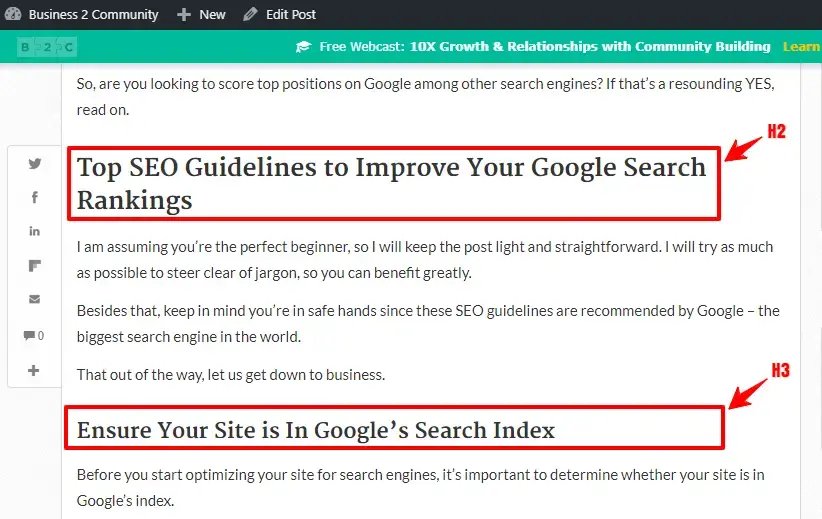
- Your keyword appears in H1, H2, and H3
- Check whether your keyword appears in the body’s section headings and subheadings.
- Many users scan headings and subheadings before reading the full body, to confirm the content is actually what they’re looking for.
Google is firmly opposed to any attempt to trick users through deceptive keyword tactics. Keyword stuffing — packing a page with keywords purely to manipulate rankings — violates Google’s spam policies. Meaninglessly cramming keywords into a short piece of content won’t fool a search engine.
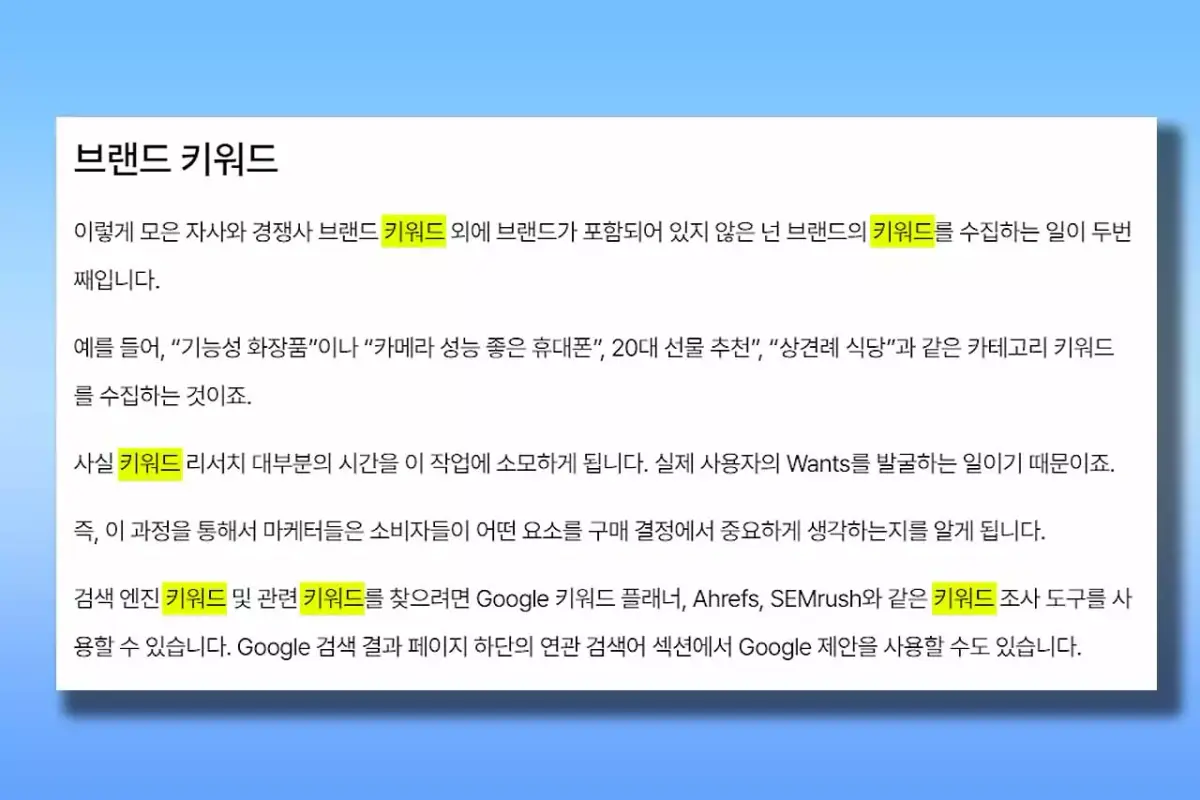
Setting a keyword just because it’s popular won’t necessarily raise your traffic, either. And Google won’t easily rank two pages from the same website for one keyword. Keep both of these in mind as you manage your content’s keywords.
- Keyword frequency
- This measures whether your core phrase is used a sufficient number of times in the body.
- How often you should use a keyword depends on the length of the body text.
- Repeating a keyword too many times in a short piece can actually earn you a negative score.
- The length of your chosen keyword
- This evaluates the length of the keyword you’ve chosen.
- A keyword that’s too short covers too broad a scope, which means fiercer competition.
- One that’s too long, on the other hand, is harder to optimize for.
- As a general rule, it’s best to target no more than four keywords per piece of content.
Step 2. Content Quality Optimized for Google SEO
Search engines always favor good content. What counts as “good” includes not just how well-developed the content is, but also standards around a website’s accessibility and optimization. Here’s what Google recommends looking at for content quality.
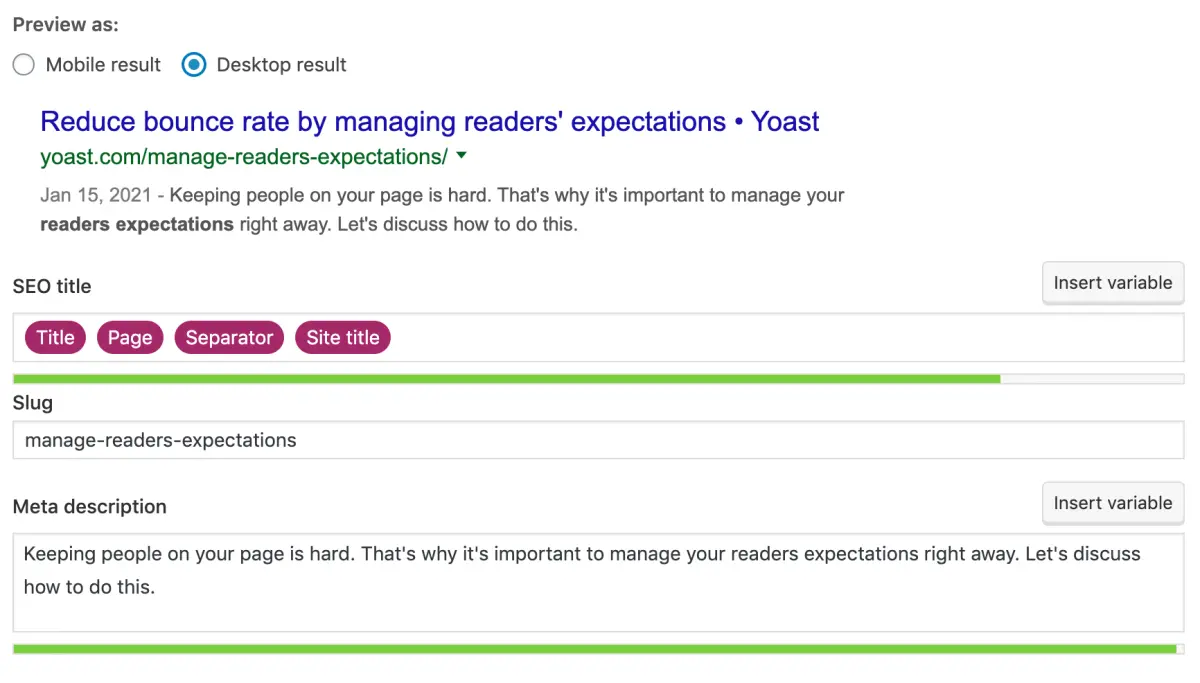
- Title length
- The title shown for a piece of content in Google search results is called the SEO title, and it’s usually a combination of the post title and the website name.
- If this title is too long, it can get cut off in search results, so keep it to a reasonable length.
- Content length
- Evaluate whether the body’s length is appropriate.
- Some SEO tools suggest a general guideline of at least 300 words. However, Google has stated that content length itself is not a ranking factor and there’s no set word-count standard, so covering the topic thoroughly matters far more than hitting a length target.
- If a piece is too short, search engines have a harder time grasping its topic and are more likely to conclude the content is thin, making them less likely to index it at all.
- Using alt text
- Check whether your images’ alt text includes your primary keyword.
- Alt text is the text displayed in place of an image when it fails to load.
- Including your primary keyword in alt text that describes what an image actually shows means, by definition, that you’re using images relevant to your content.
Screen readers used by visually impaired users, in particular, read out alt text instead of the image itself. We strongly recommend using alt text to maintain the accessibility search engines aim for.
Links (Internal Links + Outbound Links)
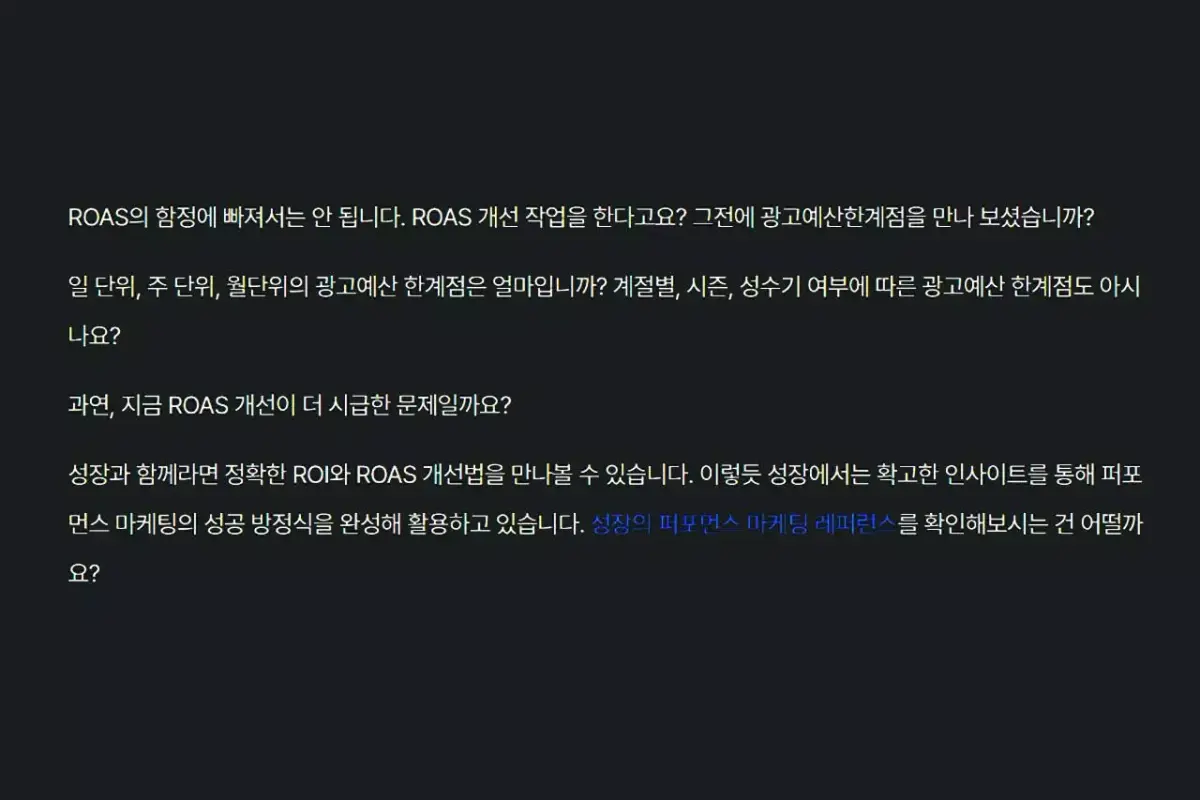
Links included in your content raise a website’s credibility while also increasing time on page.
- Outbound links
- This evaluates how many links point to other sites.
- The advantage is that a search engine can better understand your topic through the links included in your body text.
- Internal links
- Check whether you’ve included links to other pages or content on the same website.
- Linking to related content helps establish relationships between pages.
Outbound links to pages that fill in a gap in your content, or that explain related material in more depth, are also good for SEO. And including plenty of links to trustworthy websites signals that your own content is trustworthy too.
Internal links don’t just extend time on page — they also help build out a website’s overall sitemap. A well-structured content list lets a search engine conclude that a website is user-friendly.
A Google-SEO-Friendly Meta Description and Slug

A meta description is the snippet of text displayed within search results. You can use it to describe what your content covers, or to write something more compelling that pulls readers in.
- Include your keyword in the meta description
- Including your primary keyword in the meta description helps both search engines and users clearly understand the topic.
- Meta description length
- A meta description that’s too long can get truncated in search results. Google doesn’t enforce a fixed character limit — it trims the snippet to fit the width of a given device’s screen — so what matters more than character count is writing a unique description that accurately summarizes the page.
- Include your keyword in the slug
- Including your primary keyword in the URL — the address of the content you’re writing — also earns favorable SEO points.
- Think of the slug as the unique identifier for a piece of content, appended after your website’s common address. When your primary keyword is included in that slug, people can guess what the content is about just from the address.
- Use English-language URLs
- There was a trend toward using Korean-language URLs, based on the belief that including keywords in a Korean-language URL was good for SEO.
- But in practice, Korean-language URLs frequently get misread as errors — not just by Google and Bing, but by Naver too — so Growth recommends sticking to English-language URLs only.
Is This Enough for Google SEO?
Why You Shouldn’t Obsess Over the Rules
We’ve now walked through what’s needed for Google SEO optimization. If there’s one thing that matters most for SEO-friendly content, it’s your focus keyphrase.
Everything from which keyword you choose to how you place and use it decides whether your SEO optimization succeeds or fails. Beyond that, getting content quality and on-page SEO right in the right proportion matters too.
Of course, other factors matter for Google SEO as well. Checking every box above can earn you a good score, but you can still end up at a disadvantage on SEO trends and strategy this checklist doesn’t capture.
Worse, you can end up actively hurting content quality. Content with keywords jammed in unnaturally damages readability and breaks reader focus. In the end, you fail to achieve the actual point of SEO marketing: raising conversion.
Good content is always the right answer — so don’t give up on being “good content” just because it’s a little less convenient for SEO!
The Google SEO Strategy Growth Recommends
An SEO tool should only ever play a supporting role. What matters most is building your own real understanding of SEO strategy and marketing.
Reading an SEO guide and building content to match its criteria can be simple enough. But it’s meaningless if you don’t actually capture what matters — search share, top rankings, visitor acquisition, user conversion.
We’ve seen plenty of cases where a team gets so buried in an SEO guide that the results never pay off, even after faithfully following every instruction. Here’s what that can look like in practice:
- Internal links get added aggressively, but not placed on the right keyword — just dropped in wherever.
- In the effort to emphasize a core phrase, the keyword ends up crammed in far too many times.
- The focus keyphrase gets stuffed into every single image’s alt text.
Even if a case like this scores well on Google SEO optimization, it’s likely to never get indexed at all, or never land on a top page. That’s exactly why we recommend getting expert help when you’re serious about starting Google SEO optimization.
Related Reading
- The Complete A-to-Z Guide to SEO Marketing
- How to Write Titles and Links That Raise Search Rankings (+ Prompts)
- SEO Marketing Case Studies — Content Strategy Built on Keyword Analysis
- Video Search Optimization: Using YouTube Titles, Descriptions, and Tags
- Why Image Search Optimization Matters, and How to Do It
Want to apply this to your own business? Take a look at how Growth approaches it in our SEO service, or if you need a diagnosis of your specific situation, reach out through our contact page. We answer in terms of the one lead who becomes revenue — not raw traffic volume.
You can see the full picture of this topic in “The Complete Guide to Writing SEO Content — From Search Intent Analysis to Publishing and Updating.”
Frequently Asked Questions
Does an SEO article really need to be at least 300 words?
No. Google states explicitly that content length itself is not a ranking factor, and there’s no set minimum or maximum word-count standard. 300 words is just a general guideline some SEO tools suggest. As covered above, thoroughly and naturally covering the topic matters far more than forcing the length up.
How many characters should a meta description be?
Google doesn’t enforce a fixed character limit — it truncates the snippet to fit the width of a given device’s screen. So instead of obsessing over a specific character count, it’s better, as covered above, to write a unique description for every page that accurately summarizes the content and includes your primary keyword.
Does packing more keywords into the body help your ranking?
No. Keyword stuffing — packing a page with keywords to manipulate rankings — violates Google’s spam policies. As covered above, over-repeating a keyword in a short piece actually earns a negative score and hurts readability. What matters is distributing it naturally across the title, opening, and subheadings.
Is it fine to use Korean-language URLs for SEO?
Growth recommends using English-language URLs. As covered above, Korean-language URLs sometimes get misread as errors, not just by Google and Bing, but by Naver too. Putting a primary keyword that lets people guess the content, written in English, into the URL benefits both users and search engines.