
Why UX Writing Matters: User-Oriented Writing and Real-World Examples
 임재복
임재복
In a digital landscape that never stops evolving, UX writing has emerged as a core ingredient for building smooth, user-centered experiences.
Understanding why UX writing matters, and what it’s meant to accomplish, is essential to succeeding on the user experience front.
Many companies produce content as a strategy to showcase their expertise.
But in the process, they often end up exposing customers to jargon that’s hard to follow. Seller-centric language can create an uncomfortable experience for users and prospects — and it can go so far as to get in the way of decisions like purchasing.
If it’s hard to picture what that feels like, think about your last visit to the bank.

A bank teller explains a product to you using dense financial jargon.
From the teller’s perspective, they need to be precise, so specific terminology is unavoidable. They’re not trying to confuse you on purpose — but as the customer listening, it’s just frustrating.
It becomes hard to confirm whether you’re actually signing up for the product you think you are, or to accurately compare which option is really better.
In the end, unable to tell what’s genuinely the right choice, you drop out of the signup process.
If a business is operating without any consideration for user experience, this kind of drop-off is almost certainly happening on a continuous basis. Are we actually talking to our customers in language that’s easy to understand — language that’s convenient for them? In this piece, we’ll dig into why UX writing that speaks the customer’s language matters, what it’s meant to achieve, and look at some real success stories.
The definition and purpose of UX writing
Defining UX writing
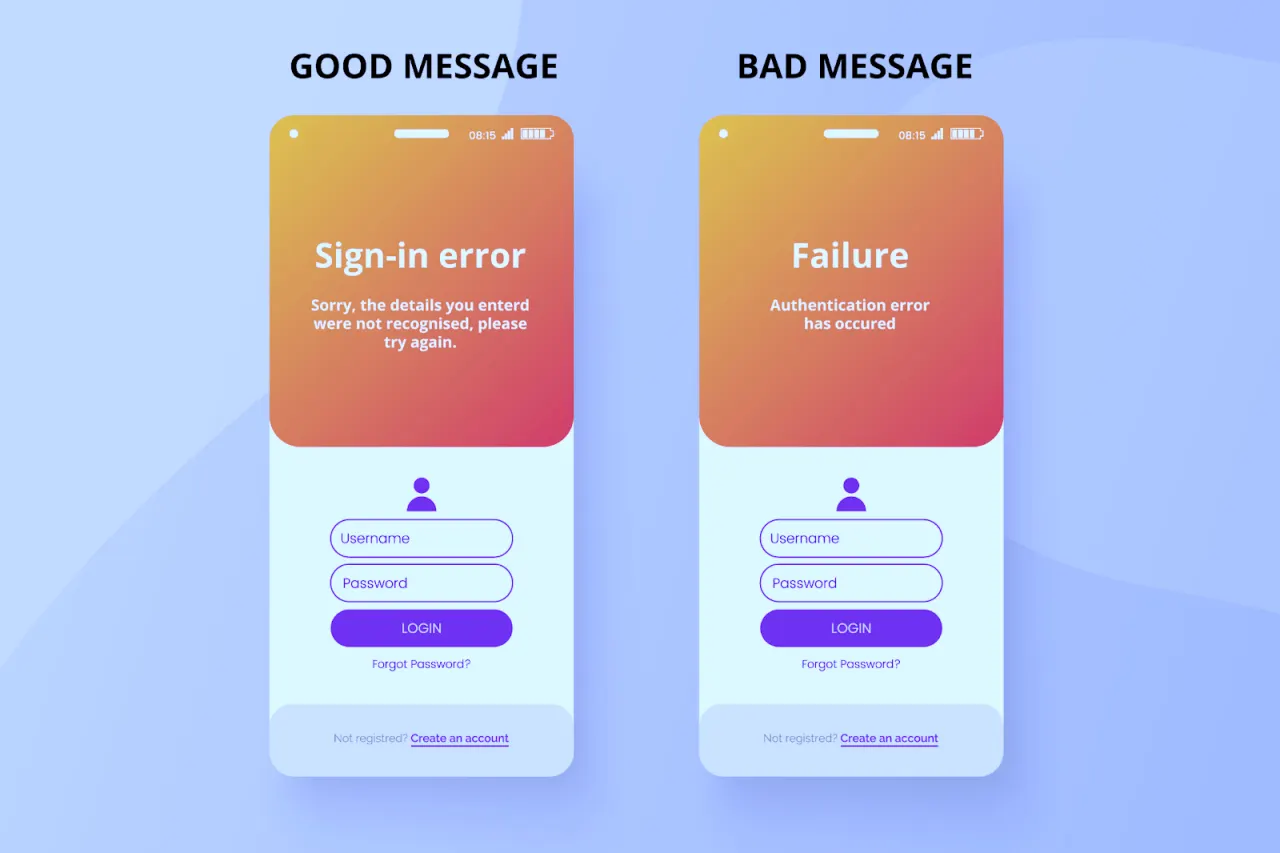
UX writing is a form of text creation that plays a critical role in user experience design. The Nielsen Norman Group (NN/g), a leading UX research institute, defines UX writing as “writing that carefully considers a user’s context, needs, and behavior,” describing it as implementing the same skills as visual and interaction design, but through “words” rather than pixels.
UX writing means effectively crafting text across every environment a user interacts with — digital products, websites, apps, software, and more.
UX writers are the people who craft the copy for apps, websites, and other digital products that help users navigate them.
They design the words for menus, definitions, buttons, labels, chatbots, and error messages, and they build the instructions that guide first-time users through a product.
They also pour real care into what’s collectively called “microcopy” — those tiny bits of text scattered throughout an interface.
Effective UX writing produces copy that feels intuitive to users and matches the product’s brand tone.
Copy built this way is easy for most people to understand, regardless of ability, age, gender identity, or background.
UX writing overlaps heavily with UX design. Just like UX designers, UX writers test multiple versions of their work and conduct user research to craft copy that’s genuinely useful.
Both UX content designers and writers are part of the design process. They make decisions grounded in user research and testing — the difference is whether they’re crafting the copy that goes into the interface, or the design itself.
The purpose of UX writing

The main purpose of UX writing is to guide users and help them understand.
Clear, concise sentences effectively deliver the information a user needs and prompt action, creating a smooth experience. UX writing also communicates brand intent and goals effectively, fostering a stronger connection with users.
More specifically, UX writing aims to achieve:
- Clear communication: preventing confusion and improving the user experience by delivering messages that are clear and easy to understand
- User orientation: writing content that fits what users actually need, lowering the barrier to entry so people can use a product or service more easily
- Consistency: maintaining consistent language, terminology, and tone across a product or service
- Usefulness: giving users useful information and delivering a convenient interface (UI) experience through the help and feedback they need
- Emotional connection: forming an emotional bond with the product or brand through text, and strengthening the relationship with users
Why does UX writing matter?
UX writing sits at the core of user experience, and it delivers value that goes far beyond simply picking the right words.
Well-crafted UX writing creates a powerful first impression during a user’s interaction, and it can go on to build brand credibility. Good UX writing doesn’t just convey information — it can enhance the user experience by forging an emotional connection.
UX writing is a critically important discipline from a marketing standpoint, but outside a handful of major companies, most businesses still aren’t investing much in it.
That means investing time and money into UX writing before your competitors do, and establishing your brand image early, can play a major role not just in branding, but in building loyal customers.
UX writing examples and the values behind them
Clear communication
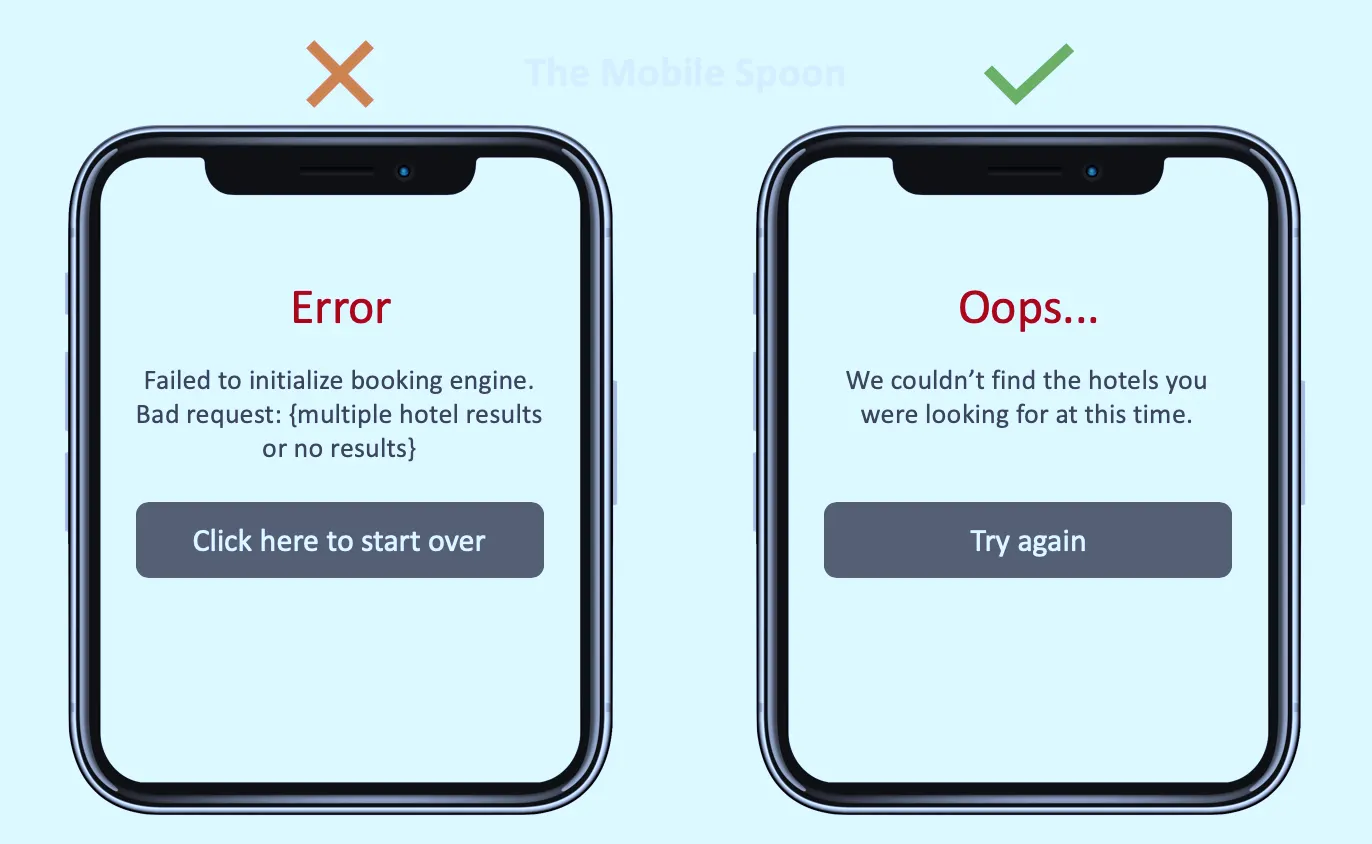
UX writing plays a pivotal role in ensuring communication is clear.
Writing concise, simple messages lets users understand information easily and makes their journey through a digital interface far more intuitive.
This clarity improves comprehension, reduces friction, and ultimately contributes to a positive customer experience.
Certain terms feel completely natural to people inside an industry.
But it’s worth remembering they don’t feel that way to everyday people. When speaking with customers, it’s important not to overload them with industry jargon — instead, translate it into language customers can easily understand.
Friendly language
UX-friendly language doesn’t need to be complicated. Put simply, it just means rephrasing things from the customer’s point of view.
- Instead of “Your account settings have been successfully updated,” use “Changes saved.” This removes ambiguity and clearly communicates that the user’s action succeeded.
- Instead of a generic error like “Internal Server Error 500,” offer a user-friendly message like “Something went wrong. Please try again later.” Nielsen Norman Group’s error message guidelines similarly recommend explaining problems precisely in human-readable language rather than codes, avoiding phrasing that blames the user (like “invalid”), and pairing the message with guidance on how to fix it. This helps users understand the problem and know what to do next.
- When guiding users through signup, use simple language like “Create account” instead of “Initiate user registration.” Simple language in onboarding instructions reduces friction and encourages users to complete the process.
- Choose user-friendly button labels like “Send” or “Done” instead of technical terms like “Submit.” Form fields can use plain language like “Your email” instead of “User input.”
- When describing a product, focus on the benefit in simple terms. For example, describe a smartphone camera as taking “sharp photos” rather than as a “high-resolution imaging sensor.”
- Use plain language in navigation menus. Consider “Your account” instead of “Account management” to make it more intuitive and friendly.
- Guide users with plain language in help sections. For example, use “Need help? Ask us anything” instead of “Query assistance.”
- When requesting permissions in a mobile app, use simple, clear language like “Allow the app to access your location for better service” instead of a technical request like “Grant location permission for optimal functionality.”
- Break long policy explanations into simple, easy-to-understand sentences. For example, “Your privacy matters to us. We don’t share your information with third parties” feels far more approachable than a dense privacy policy paragraph.
User orientation
People commonly use the word “ticket booth,” but you could swap it for something simpler like “where to buy tickets.” If it’s still hard to picture exactly what UX writing is, concrete examples help.

A message of comfort and empathy — “It’s tough paying off a loan” — makes users feel differently about Toss.
In the world of digital innovation, Toss has emerged as a pioneer not just in fintech, but in the craft of UX writing. At the heart of Toss’s UX writing philosophy is a principle of strategic simplicity.
Toss’s UX writers emphasize how important it is to break down complex concepts into language that’s clear, concise, and easy to understand.
Through this, Toss aims to give users a smooth experience that lets them navigate the platform with ease.
One hallmark of Toss’s UX writing strategy is its emphasis on maintaining a consistent brand voice across every platform.
Toss prioritizes user-centered communication over simply delivering information.
In other words, Toss weaves user empathy directly into its writing process, emphasizing an understanding of its audience’s specific needs and preferences.
Through this approach, Toss doesn’t just convey information — it connects with users on a deeper level, boosting overall user satisfaction.
In an ever-shifting landscape of digital interaction, Toss takes an iterative approach to UX writing. This piece explains how Toss’s UX writers continuously refine and adjust their writing strategy based on user feedback, technological change, and industry trends.
This ongoing commitment to evolving is what keeps Toss at the front of the pack in delivering an optimal user experience.
Consistency
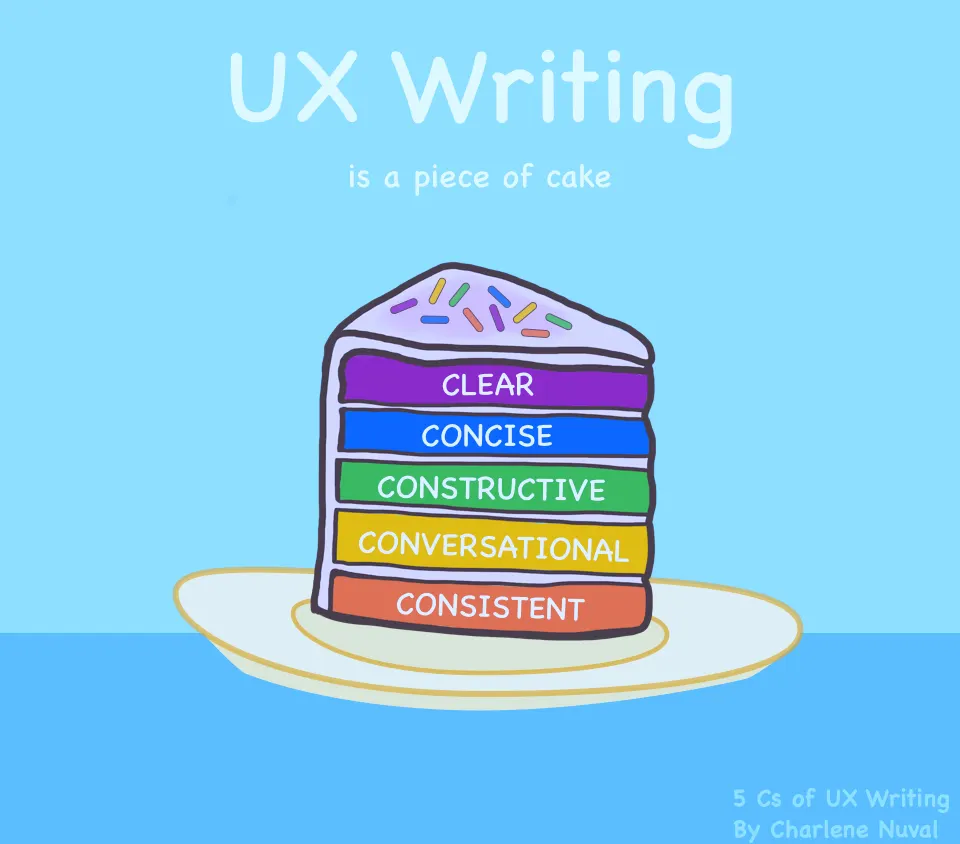
Consistent UX writing isn’t just about stringing words together. It’s about crafting a narrative that resonates with, captures, and reinforces your brand message.
Trust is the cornerstone of a successful brand. In a world flooded with information, users look to consistency as a signal of credibility. Nielsen Norman Group breaks down tone of voice in UX writing across four dimensions — formal/casual, serious/funny, respectful/irreverent, and matter-of-fact/enthusiastic — and recommends keeping your brand personality consistent while adjusting tone to fit the user’s context.
Professional UX writing reflects a brand’s voice with unwavering credibility across every interaction, from website navigation to product descriptions.
And in the digital realm, professionalism is communicated not just visually, but through word choice.
A skilled UX writer excels at crafting language that radiates expertise while staying perfectly aligned with your brand spirit. The words a UX writer designs are, in a sense, brushstrokes that express credibility and reliability.
Every brand has a story to tell, waiting to unfold. Consistent UX writing does more than communicate — it weaves a compelling story that resonates with its audience.
This isn’t just about words. It’s about creating an immersive experience that leaves a lasting impression on every user.
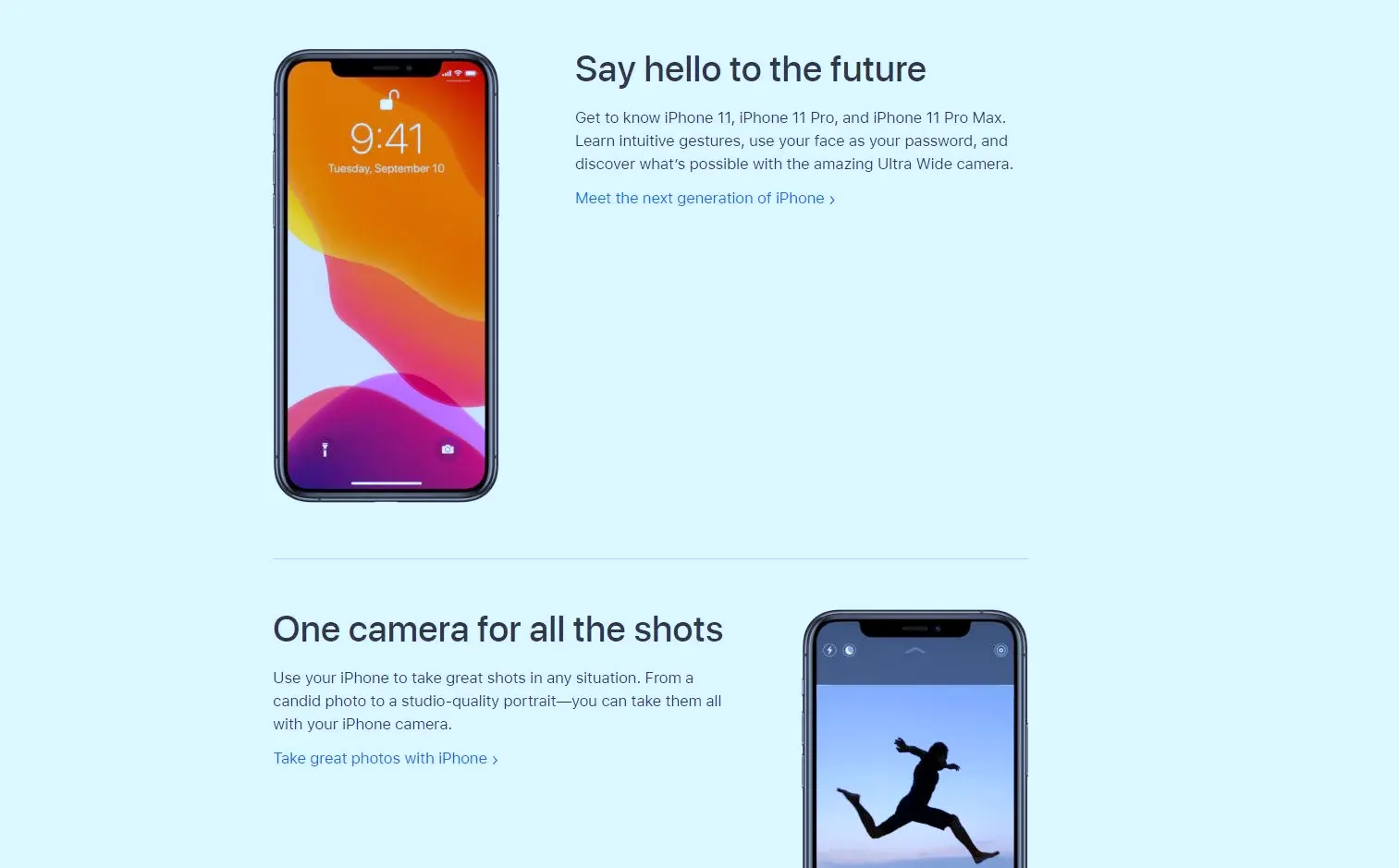
The best example in this space is probably Apple.
Apple built a devoted fan base around its own distinctive brand message. It built a fandom without ever being a luxury brand. It’s not an exaggeration to say iPhone ads carry a “style” that’s genuinely hard to put into words.
In a world where clicks matter, an inconsistent message erodes trust in a brand.
Consistent UX writing becomes the centerpiece of a brand’s roadmap to success. UX writing that shapes how customers perceive a brand and builds trust can contribute enormously to constructing a powerful brand narrative.
Usefulness

A pavement guide line is a continuous line painted down the center of a lane to guide a driver’s direction. It’s used mostly at highway interchanges, and it plays an even more critical role where road layouts are confusing.
Pavement guide lines originally came from a proposal by Yoon Seon-deok, an employee at the Korea Expressway Corporation. Under traffic law at the time, the system wasn’t even legal to introduce. But after a pilot at the Ansan Interchange confirmed it reduced accidents, the Ministry of Land, Infrastructure and Transport formally adopted it. Without pavement guide lines, interchanges across the country would see far more accidents than they do today.
Usability has a direct effect on how well a user can interact with a product, interface, or piece of content — which is exactly why it’s one of the core values behind strategic UX writing.
Usefulness can make the overall user experience considerably more positive. Content that’s clear and concise is easy to understand. That makes it not just user-friendly, but accurate and efficient at delivering the intended message.
Clear language and instructions also prevent errors and confusion — like a user making a mistake or misinterpreting information.
Well-written content contributes to task efficiency. Clear instructions and intuitive labels help users navigate an interface and complete tasks faster. Content that’s easy to read and understand is also more inclusive of users with different levels of literacy, language ability, and cognitive ability.
A product or service built with the user experience in mind builds trust with customers. When customers can easily understand and interact with content, they tend to trust the information they’re given more. We’ve all felt more confident with a representative who explains things from our perspective than with one who buries us in jargon we can’t follow.
Ultimately, UX writing built around usability plays a critical role in driving user behavior and conversion. When you’re encouraging a purchase, signup, or any other desired action, content that’s easy and convenient for consumers to use becomes a comfortable companion on the way to hitting your business goals.
Recognizing the importance of UX writing requires attention and buy-in

We already introduced Toss above as a great example of UX writing done well. From early in its development, Toss recognized the importance of UX writing in making finance simple and accessible.
As a result, it successfully pioneered the once-unfamiliar concept of an “internet-only bank” in Korea. In some ways, despite being a riskier-feeling category than second-tier banks, Toss managed to build a base of loyal customers just as large as established banks.
In short, UX writing has an enormous impact on customer engagement. It goes far beyond delivering information — it shapes the very structure of the user experience.
From fostering clear communication to building emotional connection and driving action, UX writing is the quiet force that guides users through a journey that feels smooth, enjoyable, and purposeful. For brands striving to deliver a truly excellent customer experience, recognizing its importance is essential.
If this article has helped you recognize why UX writing matters, that’s really just the beginning. To build the best possible user experience, it’s critical to build company-wide attention and buy-in so UX writers can actually do their job well.
Related reading
- Content marketing, from definition to strategy: a guide
- Earned media
- Evergreen content
- A guide to brand content marketing
- ESG content marketing examples and a realistic strategy
If you’d like to apply this to your own business — you can see Growth’s approach on our content marketing services page, and if you need a specific diagnosis for your situation, reach out via consultation inquiry. We’ll answer based on the one customer who becomes revenue, not just traffic volume.
Frequently asked questions
How is UX writing different from regular copywriting?
Copywriting is mostly focused on making a product sound appealing and persuading someone to buy it, while UX writing deals with the text (microcopy) a user encounters in the moment they actually use a product — buttons, labels, error messages, instructions. As covered above, the key difference is that UX writers rely on user research and testing to design writing that helps users complete an action without getting lost.
Why does UX writing translate into business results?
Clear, friendly copy reduces confusion and friction, preventing drop-off and boosting conversion. As in the banking example above, dense jargon drives customers away, while a message translated into the customer’s own language builds trust. Since relatively few companies are actively investing in UX writing today, being an early mover can create a real competitive edge in branding and customer loyalty.
Are there simple principles for turning copy into something more user-friendly?
The starting point is translating industry jargon into everyday customer language. As in the examples above, that means using “Changes saved” instead of “Your account settings have been successfully updated,” or “Something went wrong. Please try again later” instead of “Internal Server Error 500” — clear, respectful copy that guides the next step. Nielsen Norman Group similarly recommends human-readable language over technical codes.
What’s a well-known example of UX writing done well?
In Korea, Toss is the standout example. Toss breaks down complex financial concepts into clear, simple language, keeps a consistent brand voice across every platform, and weaves user empathy into its writing. As covered above, this strategic simplicity is exactly what let a once-unfamiliar service build such a large base of loyal customers. Internationally, Apple is often cited for building a remarkably consistent brand message.