
What Is Anchor Text?
 임재복
임재복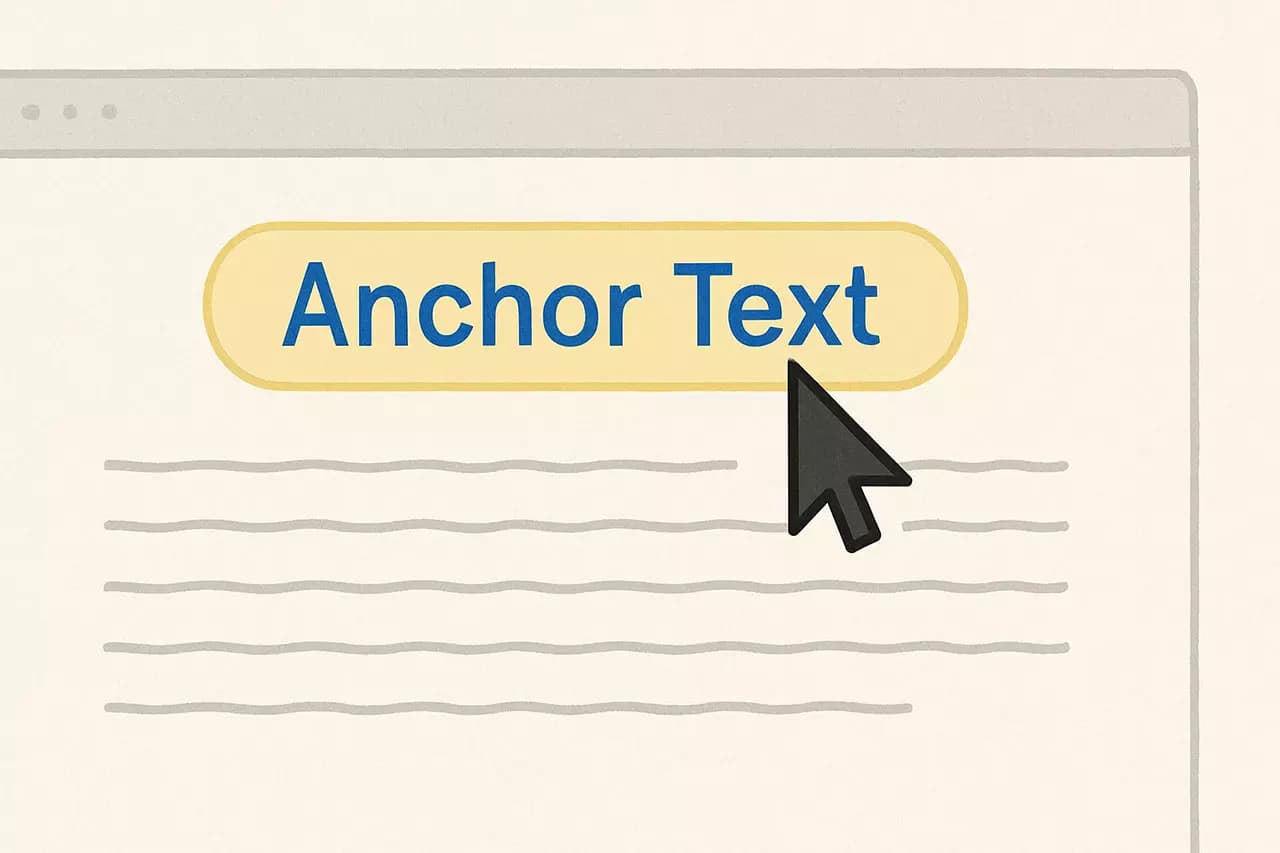
What Is Anchor Text?
Anchor text is the visible, clickable text in a hyperlink that connects one web page to another page or to a specific location on a page. Beyond shaping the user experience, it also affects where a website ranks on the results page, as explained in What Is a SERP (Search Engine Results Page)?
Why Anchor Text Matters
A Better User Experience
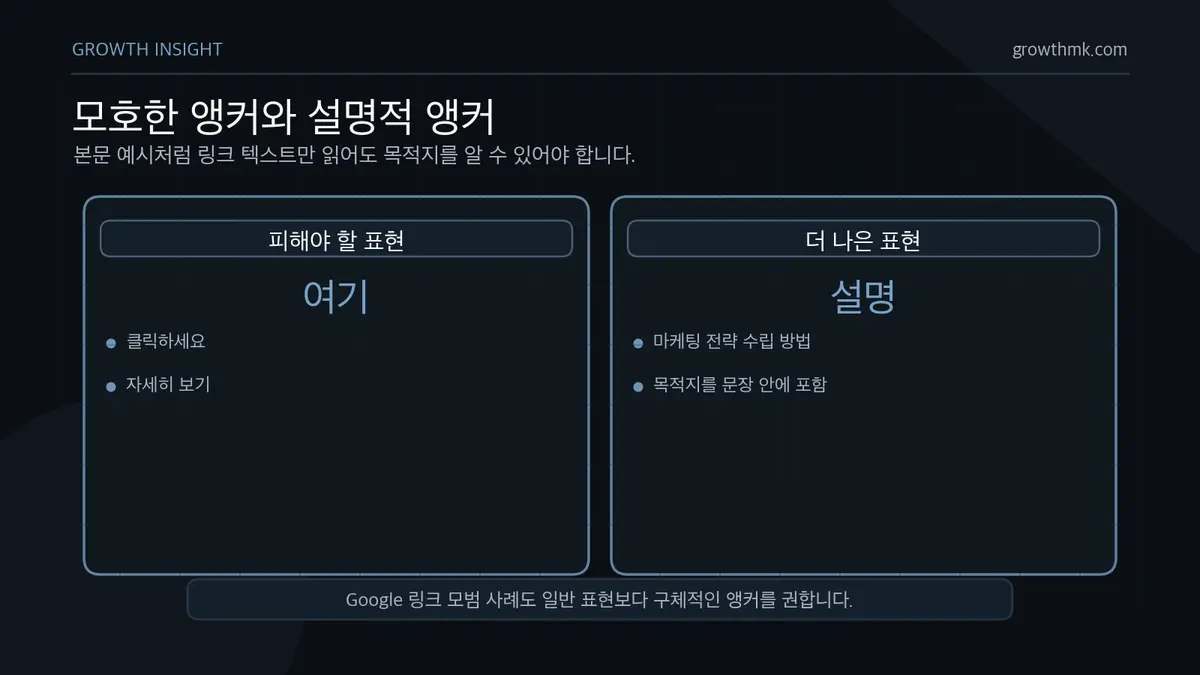
Clear, descriptive anchor text tells users in advance what to expect when they click a link. This makes it easier for people to find the information they’re looking for, improving navigation and the overall user experience. For example, “how to build a marketing strategy” works far better as anchor text than a generic phrase like “click here for more information.”
Search Engine Optimization (SEO)
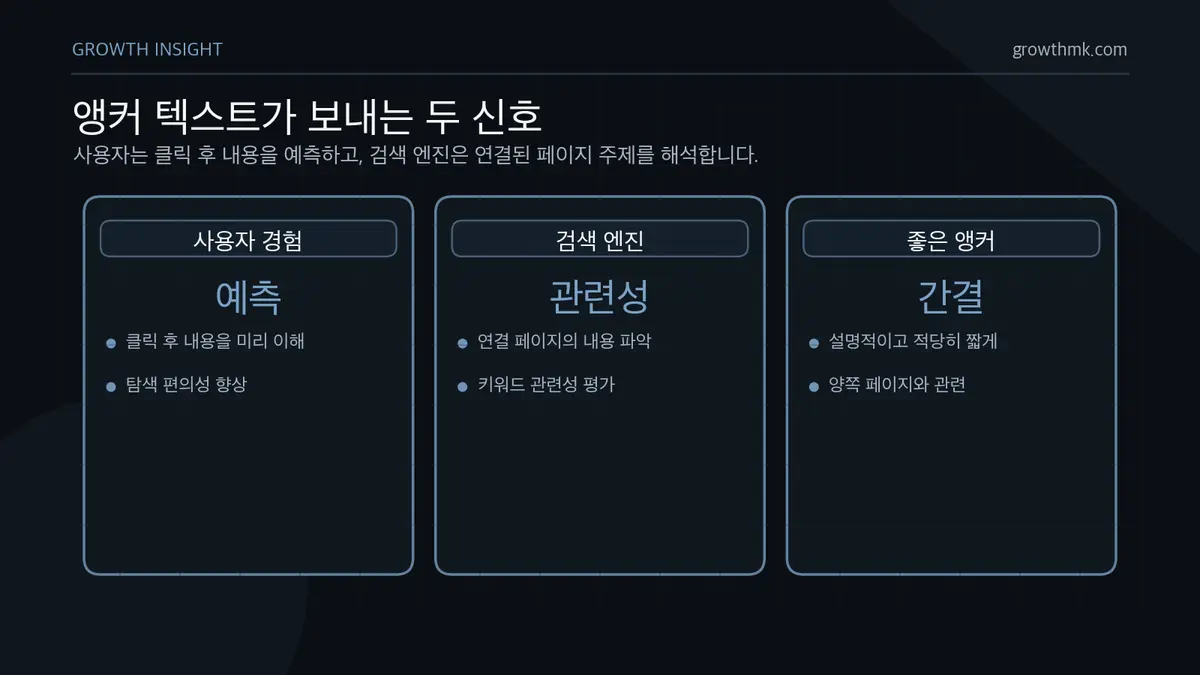
Search engines use anchor text to understand what a linked page is about and assess its relevance to specific keywords. Google’s own link best practices documentation states that “good anchor text is descriptive, reasonably concise, and relevant to both the page it’s on and the page it links to.” Including relevant keywords in anchor text can therefore help improve the search ranking of the linked page. For a broader look, see The Complete A-to-Z Guide to SEO Marketing.
How to Write Effective Anchor Text
Keep the following in mind when writing effective anchor text.
Use Relevant Keywords
It’s best to include keywords that are highly relevant to the content of the page you’re linking to. For more on using keywords effectively, see What Are Primary and Secondary Keywords? Putting Them to Work in Your Content.
Keep It Clear and Concise
Anchor text should be written clearly and concisely, so it’s easy for users to understand. Anchor text that’s too long or too vague makes it harder to earn a click, and it can also make it harder for search engines to grasp what the link is about.
Vary the Type of Anchor Text You Use
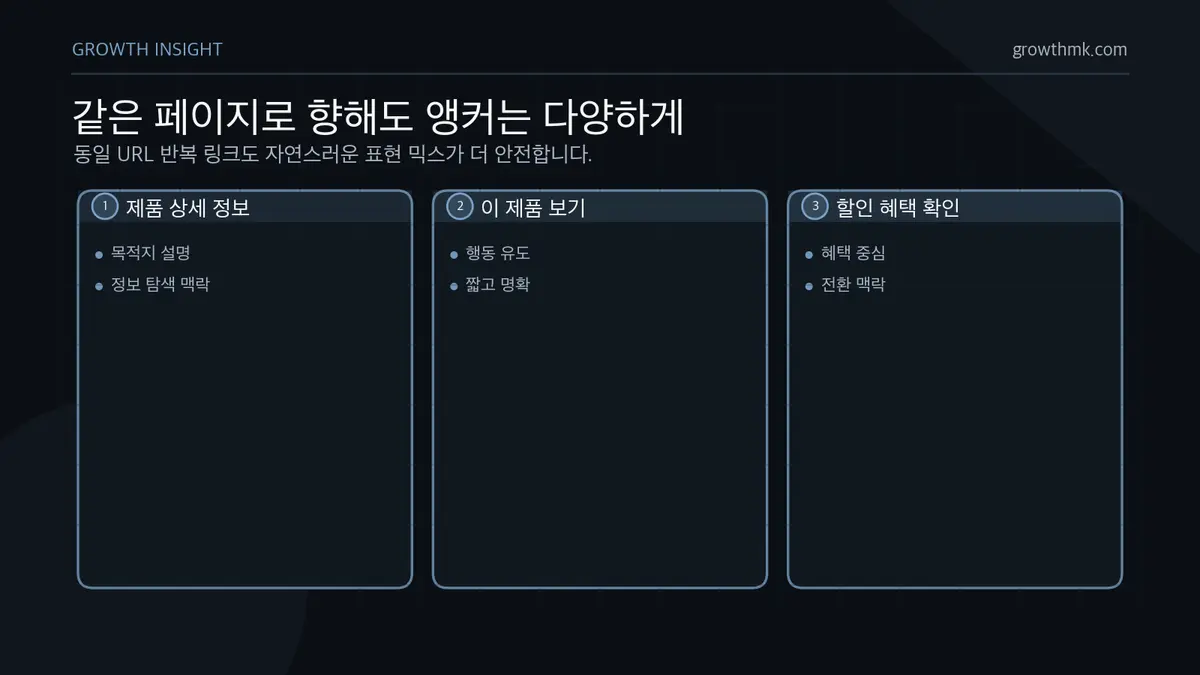
When multiple links within a site point to the same page, it’s natural — and more effective — to vary the anchor text. For example, a link to a specific product page could use “product details,” “view this product,” or “check current discounts,” depending on the context.
Use Alt Text for Image Links
When an image is used as a link, its alt text takes on the role of anchor text. That’s why it’s important to write alt text that clearly describes both the image and the content of the page it links to. For a detailed guide on this, see Why Image Search Optimization Matters, and How to Do It.
Types of Anchor Text
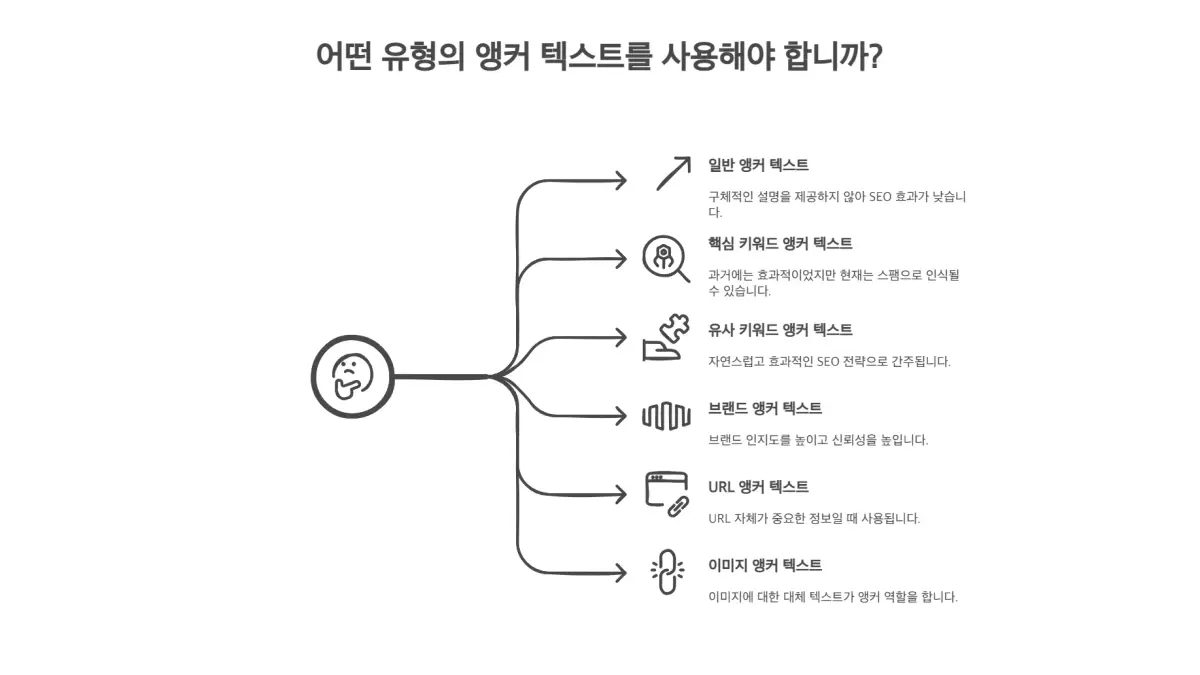
Anchor text can be grouped into several types depending on the words and phrasing used. Different anchor text strategies play an important role in backlink building. For more on managing backlinks, see A Beginner’s Guide to Managing Backlinks.
Generic Anchor Text
This is anchor text made up of generic phrases like “here,” “click here,” or “learn more.” Because it doesn’t describe the linked content specifically, its SEO value tends to be low. In fact, Google’s own link best practices discourage phrases like “click here” or “read more,” recommending anchor text specific enough that a reader could tell what page it points to just from the anchor text alone.
Exact Match Anchor Text
This is anchor text that matches the target page’s main keyword exactly. It used to carry strong SEO value, but overusing it today can get it flagged as spam by search engines. Google’s spam policies specifically call out links containing “optimized anchor text” intended to manipulate rankings as link spam, so repeating the exact same keyword match over and over is something to be careful with.
Phrase Match Anchor Text
This anchor text includes words or phrases that are semantically similar to or related to the target page’s main keyword, without matching it exactly. It’s generally considered a more natural and effective SEO strategy than exact match anchor text.
Branded Anchor Text
This is anchor text that includes a website’s or company’s brand name. It’s effective for building brand awareness and can also help build a website’s credibility.
Naked URL Anchor Text
This is when the link’s raw URL is used as the anchor text itself. It works well when no extra explanation is needed, or when the URL itself is meaningful information.
Image Anchor Text
When clicking an image takes users to another page, the image’s alt text functions as the anchor text. Google’s own image SEO guide also explains that “when an image is used as a link, the alt text is used as the anchor text” — which is why it’s worth writing alt text on image links that clearly describes the destination.
Related Topics
If you’d like to dig deeper into topics related to anchor text, check out the resources below.
- Backlinks: links from other websites pointing to your own site, with anchor text as one of their key components. To learn how link attributes affect SEO, see Dofollow Links vs. Nofollow Links: What’s the Difference?
- Internal links: links that point to other pages within the same website. A well-built internal linking structure both improves the user experience and helps with SEO. Learn more in 10 Frequently Asked Questions About Internal Links.
- SEO (Search Engine Optimization): the broad set of activities aimed at improving a website’s visibility in search results, with anchor text as one of the important elements. Learn the fundamentals in How Search Engines Work, Explained Simply.
- Website structure: a well-designed website structure helps both users and search engines navigate and understand content more easily, and anchor text plays a key role in connecting that structure together.
Anchor text is a factor that has a real impact on both a website’s user experience and its search engine optimization. An effective anchor text strategy can help boost a website’s value and reach its goals.
Related Reading
- A Beginner’s Guide to Managing Backlinks
- How Does Link Cloaking Affect Search Engines?
- 10 Frequently Asked Questions About Internal Links
- What Is Domain Rating (DR)? Definition, Importance, and Implementation Guide
- Dofollow Links vs. Nofollow Links: What’s the Difference?
If you’d like to apply this to your own business — you can see Growth’s approach on our SEO service page, and if you need a specific situational diagnosis, reach out through Contact Us. We’ll answer based on the one customer who becomes revenue — not the volume of traffic.
Frequently Asked Questions (FAQ)
Is anchor text the same thing as alt text?
In an ordinary text link, the anchor text is the visible words on screen. But when an image is used as the link, the image’s alt text takes over the role of anchor text. Google’s image SEO guide confirms that a linked image’s alt text functions as anchor text, so it’s important to always write alt text on image links that clearly describes the destination.
Is it okay to repeat the exact same keyword in anchor text?
It’s not recommended. Even for links pointing to the same page, it’s more natural to vary the phrasing — something like “product details” in one place and “view this product” in another. In particular, repeating exact-match anchor text aimed at manipulating rankings can be treated as link spam under Google’s spam policies, so it’s worth being careful.
Is a phrase like “click here” always bad?
It’s not recommended from an SEO standpoint. Google’s link best practices call for anchor text specific enough that a reader could tell what it links to from the anchor text alone. Anchor text that describes the content — like “how to build a marketing strategy” — works better than a generic phrase like “here” or “learn more,” for both the user experience and search engines.
Does anchor text optimization matter for internal links too?
Yes. Anchor text on internal links helps search engines understand a site’s structure and the topic of each page, and it also helps users predict what they’ll see next, improving navigability. It’s best to use descriptive anchor text that naturally captures the core content of the page it links to.
Marketing Insights
Marketing insights, delivered weekly
Practical growth and GEO/B2B marketing insights, summarized in your inbox every week.
Subscribe for insights