How Does Link Cloaking Affect Search Engines?
 임재복
임재복
Link cloaking is a technique for hiding or altering a hyperlink’s true destination on a website. By separating the URL a visitor sees from the URL they actually land on, it’s used for a range of purposes — marketing tracking, affiliate link management, and improving the user experience, among others.
The technique plays an important role in SEO and digital marketing strategy, but it needs to be used within search engine guidelines and with ethical considerations in mind. It helps to first get a grip on the basics via How Search Engines Work, Explained Simply.
Definition and How It Works
The Concept of Link Cloaking
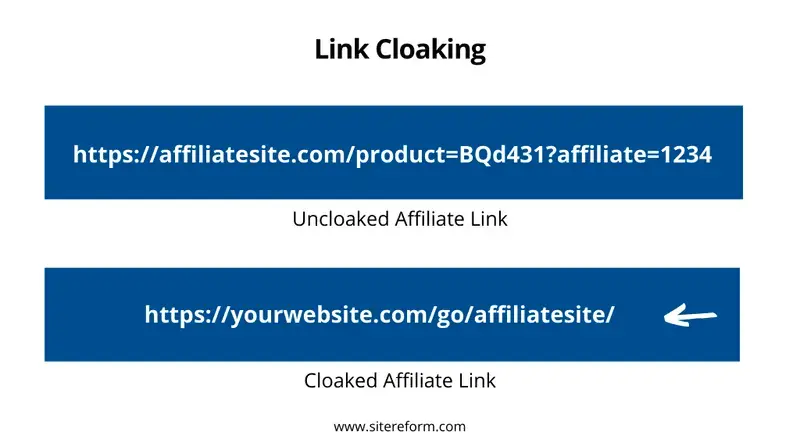
Link cloaking is the process of replacing or redirecting an original URL to another URL so that the end user, or the search engine, can’t immediately tell where the link actually leads. The word “cloaking” means “concealing,” and in this context it refers to disguising a link’s true destination.
For example, when a user clicks a link like yoursite.com/recommended-product, they might actually get redirected to a complex affiliate URL like affiliate-site.com/product?id=123&ref=yoursite. In this way, the original link is being “cloaked,” or hidden.
It’s important to distinguish “link cloaking” from “content cloaking.” Content cloaking is a technique for showing different content to search engine bots than to regular users — a black-hat SEO tactic banned by virtually every search engine. Link cloaking, by contrast, is focused on changing or hiding a link’s target URL. Reading What Is E-E-A-T? Myths and Truths About Google’s Quality Standards will help clarify how techniques like this affect search engine evaluation.
Use Cases and Types
Legitimate Business Use Cases
Link cloaking can be put to good use in a range of business situations:
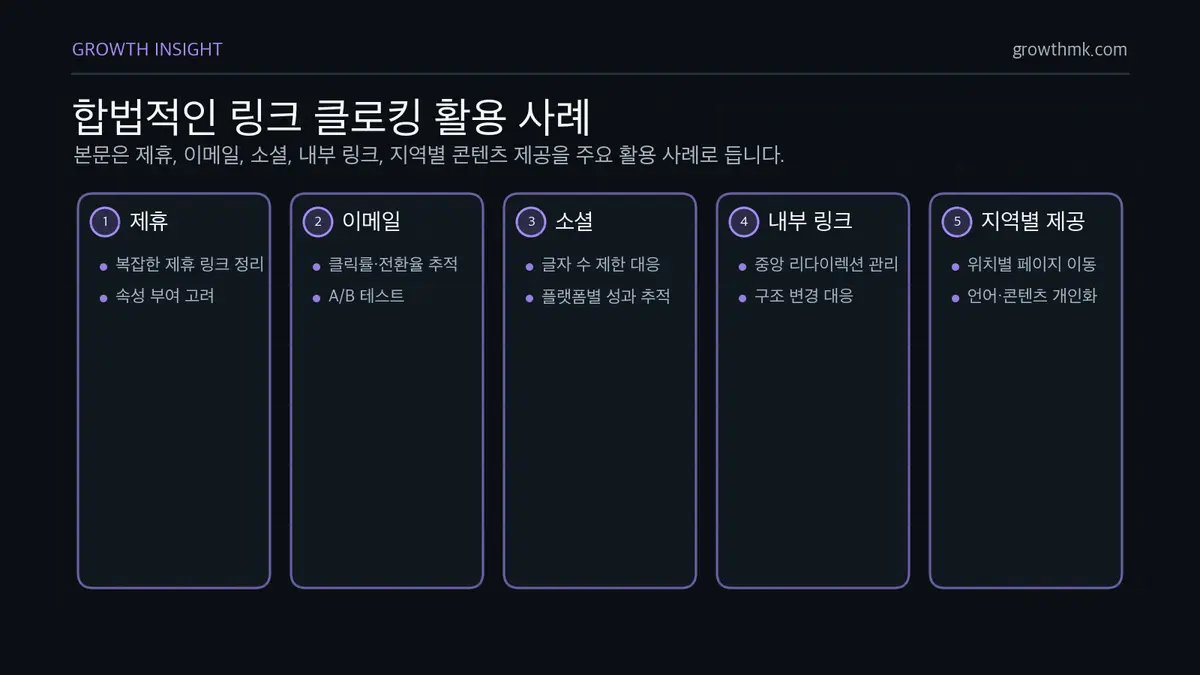
- Affiliate marketing: it can make complex, long, and sometimes unsightly affiliate links look cleaner and more professional. It matters to assign the right attributes to these links, taking into account the difference between dofollow and nofollow links.
- Email marketing: cloaked links let you track click-through rate, conversion rate, and engagement across an email campaign. You can also run A/B tests to see which message or call-to-action performs better.
- Social media marketing: shortening URLs is essentially required on platforms with character limits. Link cloaking also lets you track performance separately on each social platform.
- Internal link management: on a large site, managing links to internal pages through link cloaking means you can update redirects centrally when the site structure changes, instead of editing every individual internal link by hand.
- Region-specific content delivery: you can automatically redirect users to a different version of a page based on geographic location, serving localized content or language.
These use cases show that link cloaking can deliver value across several dimensions — a better user experience, greater marketing efficiency, and more data-driven decision-making.
Different Types of Link Cloaking
Link cloaking can be classified into several types depending on how it’s implemented and what it’s for:
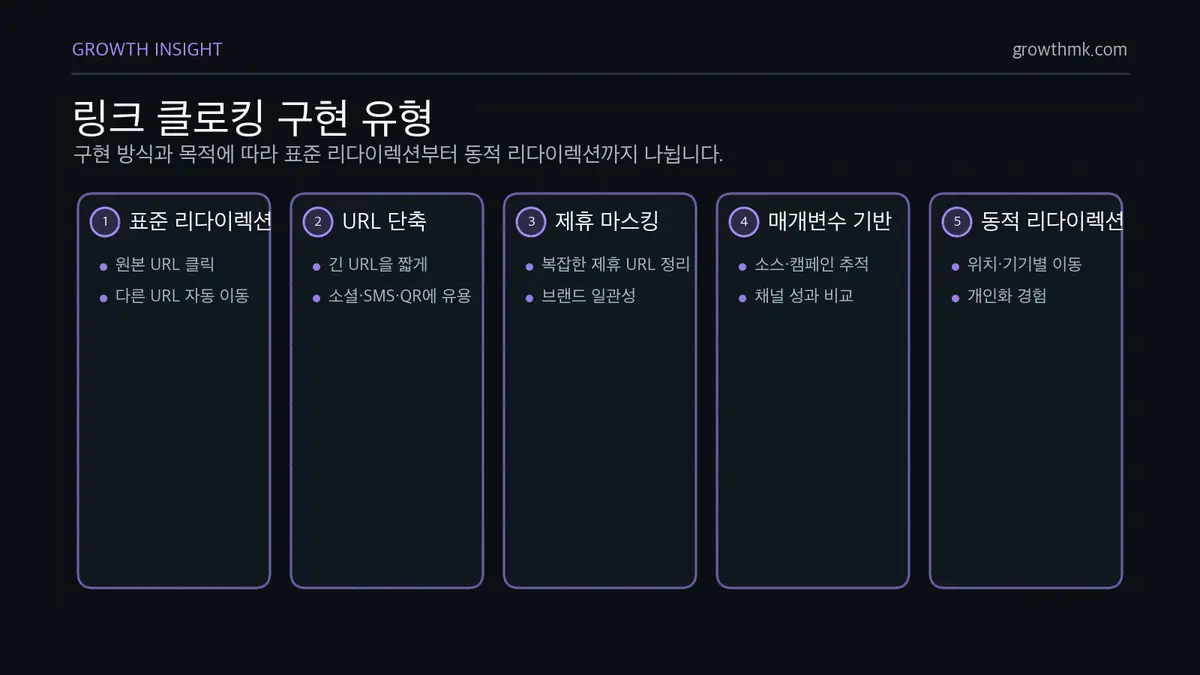
- Standard redirect cloaking: clicking the original URL automatically redirects the user to a different URL. This is the most basic form of link cloaking. For more on the different types of redirects and how to implement them, see Redirects: From the Basics to Fixing Problems.
- URL shortening: converts a long URL into a short, compact form. Especially useful on social media, in SMS marketing, and for QR codes. This is related to the techniques covered in Understanding Google Bypass Links Completely in 10 Minutes.
- Affiliate link masking: turns a complex affiliate marketing URL into something cleaner and more user-friendly. This helps maintain brand consistency and boosts trust in the link.
- Parameter-based cloaking: adds extra parameters to a URL to track traffic source or campaign information. Useful for comparing performance across marketing channels.
- Dynamic redirect cloaking: redirects to different destinations based on user data such as location or device. Effective for personalizing the user experience and lifting conversion rate.
Each type fits a particular situation and purpose, and multiple techniques are sometimes combined. Choosing one means weighing technical requirements, user experience, SEO impact, and ethical/legal considerations together.
Pros and Cons
Marketing and Analytics Benefits
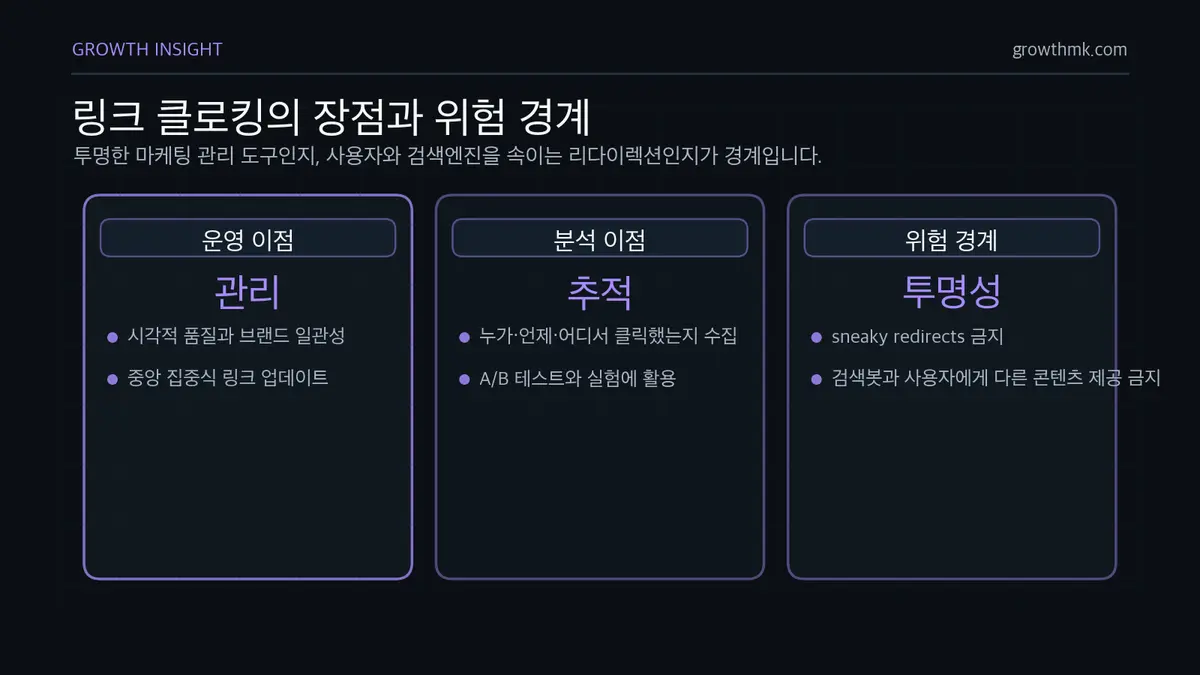
Link cloaking offers real advantages for a digital marketing strategy. The most notable is improving a link’s visual quality and brand consistency. A URL that’s long, complex, and heavily technical doesn’t just look unprofessional to users — it also erodes trust.
Amazon affiliate links, for example, are often made up of dozens of parameters and random strings, which can make users hesitant to click. Link cloaking converts these unwieldy URLs into something clean and professional-looking, which boosts user trust and strengthens brand image.
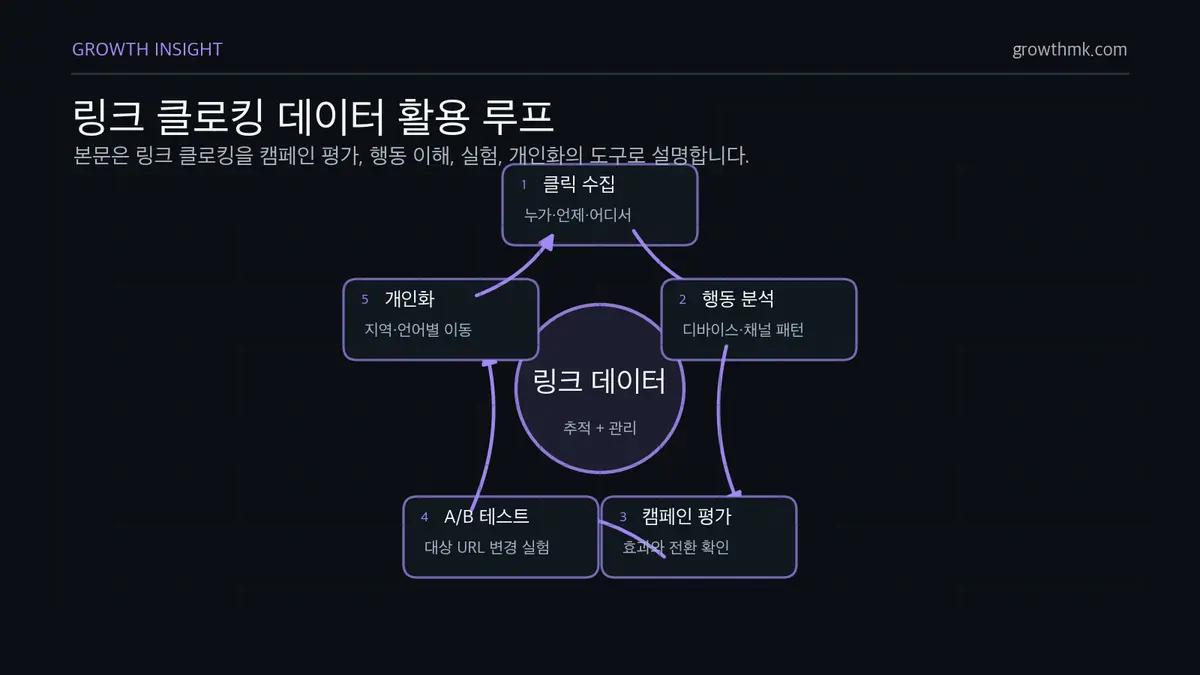
The next major benefit is detailed click tracking and data analysis. Link cloaking lets marketers collect fine-grained information about who clicked a link, when, from where, and on what device. That data is essential for evaluating a marketing campaign’s effectiveness and understanding target-audience behavior.
Centralized link management is another major benefit. A large website, or a business running active marketing campaigns, may need to manage hundreds of outbound links. (For effective internal link management, see 10 Frequently Asked Questions About Internal Links.) Managing these links centrally through a cloaking system means that when an affiliate program changes or a URL structure gets revised, you only need to update the redirect settings — not edit every individual page.
Link cloaking also makes A/B testing and marketing experiments easier. Because you can keep the same cloaked link while easily swapping the destination URL, it’s ideal for testing different landing page designs or messages.
Finally, being able to deliver regional targeting and personalized experiences is a major advantage. You can show different content or products depending on a user’s geographic location, language settings, or past visit history. With link cloaking, for instance, you might show North American visitors an English page priced in dollars, European visitors a localized page priced in euros, and Asian visitors yet another tailored page.
In this way, link cloaking is more than just hiding a URL — it can be a powerful tool for boosting marketing efficiency, improving the user experience, and supporting data-driven decisions. Its value stands out especially clearly for businesses running marketing activity across multiple channels where measuring performance matters.
Potential Risks and Considerations
Link cloaking offers plenty of benefits, but there are several important risks and limitations worth weighing carefully before you implement it. The first thing to keep in mind is its potential impact on SEO. For a deeper look at how link cloaking relates to your overall SEO strategy, see The Complete A-to-Z Guide to SEO Marketing.
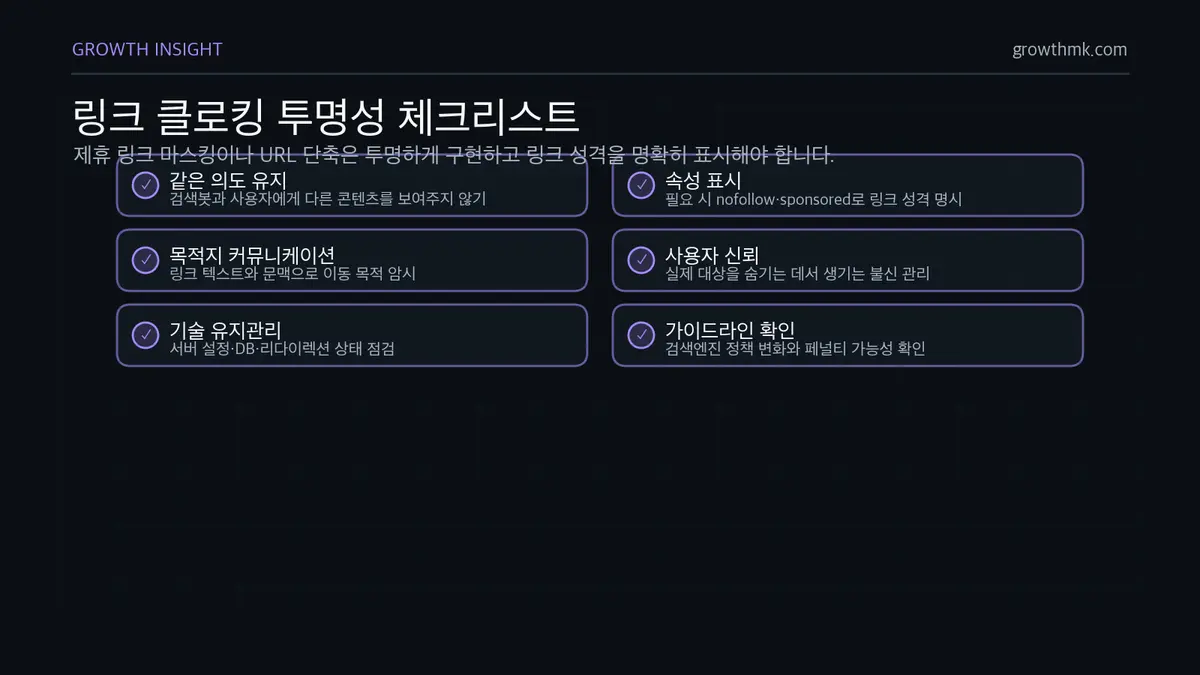
Certain types of link cloaking — in particular, showing different content to search engine bots than to regular users — can violate the guidelines of search engines like Google or Naver. Google classifies this as a “sneaky redirect”: a malicious redirect that shows users and search engines different content, or sends visitors to a page other than the one they intended to reach. Approaches considered this kind of black-hat technique can lead to search engine penalties, and in serious cases, a website being removed from search results entirely. In fact, Google’s spam policies define cloaking as “presenting different content to users and search engines with the intent to manipulate search rankings and mislead users,” and classify it as a clear violation.
Fortunately, not all link cloaking hurts SEO. Link cloaking that’s implemented transparently and improves the user experience — like affiliate link masking or URL shortening — is generally tolerated by search engines. What matters is staying current with search engine guidelines and, where needed, clarifying the nature of a link with the appropriate attributes, such as “nofollow” or “sponsored.” Google’s own documentation recommends marking ads and paid placements — including affiliate links — with rel="sponsored".
User trust and transparency are also important considerations. Because link cloaking is, by nature, about hiding a link’s true destination, it can be hard for users to know exactly where they’ll land before they click. This can be a particular trust issue with today’s security-conscious internet users.
To address this, it helps to communicate clearly about a link’s purpose and destination, and, where possible, to hint at the destination through the link text or surrounding context.
Technical complexity and ongoing maintenance are also not to be underestimated. Implementing link cloaking at scale can require significant technical resources for setting up and maintaining server configuration, database management, and redirect rules.
Legal compliance is another factor to weigh when using link cloaking. Various laws — affiliate marketing disclosure requirements, data protection law, e-commerce regulations — can all apply to link cloaking.
When cloaking affiliate links in particular, remember that most jurisdictions — the US Federal Trade Commission (FTC), the UK’s Advertising Standards Authority (ASA), and others — require clear disclosure of an affiliate relationship.
Finally, security risk deserves serious consideration. If a link cloaking system isn’t properly secured, a bad actor could hijack the redirect and send users to a phishing site or other malicious destination. It’s worth also being familiar with how broken links relate to SEO and how to fix them, given what can happen in a situation like this.
Link cloaking is unquestionably a powerful marketing tool, but these potential risks and considerations need to be carefully evaluated and managed. It’s important to weigh SEO impact, user trust, technical complexity, legal compliance, and security together, and take a balanced approach suited to your business goals and resources.
Implemented well, link cloaking can meaningfully boost marketing efficiency and improve the user experience — but implemented poorly, it can just as easily do harm. Careful planning and a strategic approach are essential.
Related Reading
- A Beginner’s Guide to Managing Backlinks
- Anchor Text
- 10 Frequently Asked Questions About Internal Links
- Domain Rating (DR): Definition, Importance, and How to Build It
- Dofollow Links vs. Nofollow Links: What’s the Difference
Want to apply this to your own business? — Visit our SEO service page to see our approach to growth, or get in touch for a specific diagnosis of your situation. We measure success by the one customer who becomes revenue, not by traffic volume.
Frequently Asked Questions (FAQ)
Is link cloaking always bad for SEO?
No. Approaches like affiliate link masking or URL shortening — which transparently lead both users and search engines to the same final content — are generally tolerated. The problem is “sneaky redirects”: showing different content to search bots than to users, or sending visitors to a page other than the intended one. That’s a clear violation of Google’s spam policies.
What link attributes should you use when cloaking affiliate links?
Google recommends using rel="sponsored" for links that involve any form of compensation, like ads or affiliate arrangements. You can also add nofollow when you don’t want search engines to associate your site with, or crawl, the destination. Assigning clear attributes makes a link’s nature transparent and reduces SEO risk.
Do you always have to disclose an affiliate relationship?
Yes. Most jurisdictions — the US FTC, the UK’s ASA, and others — require clear disclosure of an affiliate relationship or any financial interest. Cloaking a link doesn’t remove that disclosure obligation, so it’s safest to include a clear affiliate-disclosure statement within the content itself.
How is link cloaking different from content cloaking?
Link cloaking is focused on changing or hiding a link’s target URL. Content cloaking, by contrast, is a technique for showing the page itself differently to search engine bots than to regular users — a classic black-hat SEO tactic that search engines explicitly prohibit.