
Persona
 임재복
임재복
What Is a Persona?
A persona is a fictional character type created to represent users in a specific situation or for a specific purpose. It’s used mainly in marketing, UX design, and product development to build a deeper understanding of target customers or users — giving concrete shape to their needs, goals, behavior patterns, motivations, and pain points — so that teams can build empathy and make better decisions.
Personas are built on real data and research, and what sets them apart is that they’re portrayed as living, breathing people — with a specific personality, backstory, goals, and emotions — rather than a bare list of demographic facts. This helps team members discuss and build products or services as though they were dealing with a real user. It’s recognized as a core tool for putting a customer-centric approach into practice in modern marketing and product development.
The History and Origins of Personas
The Term’s Etymology and Early Concept
The term “persona” comes from Latin and originally meant the mask worn by actors in ancient Greek theater. In psychology, the term became widely known when Carl Jung defined the persona as the public face — the social self — an individual presents to the outside world to meet social expectations.
The Evolution of the Modern Persona Concept
The concept of a persona as it’s used in design and marketing today began emerging in software design in the late 1980s. It was Alan Cooper who popularized personas in his 1999 book The Inmates Are Running the Asylum in particular, and from there the concept spread widely as a core element of Goal-Directed Design methodology.
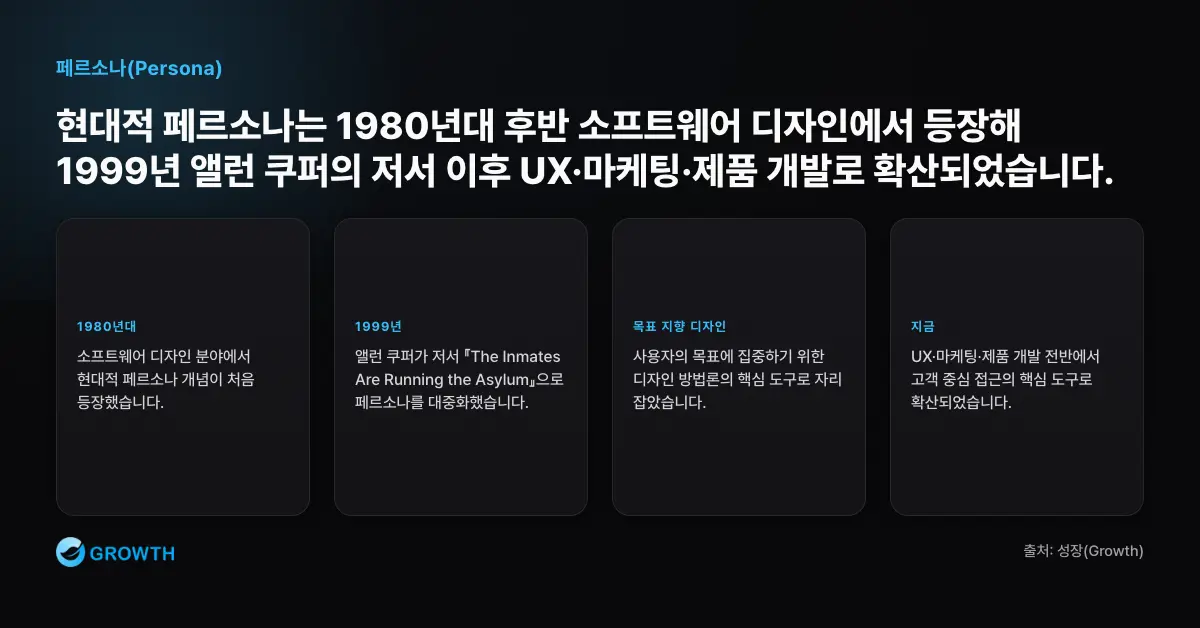
Cooper argued strongly for using personas as a tool for keeping software development focused on user goals. From there, they became established as a core tool for a customer-centric approach across UX design, marketing, product development, and more.
Key Characteristics and Components of a Persona
Core Characteristics of a Persona
A persona provides a concrete, relatable answer to the question of who your target customer or user actually is. What matters is that a persona is a research-driven output grounded in real data — not a vague guess or an idealized customer image, but a reflection of real users’ shared behavior patterns, goals, needs, and problems.
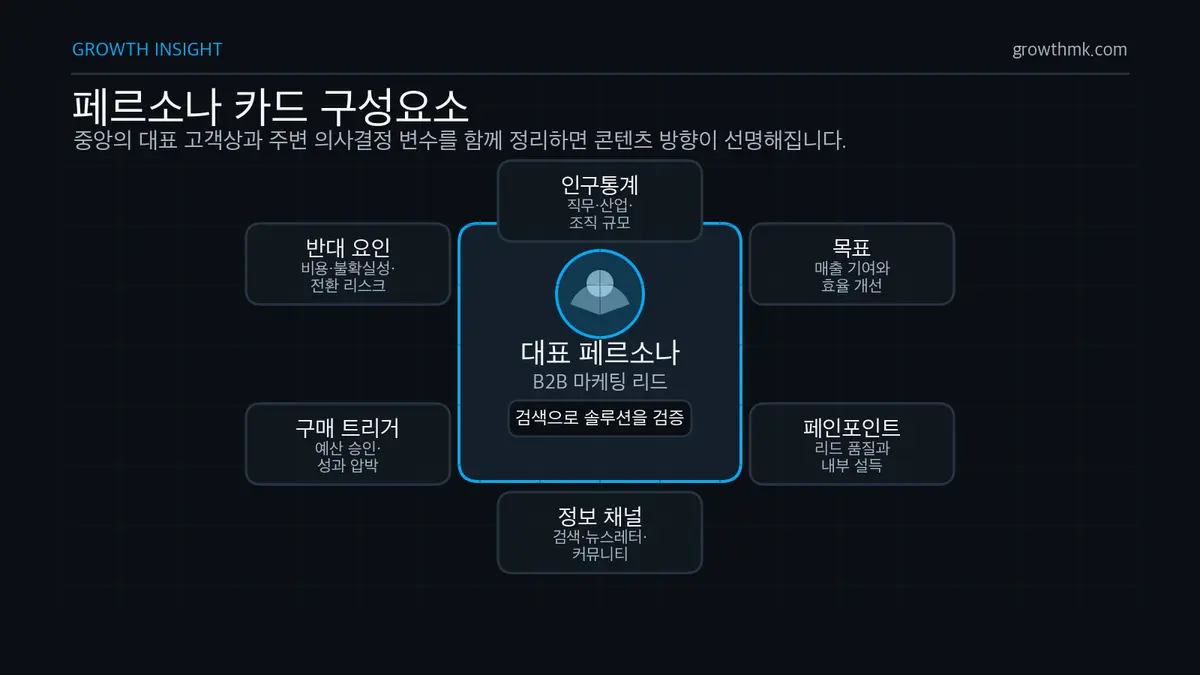
A persona has five core characteristics: representativeness, specificity, the ability to build empathy, decision support, and function as a communication tool. These characteristics make for more effective customer analysis when paired with a clear understanding of the difference between customer needs and wants and psychological frameworks like Maslow’s hierarchy of needs.
Components of a Persona Profile

A persona profile is made up of the various pieces of information needed to bring that persona vividly to life. At a basic level, this includes a name and visuals, along with demographic information — age, gender, location, occupation, education level, income level, family situation, and so on.
Psychographic information covers goals, needs, motivations, frustrations and pain points, personality, lifestyle, values, attitudes, and interests. The behavioral section covers usage patterns for products or services, technical proficiency, how they source information, their purchase decision process, and preferred communication style.
A fictional quote that captures the persona’s core mindset or attitude in a nutshell, and a scenario or user story showing how they’d use the product or service in a particular situation, are also important components. Not every persona needs to include every element above — you select and structure the information that fits your project’s purpose and characteristics.
Persona Use Cases and Applications
Using Personas in Marketing
In marketing, personas play a central role in clarifying your target audience and developing messages that actually land. As shown in our content marketing case study analysis, personas help identify a customer’s interests and pain points so you can craft marketing messages that resonate.
In the marketing keyword research process too, understanding what information a persona needs and which channels they get it from makes it possible to plan tailored content. Personas also pair well with the AISVAS consumer decision model to analyze a persona’s behavior and decision-making at each stage of a purchase.
Using Personas in Product Development and UX Design
In user experience and product design, personas are a core tool for putting user-centered design into practice. As shown in our UX writing case study, personas help you understand users’ language and mental models so you can design a better interface and experience.
They help designers, developers, and planners think from the user’s perspective and empathize, in order to design a better user experience. They provide a standard for judging which features matter most to a persona’s goals, and even in data-driven optimization work like A/B testing to steadily improve ad performance, you can interpret test results against a persona as the benchmark.
Using Personas Across Other Fields
Beyond marketing and UX design, personas are used in a range of other fields. In software development, they help developers design and prioritize features from the end user’s perspective. In educational content development, they’re used to design tailored learning materials and curricula that account for a learner’s characteristics and learning goals.
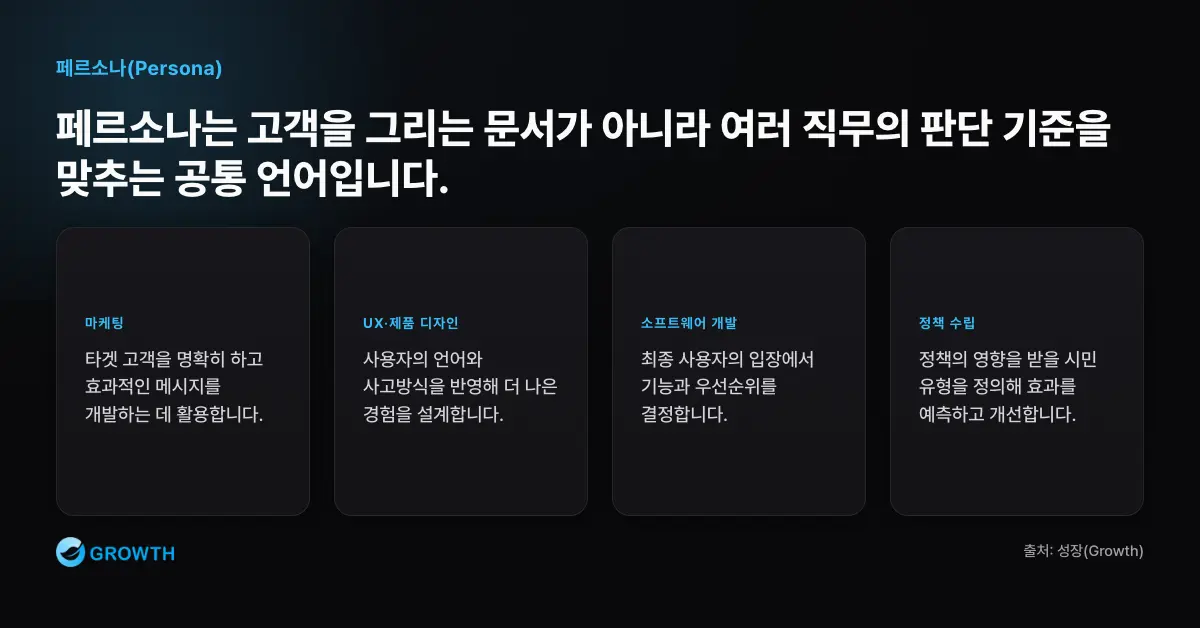
In policymaking, personas can be used to define the various types of citizens a given policy would affect, helping predict and improve its effects. In efforts to improve organizational culture, they can also help you understand employees’ different types and needs as a reference for building a better working environment and culture.
Persona-Related Concepts and Methodology
Types and Classifications of Personas
Different types of personas exist depending on purpose and depth of research. A proto-persona is built quickly, before extensive user research, based on a team’s existing internal knowledge and assumptions — useful for setting up hypotheses ahead of formal research or for early idea generation.
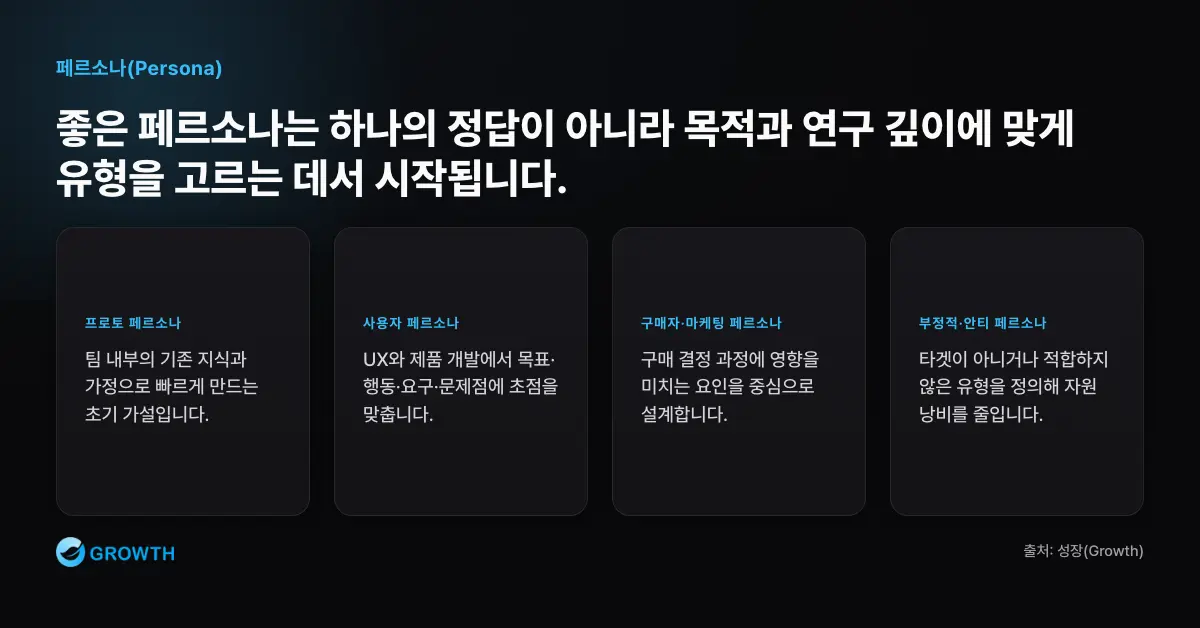
User personas are mainly used in UX design and product development, focusing on a user’s goals, behavior, needs, and pain points. Buyer personas and marketing personas are mainly used in marketing and sales strategy, focusing on the factors that influence a purchase decision for a product or service.
Negative personas, or anti-personas, define the types of users a company doesn’t want to target, or who aren’t a good fit for the product or service. This reduces wasted marketing resources and lets you focus more sharply on your core target customers.
The Process and Methodology for Building a Persona
An effective persona comes out of a systematic research and analysis process. It starts with collecting data through both qualitative and quantitative research. Qualitative research includes user interviews, usability testing, field studies, and focus group interviews; quantitative research includes online surveys, website analytics data, and CRM data.
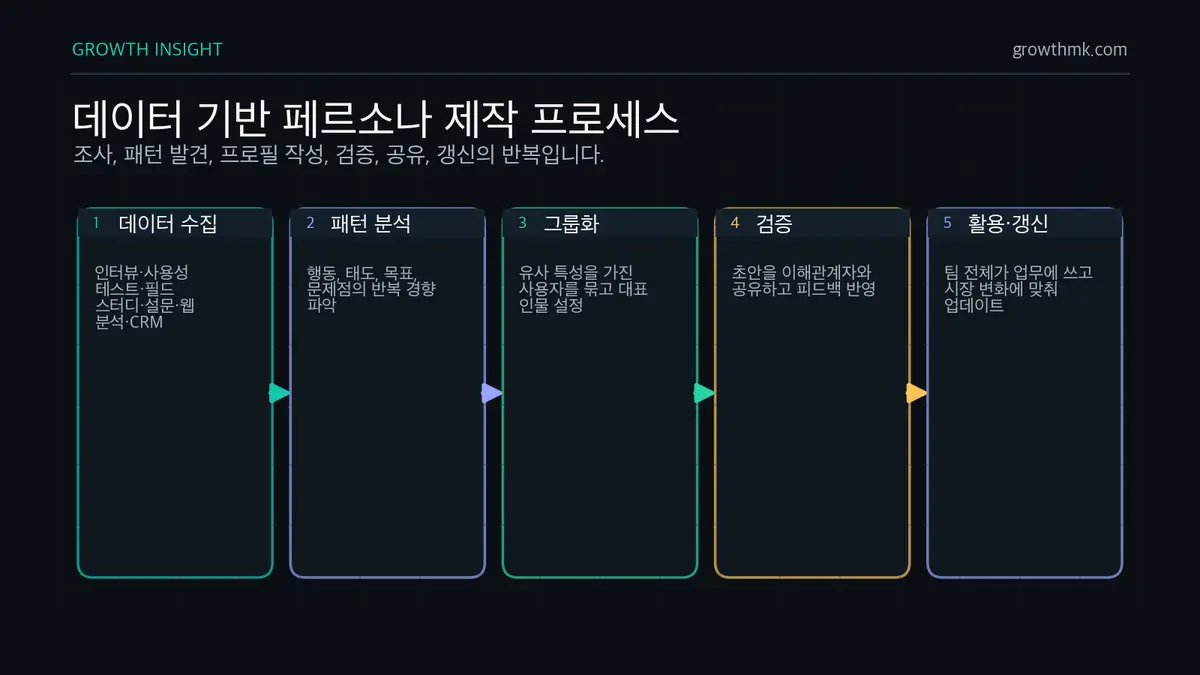
You then analyze the collected data comprehensively to identify recurring patterns or major trends in users’ behavior, attitudes, goals, and pain points, and group users with similar characteristics together. From there, you set up a fictional character representing each user group and fill in the key components of the persona profile.
Share the draft persona with team members and key stakeholders to gather feedback, validate it, and refine it further — then share the finished persona with the whole team and make sure it gets used continuously in actual work. It’s also important to periodically update personas to reflect market shifts or new research findings.
Marketing Concepts Related to Personas
Personas connect closely with a range of marketing methodologies. As shown in our performance marketing reference, persona-based targeting directly contributes to better marketing performance. In What Is Growth Hacking? as well, understanding users through a persona is the foundation for building an effective growth strategy.
As mentioned in Viral Marketing Starts and Ends With “Planning”, the sharing behaviors and interests you uncover through a persona provide important insight for planning viral content. Similarly, our SEO marketing case study analysis shows how analyzing a persona’s search behavior and interests can inform a more effective SEO strategy.
Limitations and Cautions With Personas
Common Pitfalls When Using Personas
There are recurring problems that come up when working with personas. Building too many personas dilutes focus and makes them less useful in practice. It’s more effective to limit yourself to 3–5 core personas centered on your key user groups. The Nielsen Norman Group similarly explains that personas need to be grounded in real user research data, and work best when distilled down to a small number of core types.
It’s also a problem to build personas purely from imagination without research, or to let them reflect stereotypes or bias. Always build personas from real user data and research findings, and if you start with a proto-persona, be sure to validate and develop it further through subsequent research.
Recognizing the Limits of Personas
It’s important to recognize that a persona is a representative user type and can’t capture the full range of every individual user’s traits. Keep listening to feedback from a diverse range of users, and be careful not to mistake a persona for an absolute standard that covers every user.
To keep a persona from becoming decorative — created once and never used again — integrate it into your actual work process and build a culture of actively referencing it in meetings and decisions. Because markets and users keep changing, it’s important to review and refresh personas with current information at least once a year, or more often as needed.
The Future of Personas
How Personas Will Evolve With Technology
Advances in AI, big data, and personalization technology are expected to change how personas are used and what role they play. AI could analyze the vast volumes of user data collected in real time to produce dynamic personas that shift with context and are personalized with much greater precision.
AI can boost efficiency by automating the drafting of a persona through data analysis and pattern recognition. Combined with a real user’s real-time behavioral data on top of a base persona, it could also be used to deliver an even more finely tuned, hyper-personalized experience.
Ethical Considerations and Sustainability
Addressing privacy and data-bias concerns, and building and using personas in an ethical way, will only become more important. Even as technology advances, the essential value of a persona — understanding users deeply and building empathy for them — won’t change, and it will keep playing a critical role as a core tool for a customer-centric approach.
Even in a new technology landscape shaped by tools like generative AI, personas are expected to keep playing an important role in giving direction to how AI tools get used, while keeping a human-centered perspective at the core.
Related Reading
- What Is Growth Hacking? Definition, AARRR, Experiment Design, and Real Case Studies — the complete growth-strategy pillar guide
- Marketing Channel Mix
- CDJ (Customer Decision Journey)
- The Difference Between Customer Needs and Wants
- 2024 Marketing Calendar and Key Events at a Glance
Want to apply this to your own business? — If you need a specific diagnosis of your situation, get in touch. We measure success by the one customer who becomes revenue, not by traffic volume.
Frequently Asked Questions (FAQ)
How many personas should you create?
The general recommendation is to limit yourself to 3–5, centered on your core user groups. Too many personas dilutes focus and reduces how useful they actually are in practice. The Nielsen Norman Group also notes that personas work best when distilled down to a small number of core types.
How is a persona different from a target audience or segment?
A target segment is a group defined by demographic criteria — age, region, income. A persona is a single, concrete, living, fictional individual who represents that group. The difference is that a persona also captures goals, motivations, pain points, and behavior patterns, helping the team empathize and make decisions as though they were dealing with a real user.
Is a proto-persona enough on its own?
A proto-persona is a hypothetical persona built quickly from a team’s existing internal knowledge and assumptions, before any formal research. It’s useful for early idea generation, but because it can reflect assumptions and bias, it should always be validated and developed further through actual research — user interviews, surveys, behavioral data, and so on.
How often should you update a persona?
Because markets and users keep changing, it’s best to review and refresh personas with current information at least once a year, or whenever there’s a new product launch, market shift, or new research finding. It’s important to integrate personas into your actual work processes so they don’t become a “decorative persona” — created once and then forgotten.
Marketing Insights
Marketing insights, delivered weekly
Practical growth and GEO/B2B marketing insights, summarized in your inbox every week.
Subscribe for insights